What specific health problems are linked to inbreeding in captive white tigers?
Answer
Crossed eyes (strabismus), spinal curvature, and kidney issues
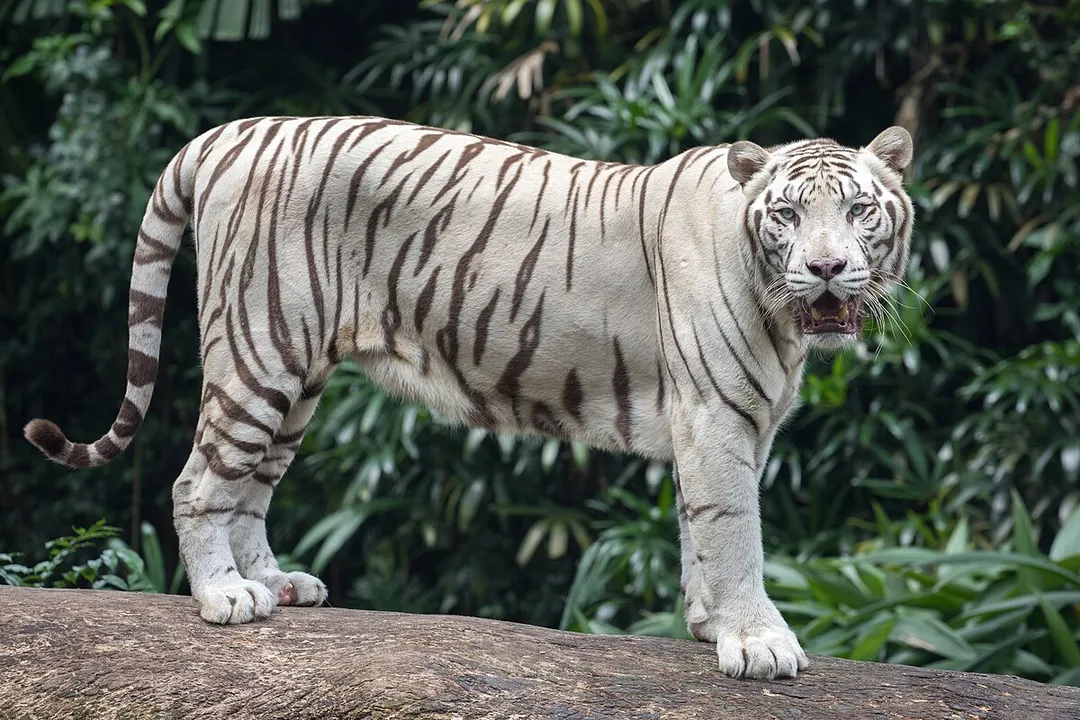
The necessary practice of intensive captive breeding, often involving closely related animals like siblings or parents and offspring to maintain the rare recessive trait, leads directly to severe inbreeding depression. This genetic bottleneck concentrates deleterious recessive genes across the population. Consequently, numerous physical abnormalities arise. Reported issues specifically include strabismus, which means having crossed eyes, alongside structural problems such as spinal curvature and internal organ issues like kidney problems. Jaw alignment issues are also reported consequences stemming from this restricted gene pool management.
Related Questions
What is the recognized subspecies category for the white tiger phenotype?What specific health problems are linked to inbreeding in captive white tigers?Which biological gene is identified as responsible for the white coat pattern in tigers?What taxonomic rank defines the group containing lions, leopards, jaguars, and tigers?What is the key characteristic distinguishing the white tiger from a true albino?What frequency was the white coat recessive gene estimated to have in wild Bengal tigers?Which major taxonomic classification level denotes multicellular, eukaryotic organisms that ingest nutrition?What practice has significantly increased the frequency of the white coat gene in captive populations?Why did wild sightings of white tigers decline significantly by the mid-20th century?What order classification includes animals adapted primarily for eating meat, like the white tiger?What practices necessitate mating closely related animals when maintaining white tigers in captivity?