What condition, characterized by reduced but not eliminated pigmentation, defines the white tiger's coat coloring?
Leucism
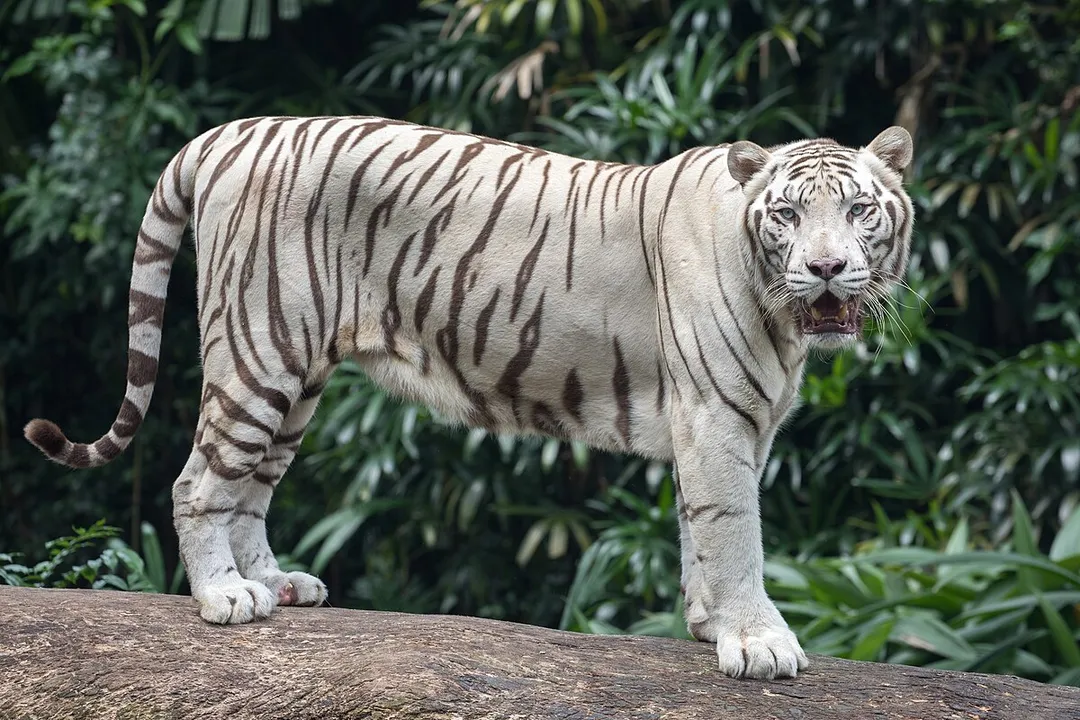
The white coloration in tigers is specifically categorized by a condition known as leucism. Leucism is a genetic state that causes a noticeable reduction in various types of pigmentation across the animal's body, leading to the pale, creamy white base coat. Crucially, leucism does not result in a total absence of pigment, which is the defining feature of true albinism. This partial lack of pigment explains why white tigers retain color in their stripes (dark brown to black) and why their eyes develop color (typically blue), unlike albinos whose lack of pigment reveals underlying blood vessels, causing pink or red eyes. Leucism is the biological mechanism that grants them their unique appearance while maintaining certain pigmented structures.
#Videos
White Tigers - Get The FACTS! - YouTube