How is the body profile of the White Crappie generally described compared to the Black Crappie?
Answer
Deeper and more compressed
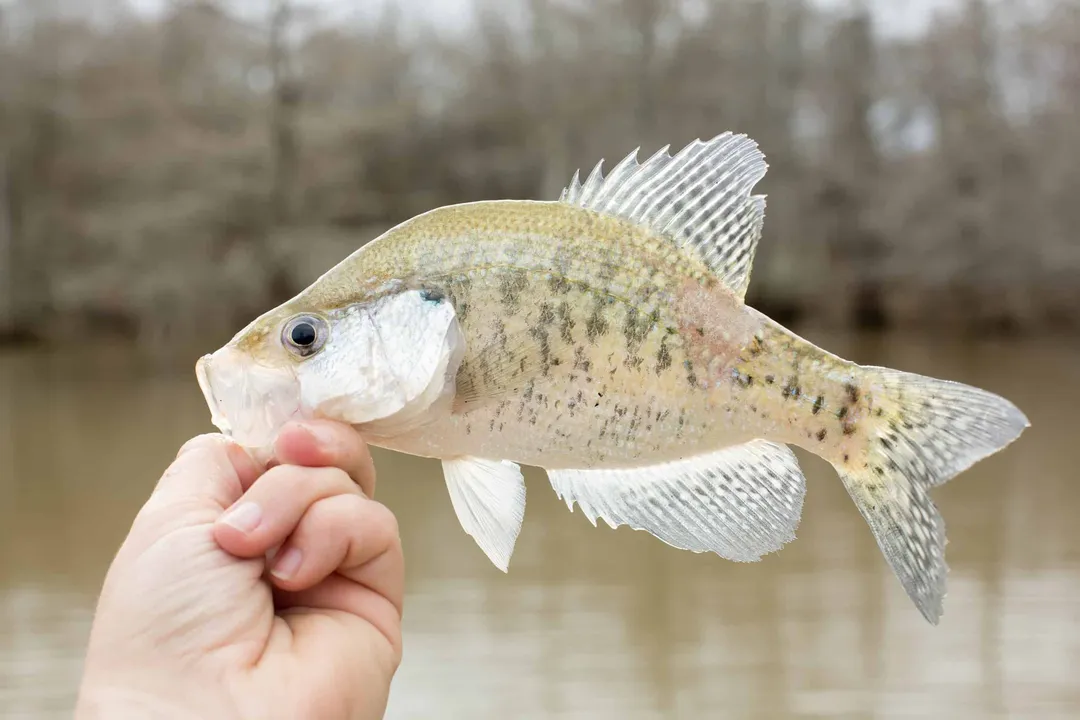
While counting dorsal spines is a key identifier, the overall body shape provides crucial supporting evidence for distinguishing between the two species of Crappie. The White Crappie typically possesses a body structure characterized as being deeper and more compressed when viewed from the side. This shape gives it a more distinct, taller, disk-like appearance. This contrasts with the body profile of the Black Crappie, which is generally less deep or compressed. When lighting conditions obscure the view of the dorsal spines, recognizing this deeper, more compressed body profile serves as an important shortcut for accurate identification on the water.
Related Questions
How many dorsal spines does a White Crappie typically possess for identification?How is the body profile of the White Crappie generally described compared to the Black Crappie?What water condition do White Crappie show greater tolerance for than Black Crappie?Which major North American river basin are White Crappie naturally inhabitants of?What is the main food source for juvenile White Crappie as they develop?What primary role do male White Crappie assume during the nesting process?What consistent water temperature range initiates the White Crappie spawning process?What is the typical lifespan range for a White Crappie under normal conditions?Why has the White Crappie sometimes been classified as an invasive species outside its native range?In small ponds where White Crappie overpopulate, what management strategy is encouraged for anglers?How is the iris of the White Crappie's eye often described in identifying characteristics?