White-tail deer Facts
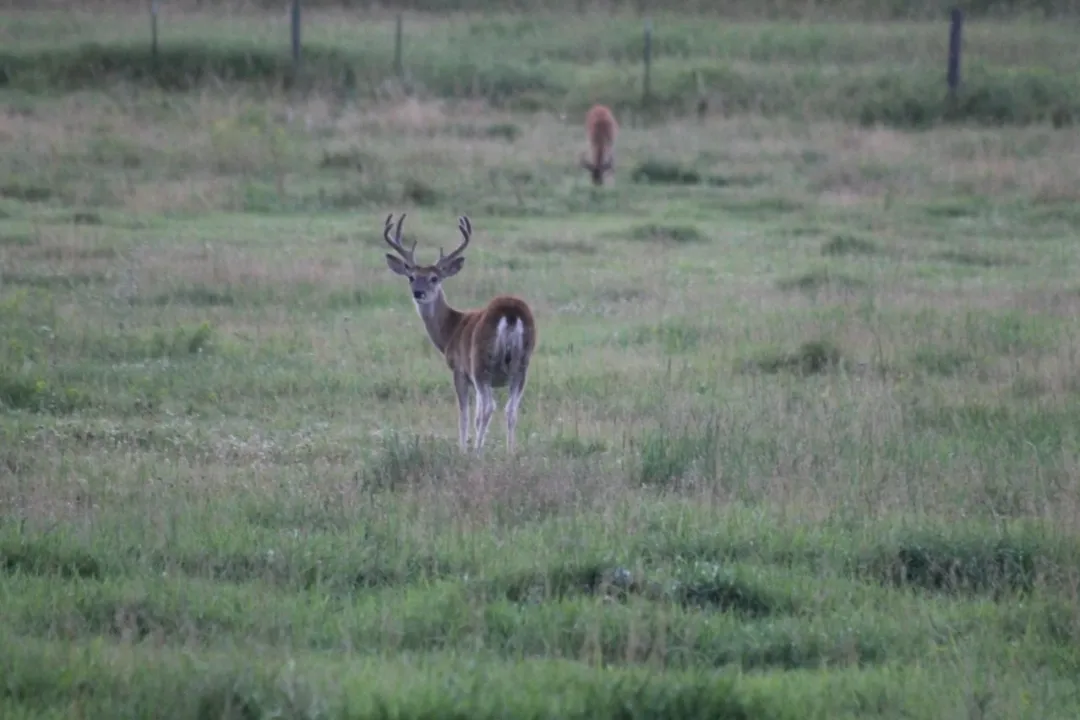
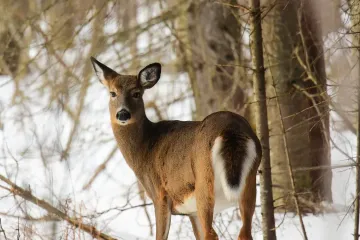
The white-tailed deer, scientifically known as Odocoileus virginianus, is perhaps the most recognized and widespread large mammal across the Americas, instantly conjuring images of woodland serenity or perhaps quick movement across a rural road at dusk. [3][4] These adaptable cervids dominate ecosystems from southern Canada all the way down through Central and northern South America. [3][9] Their common name comes from the distinctive underside of their tail, which is white and raised like a flag when the animal is alarmed, serving as a warning signal to other deer in the immediate vicinity. [1][2] A mature male, or buck, can weigh between 110 and 300 pounds, while does typically range from 90 to 150 pounds, though size variance is significant depending on the geographic region and access to quality nutrition. [3][9] While some descriptions place the maximum weight for males near 400 pounds, the average mature buck in many regions falls well below that peak. [10]
# Physical Makeup
The coloration of a white-tailed deer shifts noticeably with the seasons. In the summer months, their coats are a reddish-brown, providing excellent camouflage among deciduous foliage. [4][9] As winter approaches, the coat thickens and changes to a duller, grayish-brown hue, which offers better insulation against the cold and blends with dormant winter landscapes. [4][9] Fawns are unmistakable due to the dozens of bright white spots patterned across their back and sides; these spots usually begin to disappear when the fawn is about three to five months old, though some very lightly spotted individuals might retain hints of the pattern into their first winter. [1][6]
Their physical structure is optimized for agility and evasion. They possess long, slender legs built for explosive bursts of speed and endurance. When needed, a white-tail can sprint up to 30 miles per hour and clear fences or obstacles exceeding eight feet in height. [2][10] Unlike some hoofed animals that move both legs on one side simultaneously, white-tails move their legs in a diagonal pattern, which aids in stability while running. [6] They have large ears, often described as "radar dishes," which can rotate independently to pinpoint the direction of faint sounds. [1]
# Antlers Cycle
The most dramatic physical difference between the sexes lies in the antlers of the male deer. Antlers are composed entirely of bone and are shed and regrown annually, a process that requires substantial calcium and phosphorus reserves. [3][10] The growth phase begins in the spring, covered in a soft, fuzzy skin known as velvet, which supplies blood and nutrients to the rapidly developing bone structure. [4][10] Bucks generally shed their velvet during late summer or early autumn as the antlers fully harden. [4] The size, mass, and point count of a buck's antlers are often heavily influenced by its age and its nutritional status during the preceding spring and summer growing season. [3] For instance, a young buck in its second year might only grow spikes or small forks, whereas a prime four-and-a-half-year-old deer, if living in an area with rich forage, could exhibit a massive rack. [10] By mid-winter, typically between January and March, the antlers are shed, and the cycle restarts. [4][10]
A particularly interesting observation for those tracking deer populations is how quickly the recovery process demands resources. A buck that has just shed its antlers must immediately begin building new ones; this rapid bone formation means that a deer's diet during late winter and early spring directly dictates the potential size of its rack in the coming fall, an excellent example of how environmental conditions manifest in visible secondary sexual characteristics. [3]
# Geographic Spread
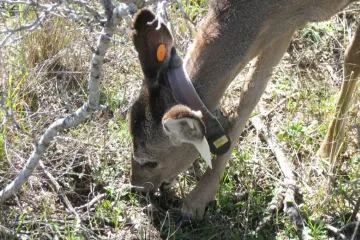
The adaptability of the white-tailed deer is key to its incredible success across North America. [9] They thrive in a vast array of environments, ranging from dense coniferous forests and swampy wetlands to agricultural lands, grasslands, and even suburban areas. [3][4][9] This flexibility means they are often the most commonly seen large mammal in many state and national parks, such as those along the eastern seaboard, including the Great Smoky Mountains National Park where they are abundant. [8] Their tolerance for human presence is remarkably high, which often brings them into direct contact with human infrastructure and communities. [4] In some areas, like the National Capital Region parks, researchers monitor their populations closely because their high density can alter plant communities by intensely browsing sensitive understory vegetation. [4]
While their range is vast, specific adaptations exist. Deer in northern climes tend to be larger, a general biological principle that aids in thermoregulation by reducing the surface-area-to-volume ratio, allowing them to conserve heat more effectively. [3] Conversely, southern populations tend to be smaller in body size. [3]
# Dietary Habits
White-tailed deer are classified as ruminants and browsers, meaning they have a four-compartment stomach designed to process tough, fibrous plant matter efficiently. [6][9] Their diet is highly opportunistic and varies drastically depending on the season and local availability. [5] In the spring and summer, they consume a wide variety of green, leafy vegetation, including forbs, grasses, agricultural crops like alfalfa and soybeans, and the new tender shoots of woody plants. [5][6][9] They particularly favor highly digestible, high-protein foods when they are available, which fuels antler growth in males and milk production in females. [5]
As the growing season ends, their diet shifts significantly. In the fall and winter, they rely heavily on browse—twigs, buds, and bark—from woody plants like oak, maple, and various shrubs. [5][6] The importance of mast—nuts and fruits produced by trees and shrubs—cannot be overstated; acorns from oak trees are a critical, high-energy food source that can sustain them through the winter months. [5][9] If high-quality mast crops are poor in a given year, deer will be forced to rely more heavily on lower-quality woody browse, which can negatively impact their body condition heading into the spring breeding season. [5] Their ability to switch food sources readily is a core reason for their ecological success. [9]
# Sensory Acuity
The deer's survival hinges on its ability to detect predators before being detected itself. Their sensory perception is finely tuned for this purpose. [1]
# Sight and Hearing
White-tails have excellent hearing, often aided by those large, swiveling ears that can detect sounds from a remarkably wide range of directions. [1] Their vision is also keen, though it differs from human vision; they have better visual acuity in low-light conditions, which is why they are most active at dawn and dusk (crepuscular behavior). [10] They can perceive movement over great distances, making them quick to react to perceived threats.
# Smell
Perhaps their most crucial sense is smell. Deer possess an extremely developed sense of smell, capable of detecting odors that humans cannot perceive. [1][2] They use this sense not only to detect danger but also to communicate. Scent glands located on the tarsal (inner hind leg) areas produce musk that is rubbed on vegetation to mark territory or signal reproductive status, especially during the rut. [3][10] This olfactory communication is a silent, yet constant, dialogue happening within their social structure. [3]
# Life Cycle and Social Dynamics
White-tailed deer exhibit sexual dimorphism, meaning males and females differ in appearance, most obviously by the presence of antlers on the males. [3] The timing of reproduction is generally tied to the shortening daylight hours of autumn, known as the breeding season or the rut. [4] Bucks compete intensely for access to females, often engaging in sparring contests with their antlers to establish dominance. [3]
Gestation lasts approximately 200 days, and does typically give birth to one or two fawns in late spring or early summer. [4][10] Fawns are born spotted and are virtually scentless for the first few weeks of life, as mothers often leave them hidden alone in tall grass or dense brush while they forage nearby. [1][4] This initial period of isolation is a critical survival strategy; the mother returns several times a day to nurse them. [1] If you encounter a seemingly abandoned fawn, the best course of action, emphasizing experience-based wildlife stewardship, is almost always to leave it completely undisturbed, as the mother is likely nearby waiting for you to depart. [7] Disturbing a fawn can cause the mother to avoid returning to it. [7]
While females (does) may form small family groups, bucks often live solitary lives or form small bachelor groups outside of the rutting season. [3] However, their social structure is fluid and context-dependent, shifting based on food availability and seasonal pressures. [6] During harsh winters, several deer may congregate in sheltered areas, known as "winter yards," to conserve energy and share resources until spring arrives. [10]
# Insight into Adaptability and Management
The white-tail's success in blending into human-dominated landscapes presents a unique management challenge. When human development fragments natural habitats, deer often exploit the edges—the transition zones between forest, field, and suburbia—where food sources are plentiful and predator pressure is low. [4] This leads to situations where suburban populations can become excessively dense, sometimes exceeding carrying capacities that might naturally occur in wilder settings. [4] This density leads to two primary issues: increased vehicle collisions and localized over-browsing, which can change the entire structure of the local plant ecosystem by eliminating the seedlings of desirable, palatable species. [4][8]
Considering the high reproductive rate and adaptability, one can observe a fascinating pressure gradient effect. In areas with intense, regulated hunting pressure that mimics historical predation levels, deer populations often remain healthier, with bucks reaching prime physical condition more consistently because the overall herd density is kept at a level where food resources are not overtaxed. [10] Conversely, in areas where hunting is heavily restricted, the age structure of the bucks can become skewed toward younger individuals, as the older, dominant males are often removed first by natural causes or accidents in high-traffic areas, allowing less experienced males to breed. [10] This highlights how human activity, intended or not, becomes the primary driver of population structure where natural predators are scarce. [4]
# Communication Methods
Communication among white-tailed deer goes far beyond the raised white tail flag that signals alarm. [2] While scent marking during the rut is important for sexual signaling, the deer also use vocalizations, though they are often subtle. [6] They can bleat, grunt, and snort. [6] A sharp, loud snort is a common sign of alarm or warning, often accompanied by the tail flagging action. [2] Does use softer grunts and bleats to communicate with their fawns. [6] Bucks, especially those sparring or actively rutting, will make vocalizations that are deeper and more guttural. [10] The combination of visual cues, scents, and vocalizations allows for a complex, though often missed by human observers, system of social information exchange within their groups. [1]
# Physical Variation and Speed
It's worth noting the physical differences that arise across their vast range. For example, deer found in the dense swamps and Caribbean islands, sometimes classified as distinct subspecies like the Key deer, are significantly smaller than their mainland cousins. [3] The Key deer, for instance, might only stand about 24-30 inches tall at the shoulder. [3] This demonstrates strong phenotypic plasticity—the ability of a single species to exhibit such different physical traits based almost entirely on local environmental constraints, such as resource limitation or predator pressure in isolated environments. [3]
Regarding their speed, while 30 mph is a reliable top-end sprint, their sustained cruising speed during an escape is often closer to 15 to 20 mph, which they can maintain for considerable distances if necessary. [2][10] This endurance makes them formidable prey animals, capable of escaping pursuit over long distances if they are not ambushed or cornered.
# Digestive Efficiency
As ruminants, the efficiency with which they extract nutrition from low-quality winter browse is fascinating. Their digestive process relies on microbial fermentation within the rumen, similar to cattle. [6] This allows them to break down cellulose, a major component of woody stems that many other herbivores cannot process. [6] This specialized gut biology is what permits them to survive harsh northern winters when herbaceous plants are unavailable, positioning them as superior competitors in mixed hardwood forests compared to strict grazers. [5]
# Scent Glands Detailed
To further appreciate their reliance on scent, it is helpful to know the key locations for their scent production, which is essential for understanding rut behavior. Besides the tarsal glands on the inner hind legs, deer possess several other scent sources. [3] They have preorbital glands near the eyes, and others on their forehead, chin, and interdigital glands between the toes of their hooves. [3] When a buck rubs its forehead or rubs its tarsal glands on a sapling (creating a "scrape" or "rub"), it is depositing a complex cocktail of pheromones onto the vegetation, marking its presence and readiness for breeding, which other deer can read days or even weeks later. [3][10]
The white-tailed deer remains a species defined by its adaptability, thriving from the remote wilderness to the edge of human development, a testament to its finely tuned senses and versatile survival strategies. [4][9]
Related Questions
#Citations
White-tailed Deer Facts for Kids - NatureMapping Foundation
Five Fun Facts about White-Tailed Deer
White-tailed deer - Wikipedia
White-tailed deer (Odocoileus virginianus) - National Park Service
[PDF] White-Tailed Deer - NC Wildlife
White-Tailed Deer - BioKIDS
Interesting facts about white-tailed deer biology - Facebook
7 Amazing Facts About Smoky Mountain White-Tailed Deer
White-tailed deer | Habitat, Diet & Adaptations | Britannica
35 facts about whitetail deer | GON Forum