White-Tailed Eagle Facts
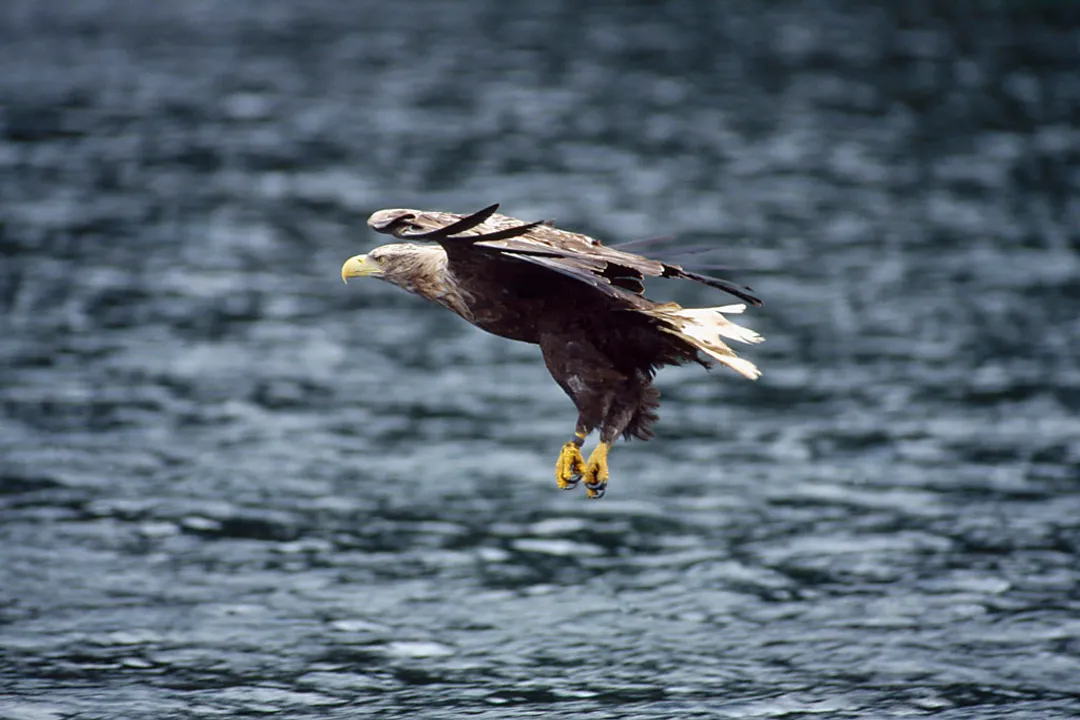
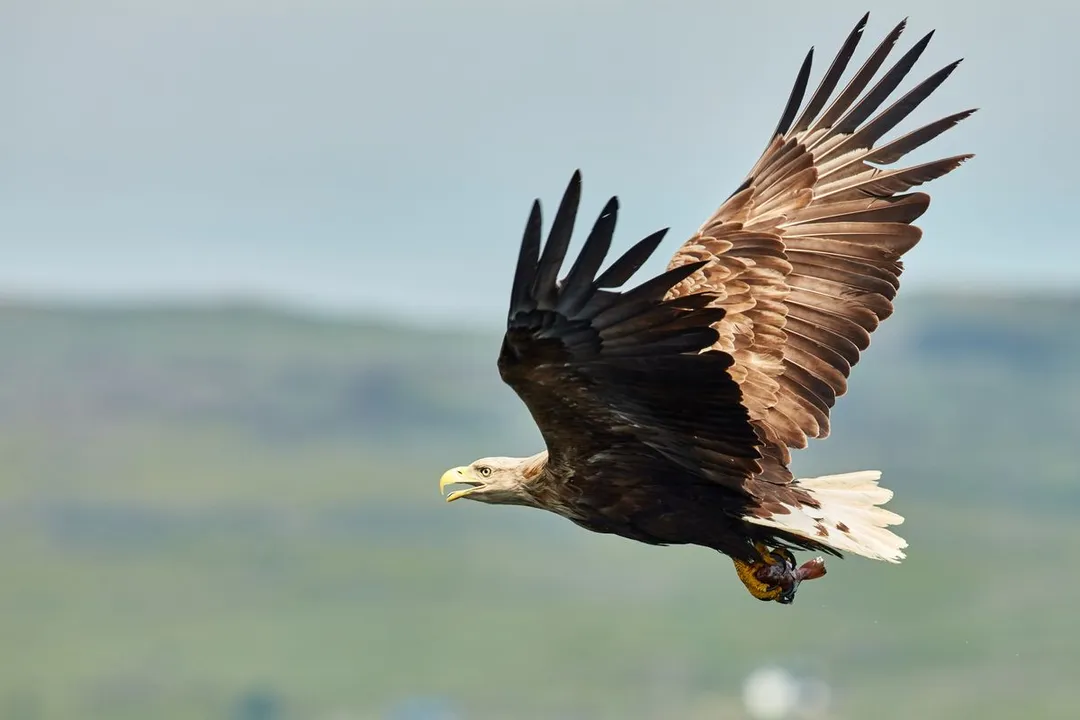
The White-Tailed Eagle, a magnificent bird of prey, commands attention with its sheer size and impressive wingspan, often reaching up to 2.45 meters across. [1][7] Known by several names, including the Sea Eagle [2][3][5] or Great Sea Eagle, [4] this raptor is unmistakable, possessing a dark brown body contrasted by a paler head and neck. [4] Its wings are notably broad, and its tail, the feature that gives it its common name, is characteristically wedge-shaped. [3][4] A key identifier for an adult bird is the contrast between its dark plumage and its bright yellow beak and legs. [4] Interestingly, the immature birds present a less refined appearance, often displaying a darker, more mottled plumage for the first few years of life before reaching full adult coloring. [4][6]
# Names and Range
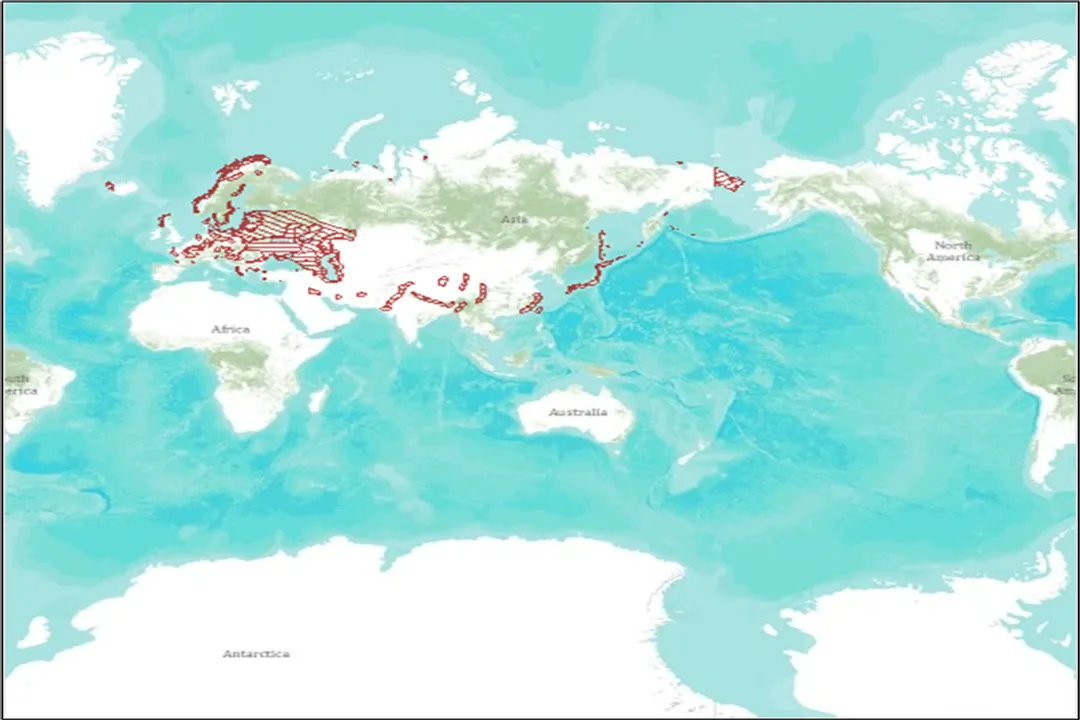
While English speakers often default to the name White-Tailed Eagle, it is part of a wider group often referred to as Sea Eagles. [2][5] This majestic creature has an extensive distribution, historically sweeping across much of Eurasia and into Northern Africa. [4] Its association with water bodies is strong, making coastal areas, sea lochs, and significant inland freshwater systems prime habitats. [1][2][8] For instance, in Ireland, populations have established themselves, particularly along the west coast, with a notable presence in County Kerry. [3]
When considering where to spot one, understanding their general preference for large open spaces near water is useful. If you find yourself in a region like Western Scotland, observing the coastline or the vicinity of large sea lochs offers the best chance, thanks to successful reintroduction efforts that have seen their numbers climb. [1][8]
# Physical Attributes
A fully grown White-Tailed Eagle is a heavy bird, typically weighing between 4 and 6.8 kilograms. [7] Males are generally slightly smaller than females, a common characteristic among raptors. Their massive wingspan is crucial for their hunting style, allowing them to cover vast distances while searching for food. [1][7]
One might compare their bulk to that of a very large buzzard, though the eagle’s sheer size and broad, paddle-like wings set it apart when seen in flight. [3] The tail structure—broad at the base and tapering to a distinct wedge shape—is a reliable feature for identification, even from a distance. [3][4]
| Feature | Typical Male Measurement | Typical Female Measurement |
|---|---|---|
| Length | Up to 80 cm | Up to 90 cm |
| Wingspan | Up to 2.3 meters | Up to 2.45 meters |
| Weight | Approximately 4 kg | Up to 6.8 kg |
| Plumage (Adult) | Dark brown body, pale head | Dark brown body, pale head |
| Beak/Legs (Adult) | Bright Yellow | Bright Yellow |
| [1][4][7] |
It is worth noting that the appearance shift during adolescence can sometimes lead to misidentification. A younger bird, lacking the bright white tail and having a darker overall look, might be mistaken for a different large raptor until it matures, a process that takes several years. [6]

# Diet and Hunting
The diet of the White-Tailed Eagle shows a strong reliance on aquatic resources, which is why they are so frequently tied to coastal environments. [1][2] Fish forms the staple component of their menu. [1][2][3] They are skilled hunters, often observed using their excellent vision to spot prey while soaring high above the water. [4] When a target is identified, they descend in a powerful stoop to snatch it from the surface or shallow water. [4]
However, they are not strictly piscivorous; they are opportunistic feeders. [5] Their diet supplements include seabirds, various waterfowl, and even small mammals such as rabbits and rodents found near their hunting grounds. [1][2][5] Furthermore, like many large scavengers, they readily take advantage of carrion when available. [2][5] This adaptability in diet is a significant factor in their survival, especially when primary food sources become scarce during harsh weather or specific seasons. If you monitor a nest site, for example, you might notice a shift in the type of debris left behind—a predominance of fish bones in summer might give way to more fur or feathers during winter months when sea ice or rough weather makes fishing more difficult.
# Breeding Habits
White-Tailed Eagles construct truly impressive nests. These structures are substantial, often built high up in large trees or secured on inaccessible sea cliffs. [1][3] The sheer size of the nest reflects the bird's longevity and commitment to a location; these eyries are reused year after year, with the pair adding new material annually, causing the structure to grow immensely over time. [1]
The breeding cycle begins with the female typically laying between one and three eggs. [1][6] An interesting aspect of their reproductive biology is asynchronous hatching; the chicks do not all emerge at the same time, usually leading to an age gap between the oldest and youngest sibling. [6] This disparity often means the first-hatched chick has a considerable advantage in receiving food from the parents. The young birds are entirely dependent on their parents for quite some time, requiring about ten to twelve weeks before they fledge—that is, take their first flight from the nest. [6] This long dependency period requires a stable food supply throughout the spring and summer. [6]
# Conservation History
The history of the White-Tailed Eagle in many parts of its range is unfortunately one marked by decline, largely due to human activity. [2][6] Widespread persecution, combined with the devastating effects of organochlorine pesticides like DDT, severely reduced their numbers throughout the mid-20th century. [2][6] These chemicals accumulated in the food chain, leading to thin eggshells and reproductive failure. [6]
Fortunately, strong conservation efforts have brought this magnificent bird back from the brink in several areas. [2] Reintroduction projects, particularly those undertaken in Scotland, have proven highly successful, leading to a significant recovery of their population across the country. [1][8] While progress is evident, the species is still globally listed as Near Threatened. [2] This status serves as a reminder that vigilance is required to protect their habitats and ensure their continued recovery, especially from ongoing threats like accidental poisoning or nesting disturbance. [2] Continued monitoring of breeding success and pollution levels remains key to securing their future.
# Comparison: Sea Eagle vs. Golden Eagle
While often confused by the general public, the White-Tailed Eagle and the Golden Eagle are distinct species that sometimes share territory, though their preferences differ. The White-Tailed Eagle strongly prefers coastal or large freshwater environments due to its diet, whereas the Golden Eagle tends to favor upland, mountainous, or moorland areas. [2][8]
The physical differences are usually clear when seen up close. The White-Tailed Eagle has its characteristic pale head and large, relatively blunt, yellow bill, along with that distinct pale, wedge-shaped tail. [4] The Golden Eagle, conversely, has a darker head, a darker, more hooked bill, and a more slender, fan-shaped tail. [2] Observing their flight patterns can also offer clues: the White-Tailed Eagle often appears more buoyant, using broader wing beats, while the Golden Eagle is frequently seen soaring on thermals with a more deliberate, soaring posture. [4] Recognizing these differences helps birdwatchers appreciate the distinct niches these two apex predators occupy within the landscape.
Related Questions
#Citations
White-Tailed Eagle Facts | Haliaeetus Albicilla - RSPB
White-tailed Sea-eagle | The Peregrine Fund
White-tailed Sea Eagle facts - Glengarriff Nature Reserve
Fascinating Facts About White-tailed Eagles - Hawk and Owl Trust
White-tailed Eagle - Roy Dennis Wildlife Foundation
White-Tailed Eagle - Facts, Diet, Habitat & Pictures on Animalia.bio
Sea Eagle Elucidation: 5 Essential White-Tailed Eagle Facts
White-tailed eagle | Scottish Wildlife Trust
White-tailed eagle guide: what they eat, why they went extinct in the ...