How is the large, hooked bill of the Wandering Albatross adapted for consuming slippery prey?
Answer
Tearing flesh and gripping slippery prey like squid
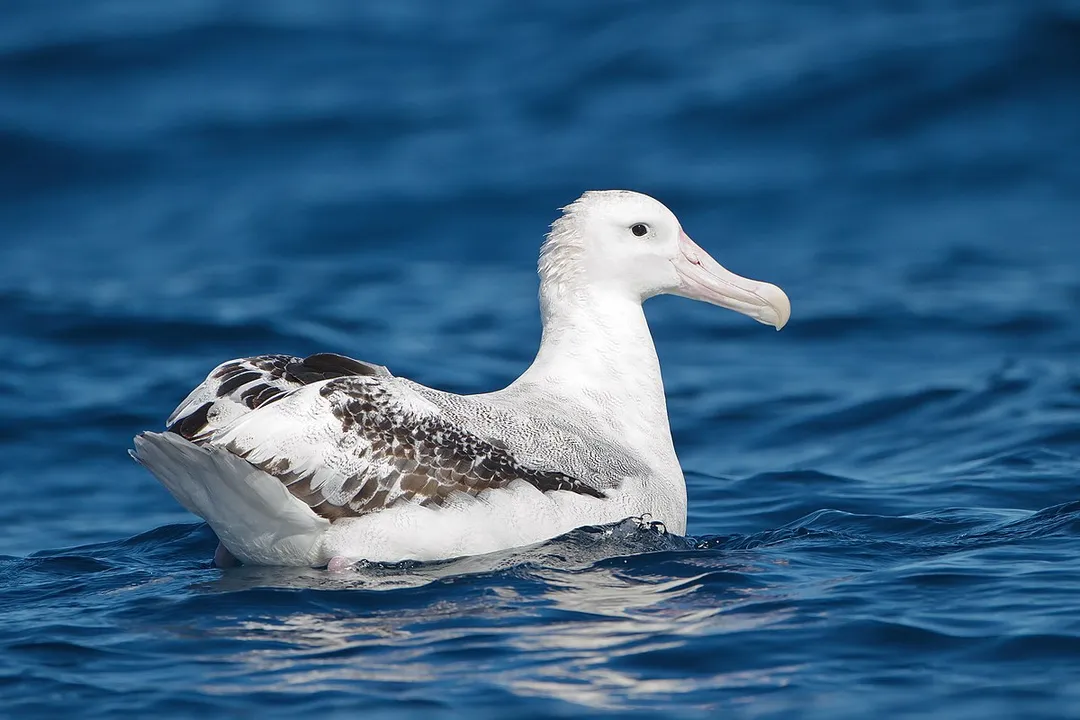
The physical structure of the Wandering Albatross includes a large, distinctly hooked bill, which is a key adaptation tailored to its preferred diet. This morphology provides the necessary leverage and strength required for two primary actions related to feeding. First, it allows the bird to effectively tear into the flesh of larger marine organisms. Second, the curvature and strength of the bill enable it to securely grip slippery prey, such as the soft-bodied cephalopods (squid) that constitute a significant portion of its intake, preventing the meal from escaping during retrieval from the water surface.
Related Questions
What is the dual vital function of the stomach oil produced by Diomedea exulans?What three main groups constitute the staple diet components for the Wandering Albatross?Which feeding technique do Wandering Albatrosses primarily employ rather than deep diving?Where are the salt glands located that enable the albatross to excrete excess salt concentrate?How is the large, hooked bill of the Wandering Albatross adapted for consuming slippery prey?What critical factor regarding prey intake is deemed more important than the volume consumed daily for sustained flight?In which specific internal organ does the Wandering Albatross store the highly concentrated stomach oil?What significant danger arises for Wandering Albatrosses that consume fishery discards?What common upper range for the wingspan of the Wandering Albatross is referenced when discussing foraging efficiency?Why does prey found beyond the immediate photic zone contribute less to the albatross's daily energy budget?