What common upper range for the wingspan of the Wandering Albatross is referenced when discussing foraging efficiency?
Answer
3.5 meters
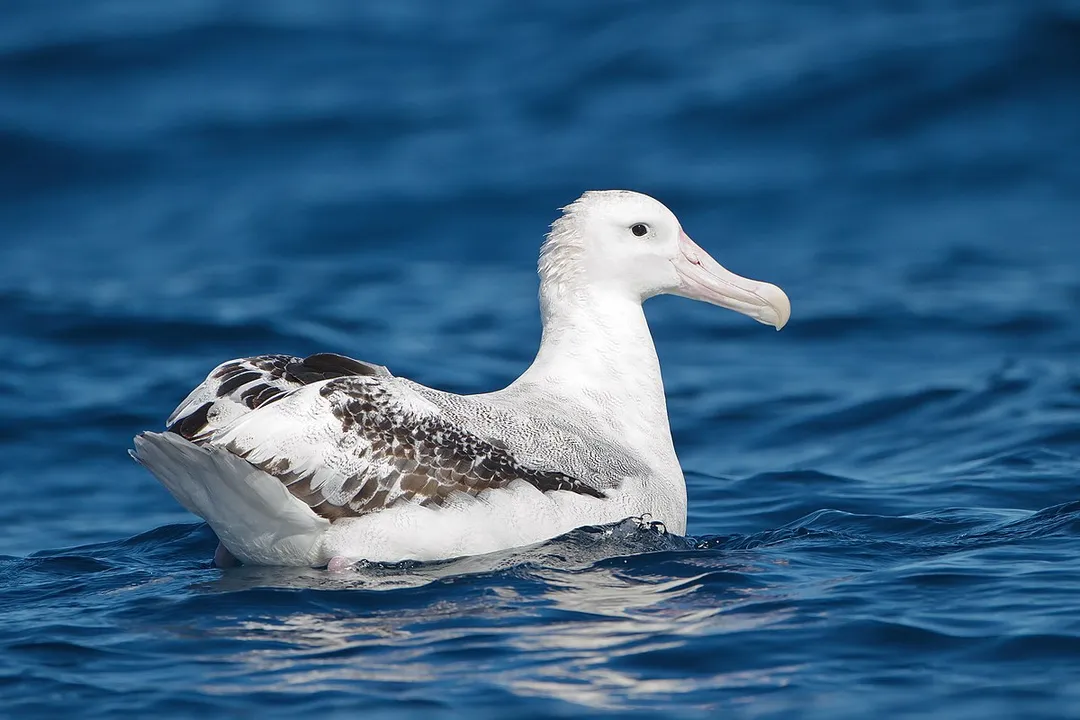
The physical attributes of the Wandering Albatross, specifically its massive wingspan, directly influence its energy conservation strategy during foraging over vast oceanic distances. While the text notes the maximum recorded wingspan is nearly 11 meters, it specifies that the more common upper range frequently referenced in discussions of flight efficiency and energy expenditure calculations is 3.5 meters. This large span allows for phenomenal energy conservation during gliding, meaning that the caloric density of the food they consume must be high enough to sustain a lifestyle that requires covering thousands of kilometers between successful feeding bouts.
Related Questions
What is the dual vital function of the stomach oil produced by Diomedea exulans?What three main groups constitute the staple diet components for the Wandering Albatross?Which feeding technique do Wandering Albatrosses primarily employ rather than deep diving?Where are the salt glands located that enable the albatross to excrete excess salt concentrate?How is the large, hooked bill of the Wandering Albatross adapted for consuming slippery prey?What critical factor regarding prey intake is deemed more important than the volume consumed daily for sustained flight?In which specific internal organ does the Wandering Albatross store the highly concentrated stomach oil?What significant danger arises for Wandering Albatrosses that consume fishery discards?What common upper range for the wingspan of the Wandering Albatross is referenced when discussing foraging efficiency?Why does prey found beyond the immediate photic zone contribute less to the albatross's daily energy budget?