What type of potent defensive compounds do Oleander aphids incorporate from oleander and milkweeds?
Answer
Cardenolide glycosides
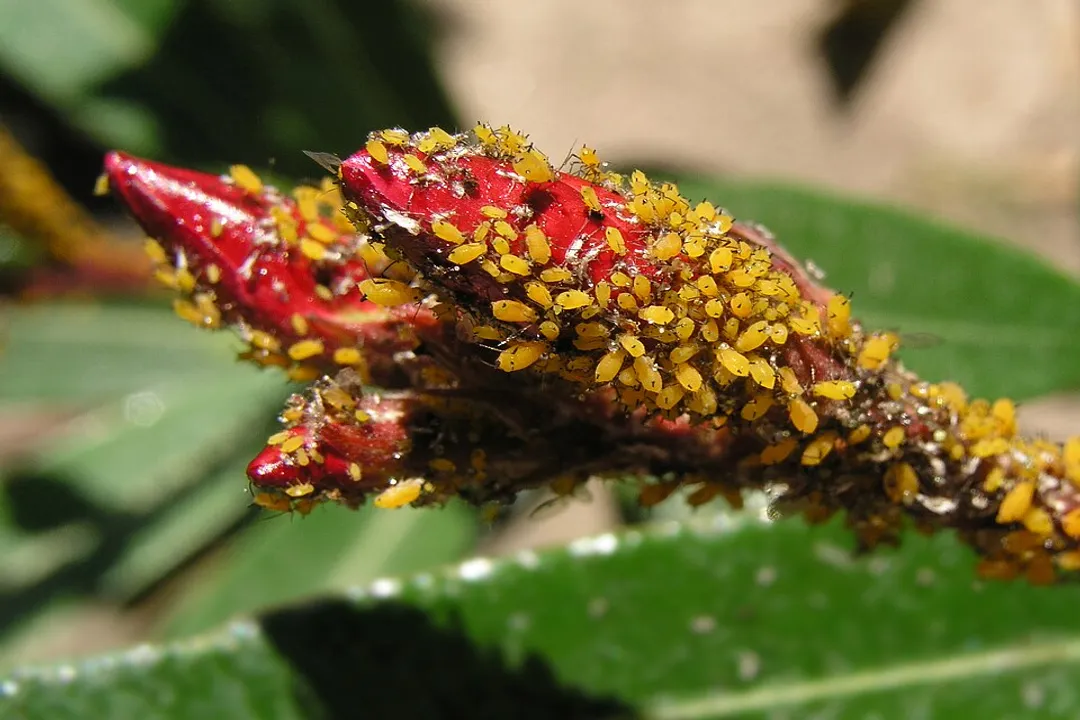
A highly specialized defense mechanism employed by the Oleander aphid involves chemical sequestration derived directly from its primary host plants, which include oleander and various milkweeds. These plants naturally contain powerful defensive compounds known chemically as cardenolide glycosides. These compounds function effectively as cardiac poisons against many potential herbivores. The aphid sequesters these toxins, incorporating them into its own tissues, rendering it toxic to many predators. This toxicity is made apparent via its bright yellow coloration, which serves as a warning signal, and the aphid also fortifies its sugary honeydew excretion with these bitter defensive chemicals.
Related Questions
What color are the legs, antennae, and siphunculi of wingless Aphis nerii?Which characteristic distinguishes the yellow pecan aphid (Monelliopsis pecanis) from Aphis nerii?What reproductive terms describe A. nerii's method of rapid colony growth?What type of potent defensive compounds do Oleander aphids incorporate from oleander and milkweeds?What visible consequence results from the aphids excreting excess honeydew on leaves?What is the result when the parasitic wasp Lysiphlebus testaceipes targets an immature A. nerii?Where does the black margined aphid (M. caryella) primarily feed on pecan leaves?Which two primary plant families show a strong host preference for the Oleander aphid, Aphis nerii?What color markings characterize the head and thorax of winged A. nerii adults (alatae)?Why must pecan growers rotate insecticides according to Mode-of-Action Group Numbers?What term describes the bright yellow coloration of A. nerii when used as a warning signal to predators?