What type of genetic trait governs the striking lack of orange pigmentation in white tigers?
Answer
A single recessive trait requiring inheritance from both parents.
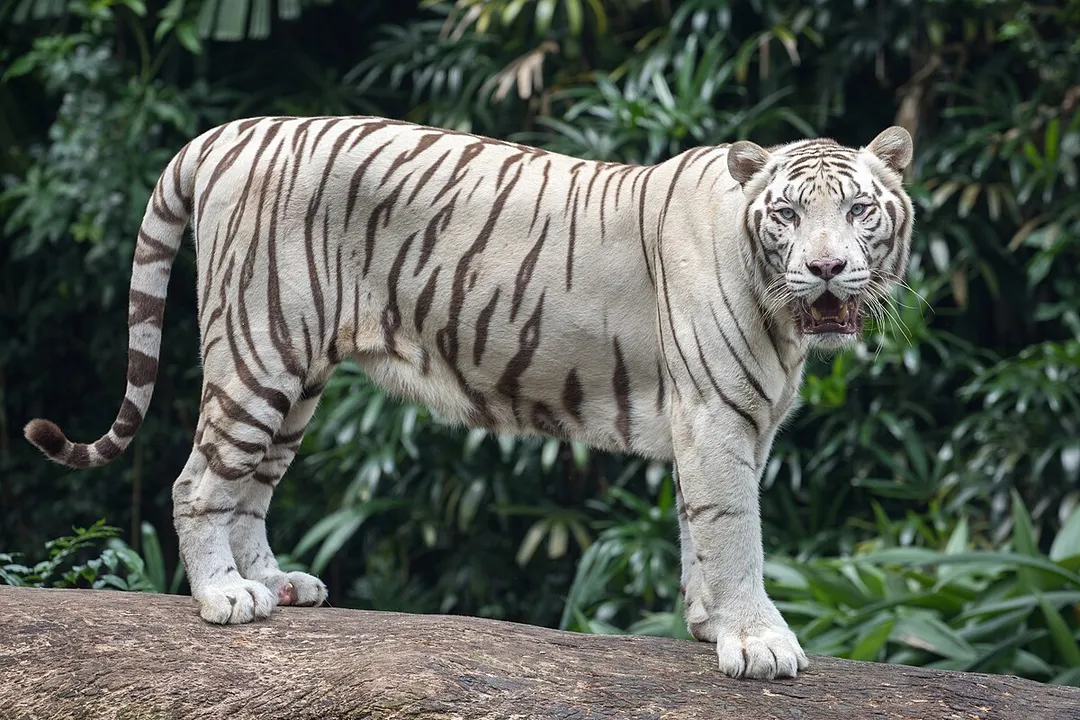
The unique white coat coloration is determined by a single gene that operates under recessive inheritance patterns. For a tiger to display the white coat, it must inherit two copies of the necessary recessive allele, one from each parent. If the tiger inherits only one copy of this recessive allele and one copy of the dominant allele (which codes for the standard orange color), the tiger will appear phenotypically normal (orange) but will carry the hidden gene. This requirement for two copies of the recessive allele means the trait is rare unless breeders actively manage for its expression by pairing carriers.
Related Questions
What classification describes white tigers relative to Panthera tigris tigris?What type of genetic trait governs the striking lack of orange pigmentation in white tigers?Which specific gene is identified as responsible for regulating pheomelanin production in white tigers?The SLC45A2 gene mutation primarily blocks the full development of which pigment in white tigers?How does natural selection affect the survival of the white coat trait in wild habitats?From which historical region did almost all reports of wild white tigers originate?What process primarily caused the frequency of the white coat gene to increase beyond its natural equilibrium?What immediate consequence resulted from breeders intensely seeking the rare recessive white coat gene?Health defects like strabismus in captive white tigers are caused by what underlying issue?Which specific health ailment is listed among the documented defects arising from intensive inbreeding in white tigers?