How does natural selection affect the survival of the white coat trait in wild habitats?
Answer
It imposes a slight disadvantage due to poor camouflage.
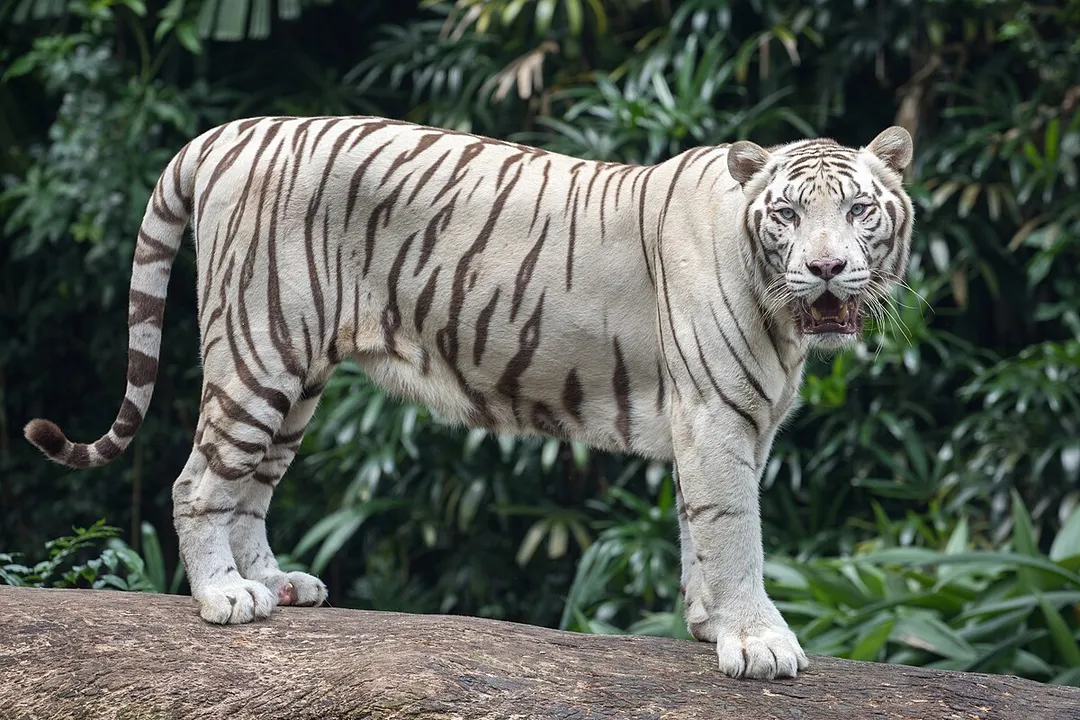
In natural environments, the forces of natural selection tend to suppress the propagation of the white coat trait. Standard orange and black patterning provides superior cryptic coloration, allowing tigers to effectively camouflage themselves within varied backdrops such as dense foliage or dappled light conditions, which is essential for stalking prey. A pure white coat, conversely, stands out significantly against most natural settings. This increased visibility makes it harder for the white tiger to successfully hunt and may increase its vulnerability to detection by prey or rivals, thereby imposing a survival disadvantage that keeps the trait rare in the wild.
Related Questions
What classification describes white tigers relative to Panthera tigris tigris?What type of genetic trait governs the striking lack of orange pigmentation in white tigers?Which specific gene is identified as responsible for regulating pheomelanin production in white tigers?The SLC45A2 gene mutation primarily blocks the full development of which pigment in white tigers?How does natural selection affect the survival of the white coat trait in wild habitats?From which historical region did almost all reports of wild white tigers originate?What process primarily caused the frequency of the white coat gene to increase beyond its natural equilibrium?What immediate consequence resulted from breeders intensely seeking the rare recessive white coat gene?Health defects like strabismus in captive white tigers are caused by what underlying issue?Which specific health ailment is listed among the documented defects arising from intensive inbreeding in white tigers?