White Tiger Locations
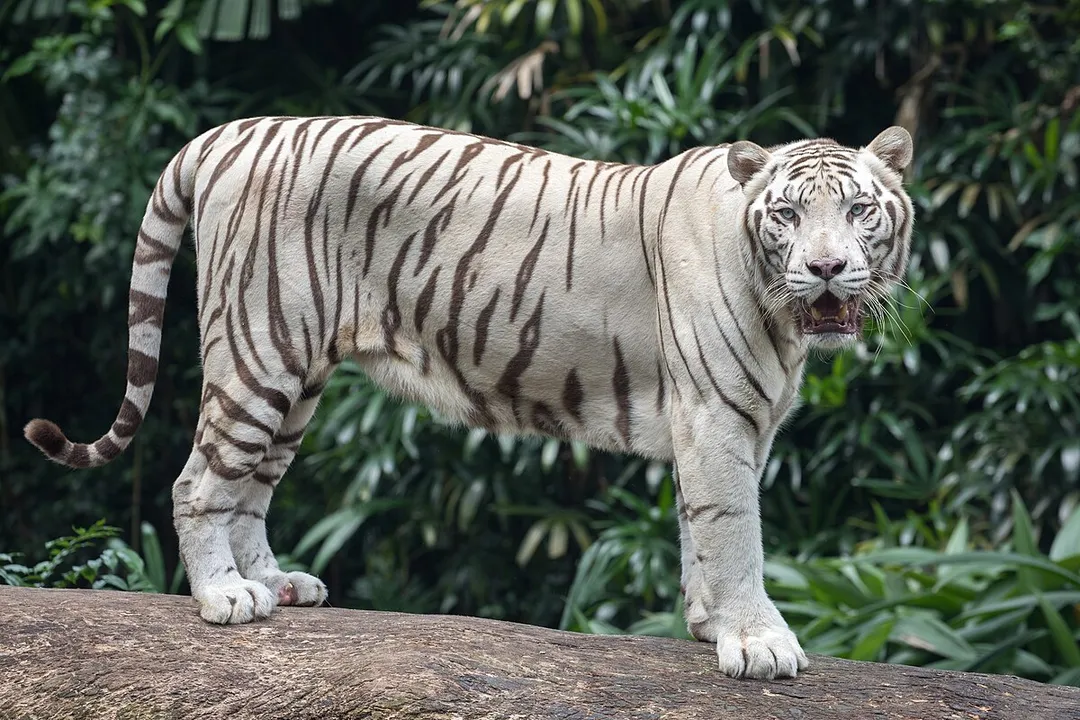
The quest to locate a white tiger is one that takes one on a peculiar journey, one that quickly shifts from the wild jungles of the past to the controlled enclosures of the present. These breathtaking animals, instantly recognizable by their ghostly coats and piercing blue eyes, are far more than just a color variation; their very existence is a story woven from rare genetics, historical captures, and ongoing controversy in animal welfare. To speak of white tiger locations is not to chart migratory routes across the Indian subcontinent anymore, but rather to examine where they are held and why they are there.[1][3][4]
# Rarity Genetics
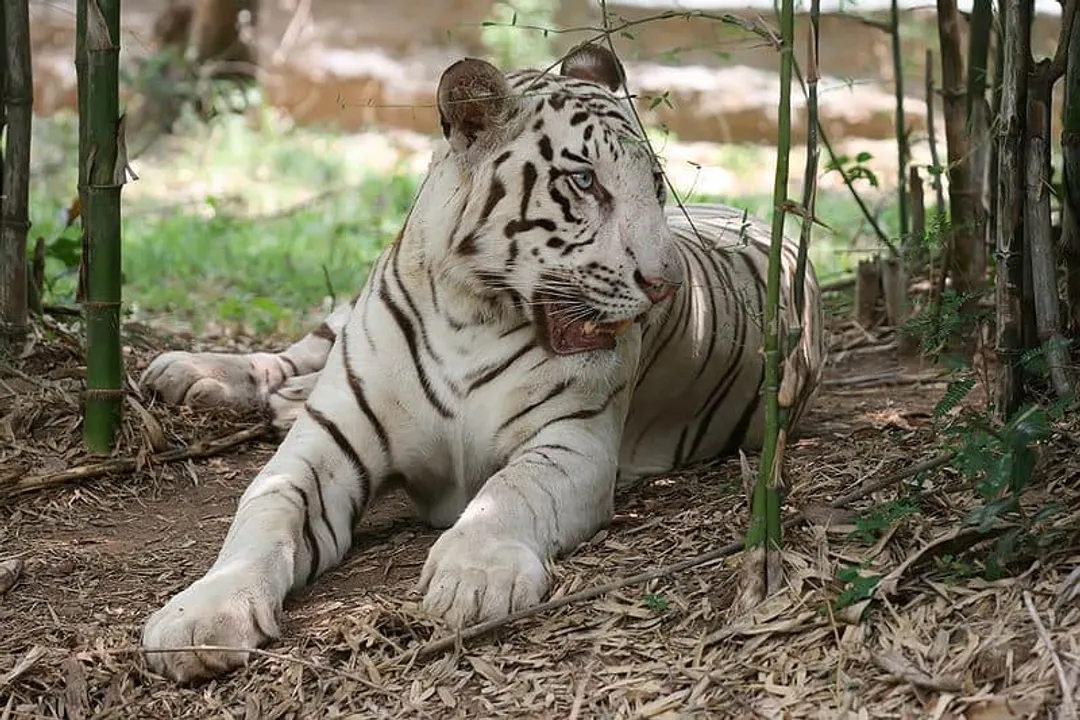
What makes a white tiger a white tiger is not albinism, a condition characterized by a total lack of melanin resulting in pink eyes, but rather a condition called leucism, caused by a specific genetic quirk. [3] Scientifically, white tigers are typically a leucistic morph of the Bengal tiger (Panthera tigris tigris), although some have been bred with Siberian tigers (Panthera tigris altaica). [3][7] This distinctive white coloration stems from a point mutation in the SLC45A2 transport protein gene, which prevents the expression of the pigment pheomelanin, responsible for the orange hue in their orange counterparts. [4][7] This trait is recessive, meaning both parents must carry the gene for a white cub to be born. [4][8] In nature, this unusual coloration is a significant disadvantage, as the lack of typical camouflage reduces their ability to stalk prey or evade threats, contributing to their extreme rarity. [3][7] Historically, the chance of such a gene expressing itself naturally in the wild was estimated to be only about once in every 10,000 births. [3][4] The stripes themselves are patterns of skin pigmentation, meaning they would remain visible even if the animal were shaved. [4]
# Historical Range India
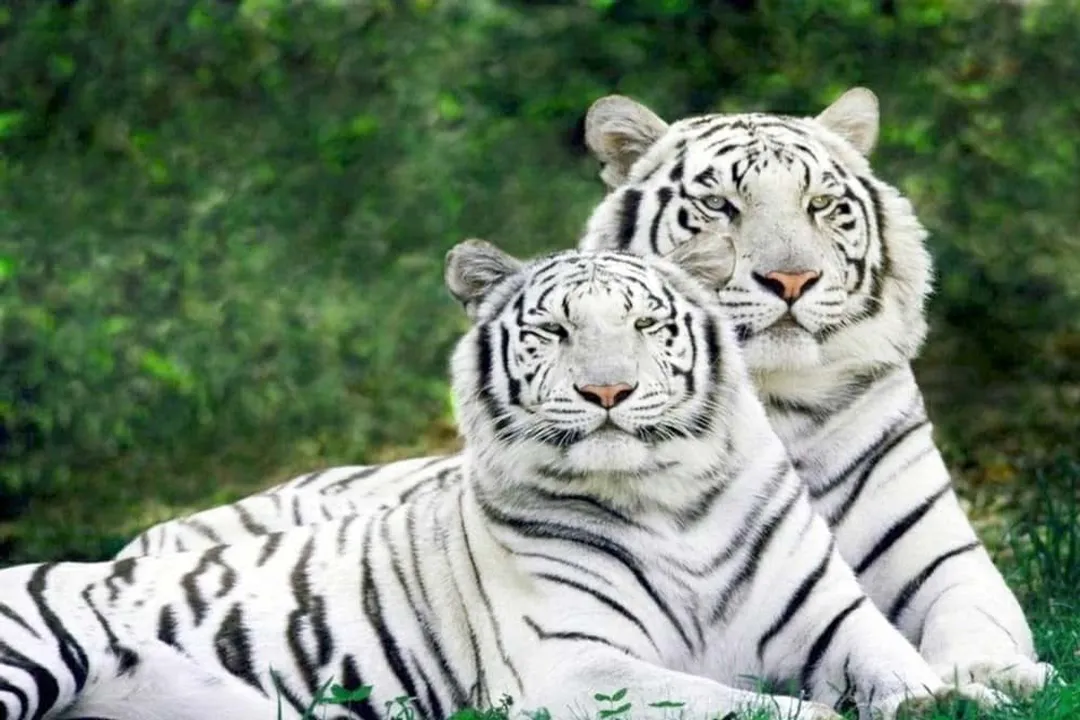
When white tigers did appear in the wild, their location was heavily concentrated in the Indian subcontinent. [3] Historical reports place these unique animals across the forests and wetlands that constituted the historical range of the Bengal tiger: India, Bangladesh, Nepal, and Bhutan. [3][7] Within India, certain regions have been particularly noted for producing these rare cats. [8] The state of Madhya Pradesh is strongly associated with the white tiger's heritage, alongside areas like Assam, West Bengal, Bihar, and Odisha. [8] The former princely State of Rewa within Madhya Pradesh is repeatedly cited as a historical hotspot where they were observed and occasionally captured. [4][8] White tigers were documented in India as far back as the 16th century CE. [4]
# Last Sightings
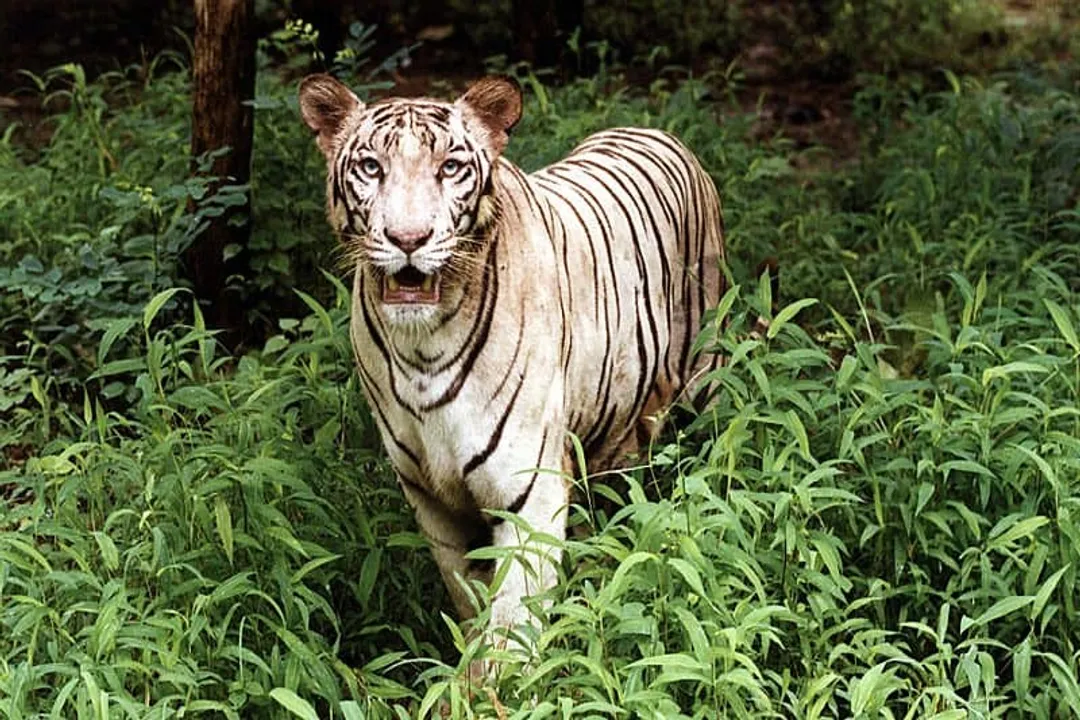
The era of the wild white tiger has sadly concluded. According to multiple accounts, the last confirmed sighting of a white tiger in the wild was in 1958, when one was shot. [3][4][7] Since that time, these magnificent creatures have existed exclusively in captivity. [3][7] This moment marked a definitive shift in the "location" of the white tiger from natural preserves to human care. The story of modern captive white tigers almost always traces back to one individual: Mohan. [4] Mohan, a white tiger cub, was captured in 1951 from the forests of Mukundpur, in the Sidhi district, an area that is now part of the Sanjay Dubri Tiger Reserve. [4][8] The Maharaja of Rewa captured him and subsequently used him in breeding programs. [8] Today, a substantial portion of the global white tiger population is directly descended from Mohan, resulting in a severely limited and inbred gene pool. [4][7]
# Captive Populations Global
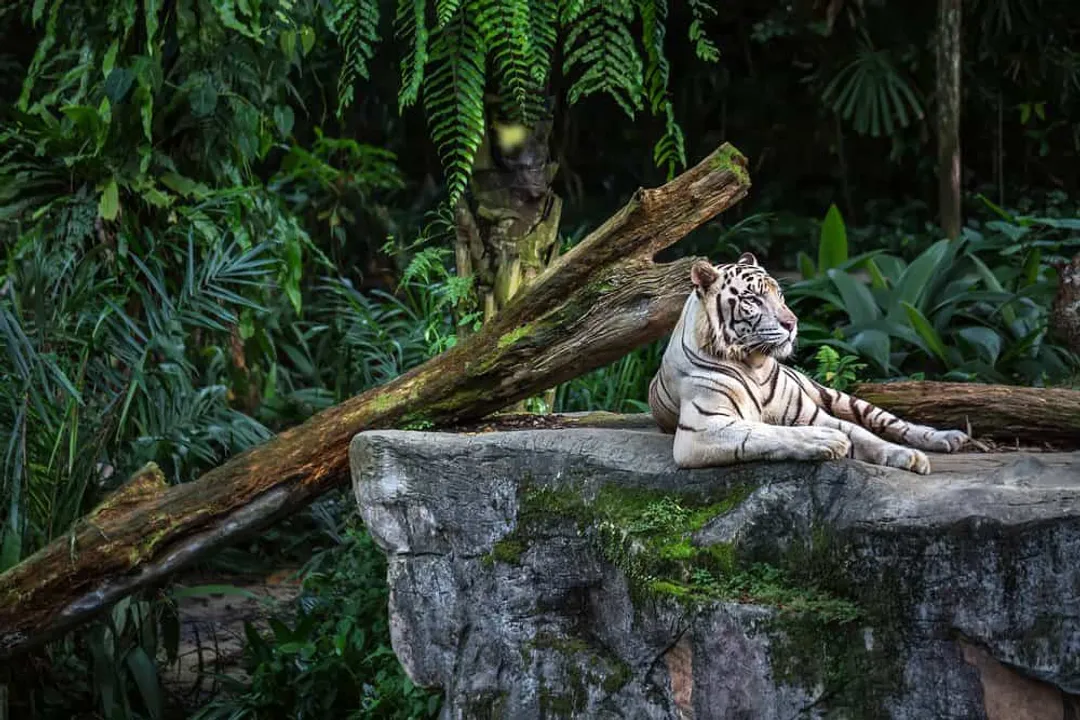
Because they no longer survive in their natural environments, white tigers today are found only in zoos, circuses, private residences, and various rescue sanctuaries around the world. [3] While exact figures fluctuate, current estimates suggest that there are approximately 200 white tigers held in captivity globally. [3][7] India itself is home to about a hundred of these animals, meaning half the world's captive population resides there. [3][4] The United States also maintains a significant number within its zoos and theme parks, though some reports place the US captive total near 5,000 when considering all private collections, which contrasts with the general global count of 200. [7] The larger, accredited zoo systems, such as those adhering to the Association of Zoos and Aquariums (AZA) standards, have largely ceased breeding them intentionally due to genetic concerns. [4]
# Indian Zoos Viewing
For those seeking to view these striking animals, the search must focus on specific captive facilities, primarily within India where a significant number remain. [1][3] Several prominent zoological parks in India have historically housed or currently feature white tigers:
- Alipore Zoological Garden in Kolkata, West Bengal, dating back to 1875, is one such location. [1]
- The National Zoological Park (Delhi Zoo) in New Delhi has a dedicated enclosure for them. [1]
- Nandankanan Zoological Park in Bhubaneshwar, Odisha, is particularly famous for hosting a White Tiger Safari designed to mimic natural surroundings. [1]
- The Sri Chamarajendra Zoological Garden in Mysuru has been noted for housing specific white tigresses. [1]
- Arignar Anna Zoological Park (Vandalur Zoo) in Tamil Nadu, one of India’s largest, also includes rare white tigers among its inhabitants. [1]
- Nehru Zoological Park in Hyderabad is another noted spot where visitors might catch a glimpse. [1]
It is worthwhile for a prospective visitor to note that the prime viewing times in these locations are often early morning or late afternoon, coinciding with cooler temperatures or feeding times, as this is when the cats are more active. [1]
# Breeding Controversy
The primary location for the modern white tiger is not a physical geography, but a breeding program—one that conservationists frequently condemn. [3][4] The drive to produce white tigers for exhibition and revenue has resulted in nearly all captive white tigers being the descendants of Mohan, who were bred through intense inbreeding to ensure the recessive gene was expressed. [7][4] This practice brings significant welfare concerns. It is widely reported that around 80% of white tiger cubs bred this way die shortly after birth, and survivors often suffer from severe genetic defects, including strabismus (crossed eyes), spinal deformities, hip dysplasia, and immune system deficiencies. [3][4] The visual pathway abnormality linked to the white gene even causes reduced spatial orientation and photophobia. [4]
One must pause and consider the true nature of these "locations." While a zoo in New Delhi or Kolkata offers a viewing opportunity, the experience is fundamentally different from seeing a truly wild tiger in a protected reserve. [3] When observing a white tiger, one is often looking at an animal whose very existence is tied to a practice that compromises its health, rather than one that serves a genuine conservation purpose for the Bengal tiger subspecies, which is endangered. [3][7] The very conditions that make them desirable—their striking, non-camouflaged appearance—are what made them vulnerable in the wild and what makes their captive breeding program unsustainable from a welfare standpoint. [3]

# Final Habitat Reality
The discussion around white tiger locations ultimately circles back to a conservation paradox. While the last wild sighting was over sixty years ago, there are still hundreds held captive, many in India. [3][7] The fact that there are roughly 200 white tigers in captivity compared to approximately 3,500 Bengal tigers remaining in the wild across India highlights a curious allocation of resources and attention. [7] Conservationists argue that the focus, money, and breeding efforts should be directed toward maintaining the genetic diversity and protecting the habitat of the truly wild, orange Bengal tigers, rather than perpetuating a visually appealing but genetically challenged line for exhibition. [3][7] If you visit a facility showcasing a white tiger, it is essential to observe not just the animal’s beauty, but also the quality of its environment and whether the facility prioritizes welfare over profit, or if it is a self-sustaining rescue operation taking in animals from bad situations, like the one in Spokane, Washington, noted for providing a "forever home" to an aging white tiger named Nalin. The most crucial location for the white tiger's future is not a new geographical area, but rather the legitimate, accredited sanctuaries that can ensure the health of the remaining individuals without engaging in further detrimental breeding practices. [3]
Related Questions
#Citations
White tiger - Wikipedia
White Tigers: Facts, Threats, & Conservation | IFAW
White Tiger - Official Conan Exiles Wiki - Fandom
r/korea - Map that shows the recorded locations of wild white tigers ...
How Many White Tigers Are Left in the World? - A-Z Animals
All about White Tigers in India - Bandhavgarh National Park
Chasing the Rare: Top Destinations for Spotting White Tigers in India
White Tigers - Cat Tales Wildlife Center