The entire Potamotrygon genus shares which significant evolutionary accomplishment regarding habitat?
Answer
Adaptation to purely freshwater existence
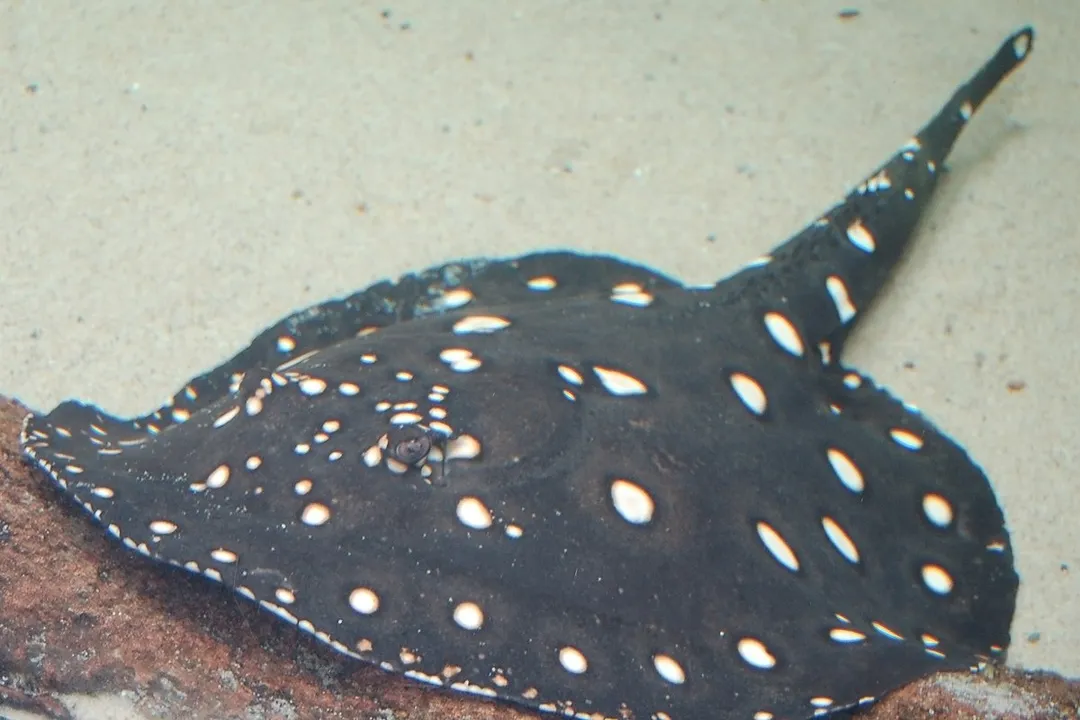
A defining feature of the entire *Potamotrygon* genus, which includes the Xingu River Stingray, is their significant evolutionary accomplishment of having adapted to live exclusively in freshwater environments. This adaptation sets them apart from their marine relatives. This transition necessitated major shifts in fundamental physiological processes, such as osmoregulation—the critical balance of salt and water within the body—which represents a major hurdle overcome by these freshwater pioneers. Their entire morphology, including aspects of their life cycle and sensory capabilities, is finely tuned for the demands of flowing river currents rather than the consistent salinity of the ocean.
Related Questions
What specific pattern defines the Xingu River Stingray, Potamotrygon leopoldi?Which major river system is the Xingu River identified as a tributary of?What type of diet does the Xingu River Ray specialize in, concerning its prey?How did scientists determine the age of P. leopoldi individuals in research studies?What evolutionary concept is suggested by distinct morphological traits evolving between Xingu ray populations separated by short distances?What major infrastructural development poses a fundamental threat to the evolutionary conditions shaped in the Xingu River?The entire Potamotrygon genus shares which significant evolutionary accomplishment regarding habitat?Geographical separation over evolutionary timescales results in what ecological phenomenon within the Xingu basin?What is the evolutionary trade-off associated with the slower growth and maturity observed in long-lived P. leopoldi?What is the primary function of the distinct coloration in the Xingu Ray's morphology?