Are X-Ray Tetras endangered?
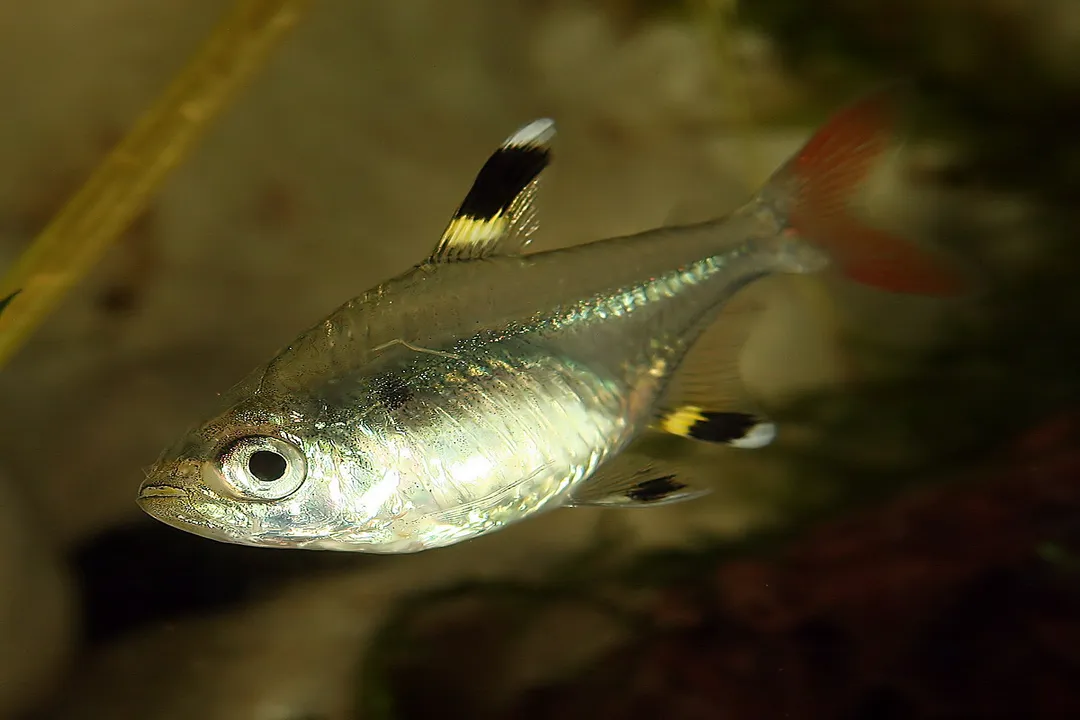
The silvery, somewhat transparent fish often seen swimming near the surface of tropical aquariums is the X-Ray Tetra, scientifically known as Pristella maxillaris. [1][7] This small characin is instantly recognizable due to its unique physical characteristic: a body so clear that one can observe its internal skeletal structure and organs, giving rise to its evocative common name. [3][4][5] Beyond this singular visual appeal, the X-Ray Tetra holds a place in the aquarium hobby thanks to its hardiness and active schooling nature. [2][6] While its visibility in tanks worldwide might suggest an overwhelming population, understanding the status of wild populations requires looking closely at where it originates and how it is sustained in global commerce.
# Transparency Key
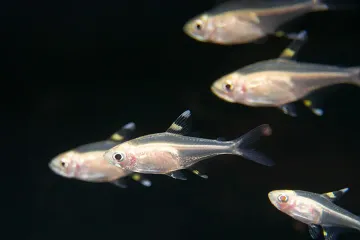
The signature feature of the Pristella maxillaris is undeniably its near-translucence. [3][5] Its body lacks dense pigmentation, especially along the sides, which permits a view of the spinal column, swim bladder, and other internal anatomy. [3] This transparency is not absolute; the fish typically possesses a smoky or yellowish tint, and its fins, particularly the dorsal and caudal fins, often display bright coloration, frequently reddish or yellowish. [1][8] They are small fish, generally growing to about one inch in length, though some reports suggest they can reach up to 1.5 inches. [8][9] Males and females look very similar, which can make sexing the fish tricky for the casual observer. [9]
The specific anatomy visible through the skin is what truly captures attention. For hobbyists interested in biology, the X-Ray Tetra acts as a living, small-scale model of fish anatomy. [4] Their small size means they are often grouped together, and when several are kept in a well-lit tank, the collective shimmer of their transparent forms moving through the water creates a distinctive visual effect. [5]
# Native Range
The origins of this popular aquarium resident trace back to specific regions within South America. [1][6] The primary native distribution area includes the Orinoco River basin and waters in Guyana. [1][6] Furthermore, their range extends into the Amazon basin. [1] These environments are characterized by freshwater systems, which dictates the necessary conditions for their care outside the wild. [2]
The species is generally reported to inhabit warmer, slightly acidic waters, typical of many South American tetras. [2] This distribution across major river systems in Northern South America suggests a relatively broad, though geographically confined, natural range. [1] When considering the conservation status of any wild population, the health and extent of these native habitats—the Orinoco and Amazon systems—become critically important factors. [6]
# Conservation Review
Determining whether a species like the X-Ray Tetra is officially endangered or threatened relies heavily on assessments performed by bodies like the International Union for Conservation of Nature (IUCN) Red List. Reviewing the available information from resources detailing the fish’s biology and trade reveals a pattern common to many successful aquarium exports: there is no indication from these sources that Pristella maxillaris is currently classified as endangered [1] through. [9] In fact, the known distribution suggests a relatively widespread natural population across several major river systems in South America. [1]
If a species were facing significant decline, sources discussing its biology and trade often mention habitat loss, overfishing, or specific environmental threats associated with its native range. The collective information provided here focuses instead on its successful establishment in the aquarium trade and its broad geographical distribution. [1][6]
This is where we can pause to consider an observation based on citizen science data. Platforms that aggregate observations from hobbyists and field researchers, such as iNaturalist, catalogue records of Pristella maxillaris. [7] While this data primarily reflects where people see the fish, either captive or wild, a consistent record of observations across its wide native range, coupled with its historical popularity, generally points toward a species that is not currently facing immediate, catastrophic risk across its entire distribution. [7] In the context of global conservation watch lists, widespread species that thrive in diverse yet connected river systems are usually categorized as "Least Concern" unless localized pressures are overwhelming, though this specific categorization is not confirmed in the provided data.
# Aquarium Presence
The high volume of X-Ray Tetras available in the global pet trade strongly suggests that the vast majority of fish sold today are captive-bred rather than wild-caught. [2] This is a significant factor in assessing the pressure on wild stocks. When a species is successfully bred in high numbers in controlled aquaculture facilities, the demand for wild specimens generally decreases, which acts as a buffer against over-harvesting in their native rivers. [2] The fish’s reputation for being relatively easy to breed in aquariums contributes to this stability, making them a reliable source for suppliers. [2][9]
For instance, many tetras require specific water chemistry or breeding triggers that make mass production difficult. The X-Ray Tetra, while having preferences, is adaptable enough for commercial breeders to maintain steady production lines. [2]
An insightful point for long-term hobbyists relates directly to this captive success. If one were tracking the market, they might notice that the intensity of the red or yellow coloration in fins can sometimes correlate with the sophistication of the breeding line. Fish sourced from high-quality, established hatcheries often display more vibrant colors than those recently collected from wild populations due to generations of selective pressure for visual appeal in the domestic market.
Their schooling behavior—they prefer to be kept in groups of six or more—also contributes to their sustained commercial viability, as they are more desirable when purchased in quantity. [6]
# Wild Stability Factors
Considering the environmental pressures facing major river systems worldwide, the stability of any wild population hinges on more than just a broad historical range. The health of the Orinoco and Amazon tributaries where Pristella maxillaris lives is paramount. [1] While these river basins face challenges from pollution, development, and climate change, the tetra’s presence across them provides a degree of resilience.
Contrast this with a species restricted to a single, small tributary; the loss of that single habitat would immediately translate to extinction risk. [4] The X-Ray Tetra’s association with multiple large systems offers inherent demographic buffering. If one section of the Orinoco experiences a localized environmental collapse, populations in the neighboring Amazonian tributaries might remain healthy, maintaining the species' overall viability. [1]
Another crucial element is the X-Ray Tetra’s behavior in the wild. They are surface and mid-water dwellers. [8] Understanding their specific ecological niche—what they eat and what preys on them—is key to modeling population dynamics, but the provided sources do not delve into this level of ecological detail. However, their relative abundance in historical records suggests they were a successful part of their local food web. [6]
When examining the practical side of aquarium keeping, there is a subtle but important distinction related to conservation. While captive breeding alleviates direct pressure from collection, the maintenance of healthy, sustainable breeding stock relies on genetics.
A practical tip stemming from this aquaculture reality is to occasionally source fish from different breeders, even if they are all labeled as X-Ray Tetras. This practice, akin to genetic diversity management, helps ensure that the hobby retains lines with robust traits, minimizing the chances of inbreeding depression affecting the captive population's overall health, indirectly supporting the stability of the trade that keeps wild collection low.
Ultimately, the current information suggests that while the specific IUCN listing is not present in these direct sources, the X-Ray Tetra is not considered endangered, largely due to its extensive natural range across major South American river basins and the successful transition of the aquarium trade toward captive propagation. [1][2] Their continued presence as a staple fish, capable of thriving outside its native waters, points toward a species whose wild populations are, for now, adequately sustained.
Related Questions
#Citations
Pristella maxillaris - Wikipedia
X-Ray (Pristella) Tetra Complete Care Guide - FishComfort
X-Ray Fish - Facts and Beyond | Biology Dictionary
X-ray fish | Research Starters - EBSCO
X-Ray Tetra Facts & Photos | Wowzerful
X is for X-Ray Tetra - National Aquarium
X-ray Tetra (Pristella maxillaris) - iNaturalist
X-ray tetra • Pristella maxillaris • Fish sheet - Fishipedia
X-Ray Tetra | GavenLovesAnimals' Animal Kindom Wiki | Fandom