What countries have river otters?
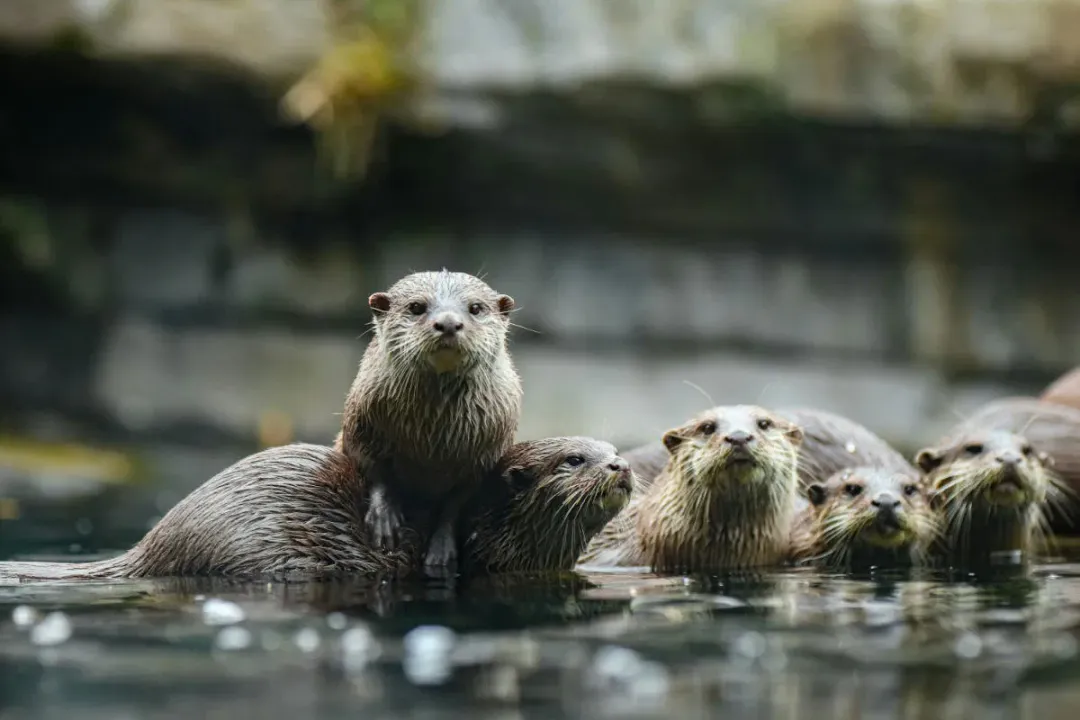
The family of otters, those sleek, playful carnivores of the water, spans continents, but pinpointing exactly which nations host their river-dwelling relatives requires looking closely at species distribution. While the term "otter" covers eight distinct species, including sea otters and giant otters, the river otters—those perfectly adapted to freshwater systems—have established themselves across large swathes of the globe, from the Americas to Eurasia. [2] Understanding their presence means tracing the ranges of species like the North American River Otter (Lontra canadensis), the Giant River Otter (Pteronura brasiliensis), and the Eurasian Otter (Lutra lutra), among others. [4][2]
# North America
The range of the North American River Otter (Lontra canadensis) is quite extensive across Canada and the United States. [1] In the United States, these otters can be found in nearly every state, although their historic range has seen some contraction. [8] Specifically, they are present in all states bordering the Atlantic Ocean, the Gulf of Mexico, and the Pacific Ocean, except for a few exceptions in the arid Southwest. [1] For example, they are known to inhabit areas like North Carolina, where the state wildlife resources commission monitors their populations in the coastal plain, mountain, and piedmont regions. [8]
Across the northern border, the Canadian distribution is similarly broad. The North American River Otter is found in all of the provinces and territories of Canada, although like their southern counterparts, they are absent from some of the most northerly Arctic islands. [1] This means that from the southern tip of Ontario up through the waterways of the Yukon and Northwest Territories, these otters make their home in freshwater environments. [1]
When you consider the broader category of river otters in the Americas, the picture expands significantly southwards. Central and South America host several species, including the Giant River Otter and the Neotropical River Otter (Lontra longicaudis). [6] The Neotropical River Otter is widespread, found in countries stretching from Costa Rica south through the northern parts of South America. [6]
# South America
South America is home to some of the most charismatic river otters, most notably the Giant River Otter. These giants, which are the longest members of the weasel family, are restricted to the major river systems of the continent. [4] Their geographic range is concentrated in the Amazon Basin, meaning they are found in countries such as Brazil, Peru, Ecuador, Colombia, Bolivia, and parts of the Guianas. [4][6] It is interesting to note that while they are apex predators in their aquatic environment, the Giant River Otter's range is more specialized and less widespread than that of the smaller Neotropical River Otter, reflecting a dependency on larger, less disturbed riverine habitats. [6]
The Neotropical River Otter shares some of this territory but has a much broader sweep. Its distribution extends across Central America, starting in countries like Costa Rica, and continues south through nations such as Venezuela, Guyana, Suriname, Uruguay, and Argentina. [6] This contrast between the specialized, basin-dwelling Giant Otter and the adaptable Neotropical River Otter provides a good example of how different ecological niches shape distribution patterns within a single continent's river systems. [4][6]
To provide a simple geographic overview of otter presence, based on reported species ranges, one can see a clear bifurcation: a specific North American species dominates the northern continent, while several species, including the Giant and Neotropical, share the waters further south. [1][6]
| Continent | Primary River Otter Species Present | Example Countries |
|---|---|---|
| North America | North American River Otter (Lontra canadensis) | Canada, United States [1] |
| South America | Giant River Otter (Pteronura brasiliensis), Neotropical River Otter (Lontra longicaudis) | Brazil, Peru, Argentina, Costa Rica [4][6] |
| Eurasia | Eurasian Otter (Lutra lutra) [2] | Information inferred from general otter presence in Europe/Asia |
# Eurasian Distribution
While the sources detail the American species quite well, they also confirm that otters are found across the globe, with one clade mentioned as being present worldwide. [5] The Eurasian Otter (Lutra lutra) is the primary species inhabiting freshwater environments across much of Europe and Asia. [2] This species demonstrates remarkable adaptability, with its range historically covering a vast area, though conservation challenges have reduced its presence in some regions. [7]
In Europe, the Eurasian Otter is found across many nations, including Norway, Sweden, Finland, Germany, France, and nations throughout Eastern Europe. [2] Their presence is often associated with clean water sources, making them good indicators of river health in these areas. [7]
Moving eastward, the distribution continues across Asia. While specific country-by-country lists for the Eurasian Otter can be extensive, their range includes countries like China and India, where various subspecies or closely related river otter types may also reside, depending on the exact classification used. [7] It is worth noting that the presence of otters in these vast continents is not uniform; coastal areas, heavily polluted rivers, or heavily developed regions may lack populations, even if the country generally supports them. [9]
# Population Insights and Conservation Context
When considering otter populations, sheer numbers can be difficult to ascertain definitively across all species and countries, as tracking elusive semi-aquatic mammals is challenging. [3] One source attempts to rank countries by otter population, though it often aggregates data or focuses on specific studies, sometimes including non-river species in broader counts. [3] For instance, countries like the United States and Canada are noted in various contexts regarding otter presence, reflecting the large established populations of Lontra canadensis. [1][3] However, comparing a population count in a country with only one river otter species to one with three different species presents an apples-to-oranges scenario regarding true diversity or ecological importance.
The distribution pattern of river otters often follows the paths of major river drainage systems, which is an intuitive, yet important, geographical reality. For example, the success of the North American River Otter in the United States is clearly tied to its presence near both coastal and inland waters across nearly the entire contiguous area, suggesting that where water quality supports a healthy fish population, the otter is likely to establish a territory. [8] This reliance on robust aquatic food webs means that a country's commitment to clean water infrastructure can directly translate into otter conservation success, often more so than localized species-specific protection alone.
Looking at the broader world, we can observe that the need for expansive, relatively undisturbed freshwater corridors is a unifying requirement for nearly all river otter species, whether we are discussing the small, adaptable Neotropical River Otter or the larger, more demanding Giant River Otter. [6] A country possessing a network of pristine rivers has a high probability of supporting a healthy otter population, regardless of the specific species inhabiting it.
# Habitat Specifics
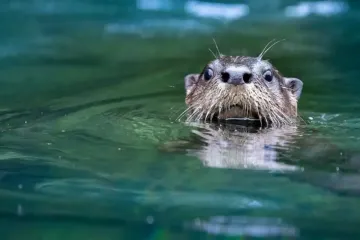
The countries hosting river otters share a common environmental prerequisite: suitable aquatic habitat. The North American River Otter thrives in freshwater, brackish water, and coastal marine environments, showing flexibility between rivers, lakes, marshes, and estuaries. [1][8] This adaptability allows them to occupy a wider variety of land areas within the countries they inhabit compared to some of their South American cousins.
In contrast, the Giant River Otter shows a far more specific habitat preference, strongly tied to large, clear-water tributaries of the Amazon River system. [4] This specialization means that habitat degradation in a single major river system in Brazil or Peru could have a disproportionately large impact on the global population of this species compared to the generalized threat faced by the North American species across its wider range. [4] Their need for extensive river corridors is critical; a fragmented river environment is often unsuitable for a social, wide-ranging predator like the Giant River Otter.
This highlights a subtle but crucial distinction in how we assess otter-hosting nations: A country like the United States, with its varied topography supporting many water sources, hosts a resilient, widespread species. Conversely, a nation like Ecuador, while hosting river otters, might be crucial for the survival of a highly specialized species like the Giant River Otter, meaning its conservation role for that species is paramount, even if its total otter count is lower. Therefore, evaluating a country’s role involves assessing which otters they host and the sensitivity of those species’ required habitats. [6]
The Eurasian Otter's wide distribution across Europe and Asia further suggests a general tolerance for colder climates, provided the water bodies do not freeze solid for extended periods, cutting off their primary food source. [2] The continued monitoring of Lutra lutra populations across the diverse political landscapes of Eurasia serves as a continuous check on the overall health of those continents' major river systems.
# Global Otter Family
It is important to remember that the distribution of otters is a story of evolutionary success across nearly all continents except Australia. [5][9] The fact that a clade—a group sharing a common ancestor—of otters successfully colonized environments from the icy waters of North America to the tropical Amazon and the temperate rivers of Europe and Asia is remarkable. [5] This global reach suggests that while specific species have specialized, the general blueprint of an otter—streamlined body, powerful tail, and keen senses—is highly effective in almost any freshwater setting that provides sufficient prey and cover. [9]
For an interested reader looking to spot one of these elusive animals, knowing the general map is the first step. If you are traveling through the Canadian boreal forests, the North American River Otter is your target. [1] If your travels take you to the Pantanal wetlands or deep into the Peruvian Amazon, you might be searching for the magnificent Giant River Otter. [4] Should your path lead through the forests of Norway or the rivers of China, the Eurasian Otter is the local representative. [2] While precise, up-to-the-minute census data for every nation remains elusive for these shy creatures, the established geographical ranges provide a solid foundation for understanding where these fascinating aquatic mammals continue to thrive in the modern world. [7]
Related Questions
#Citations
North American river otter - Wikipedia
Otters of the World - Otters and Butterflies
Otter Population by Country 2025
Giant River Otter (Pteronura brasiliensis) - Philadelphia Zoo
A clade of otters is found around the globe despite being exclusive ...
Central and South America - International Otter Survival Fund
Where Do Otters Live? - World Animal Protection US
North American River Otter | NC Wildlife
Where Do Otters Live Around the World? | Bellanova Books