What term describes the difference in appearance between male and female Fairy Wrasses?
Answer
Sexually dimorphic
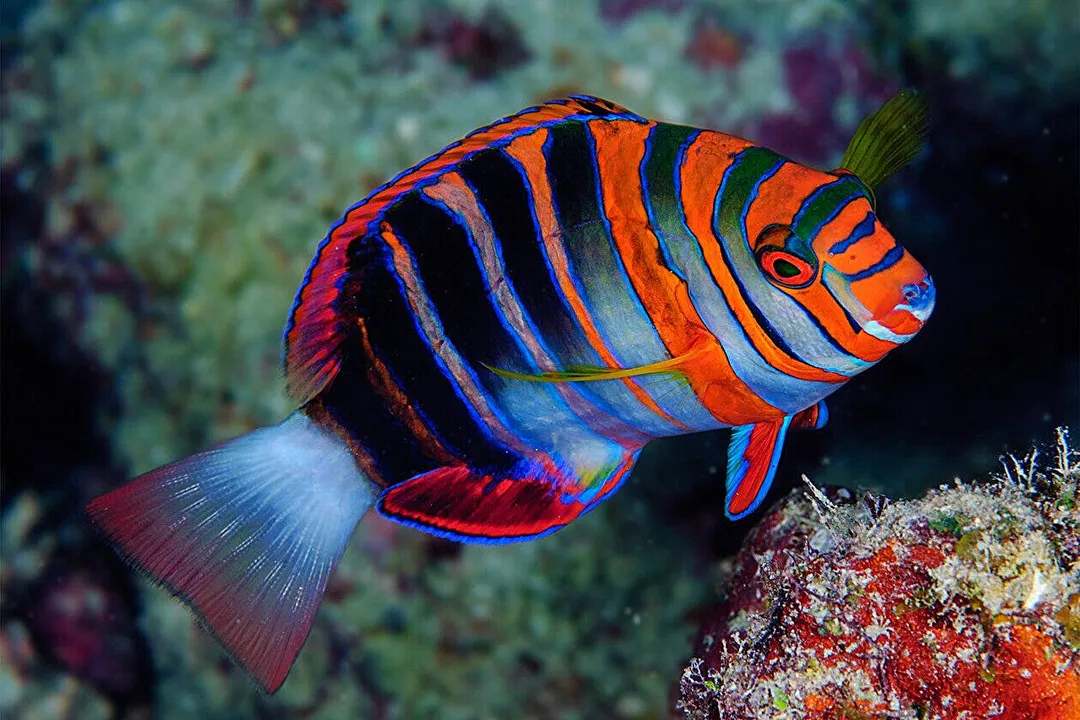
Fairy Wrasses, like many brightly colored reef fish, exhibit pronounced differences in appearance between males and females, a condition defined as sexual dimorphism. Males typically display the most vibrant and complex color patterns, involving striking reds, blues, and yellows. These elaborate visual displays are critically important for their reproductive success, primarily serving the function of attracting mates. Females, conversely, often present a more subdued or different coloration, reflecting differing selective pressures related to camouflage or avoiding attention, reinforcing the functional importance of these visual differences in mating success.
Related Questions
What are the recognized physical characteristics of wrasses belonging to the family Labridae?What is the approximate maximum length reached by the Queensland Maori Wrasse, *Cheilinus undulatus*?What evolutionary concept defines the history of rapid speciation within the Labridae family?What mechanism explains the rapid evolution of vivid colors in Fairy Wrasses (*Cirrhilabrus*)?What external environmental fluctuation is strongly implicated in the speciation of Fairy Wrasses?What process results from geographically isolating *Cirrhilabrus* populations due to fluctuating sea levels?Which factors are described as more critical architects of wrasse diversity than localized ecological niches for the Fairy Wrasse lineage?What integration is described as essential for accurately describing and conserving wrasse biodiversity?What term describes the difference in appearance between male and female Fairy Wrasses?In which global region is the greatest diversity of the Labridae family concentrated?