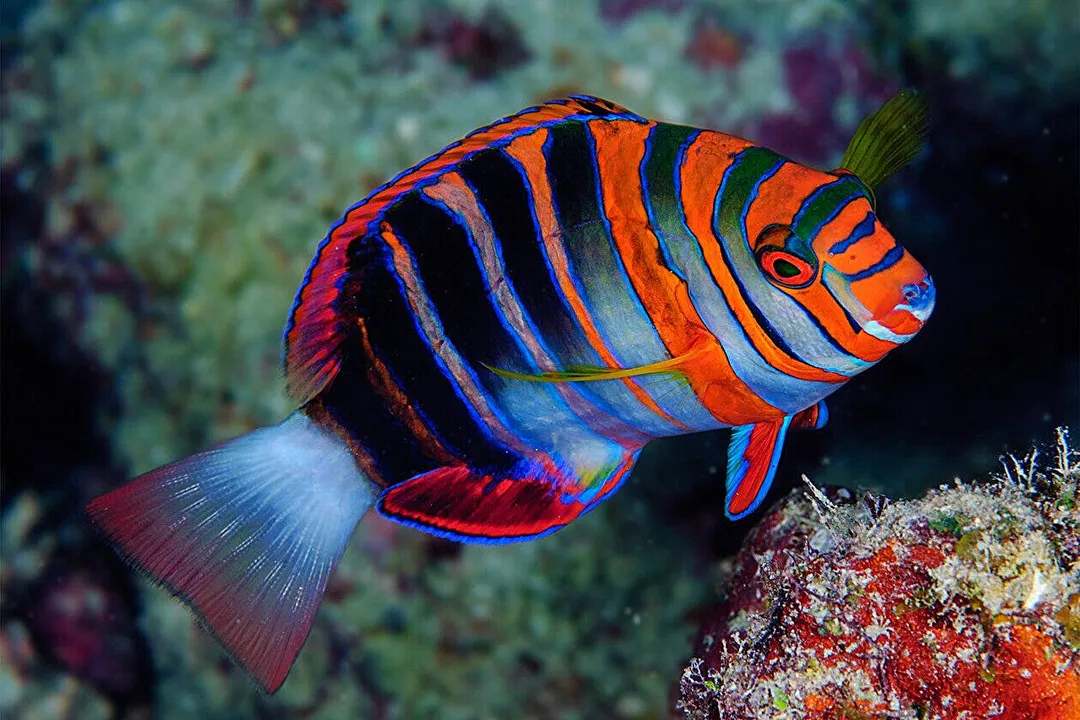
What integration is described as essential for accurately describing and conserving wrasse biodiversity?
Molecular techniques with traditional morphology
The rapid evolutionary tempo observed in the Labridae family—where speciation can occur quickly based on subtle color differences evolved over short periods—presents significant challenges for taxonomists. Because morphological divergence may lag behind genetic separation, or conversely, superficial similarity might arise due to convergent evolution, relying on only one method is insufficient. Therefore, a deep integration incorporating the insights from modern molecular techniques, such as DNA sequencing, alongside traditional morphological assessments is deemed not just beneficial, but absolutely essential for accurately describing and effectively conserving the full, true breadth of wrasse biodiversity.