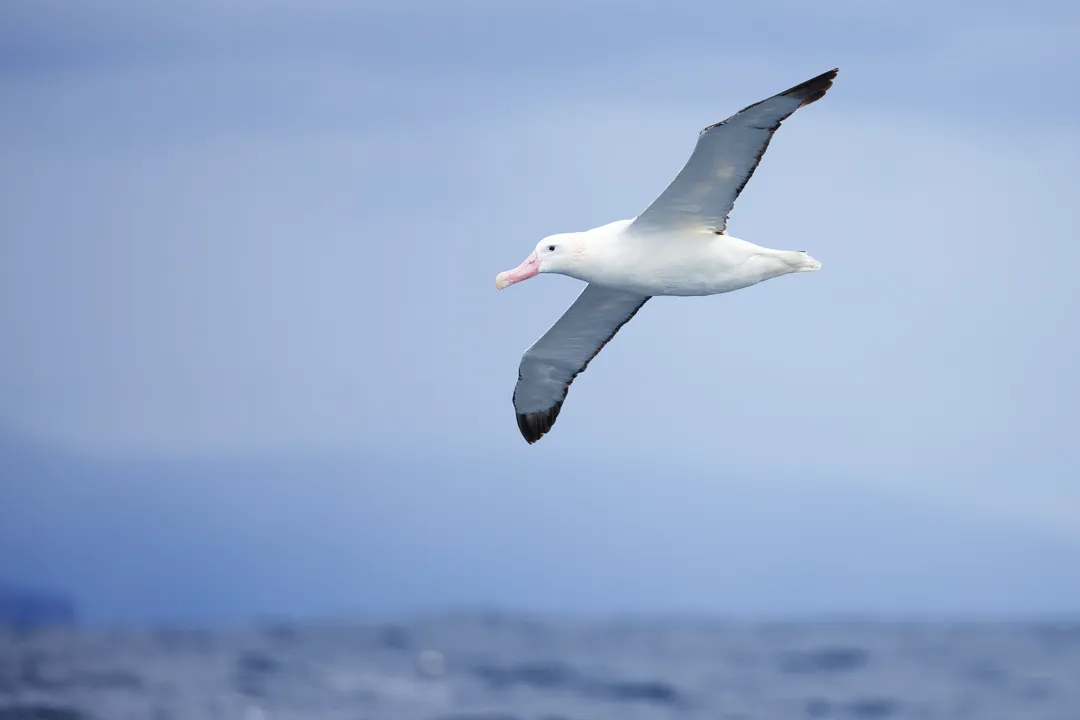
What specific risk associated with longline fishing operations causes high mortality rates in Wandering Albatross populations?
Incidental capture or bycatch on baited hooks
The greatest threat impacting the sustainability of the Wandering Albatross population stems directly from human fishing activities, specifically incidental capture known as bycatch associated with commercial longline fishing. These operations deploy incredibly long lines, sometimes stretching for many kilometers, armed with numerous baited hooks that drift near the surface where the birds forage. The albatrosses are attracted to this readily available bait, mistake it for natural prey, and ingest the hook. This often results in the bird being pulled underwater by the heavy line, leading to drowning. Given the species' late sexual maturity and slow breeding cycle, this high rate of adult mortality severely hinders the population's ability to recover.