By alternating between high and low flight paths near the ocean, what energy source does the Wandering Albatross harness via wind shear?
Answer
Kinetic energy generated by the wind gradient
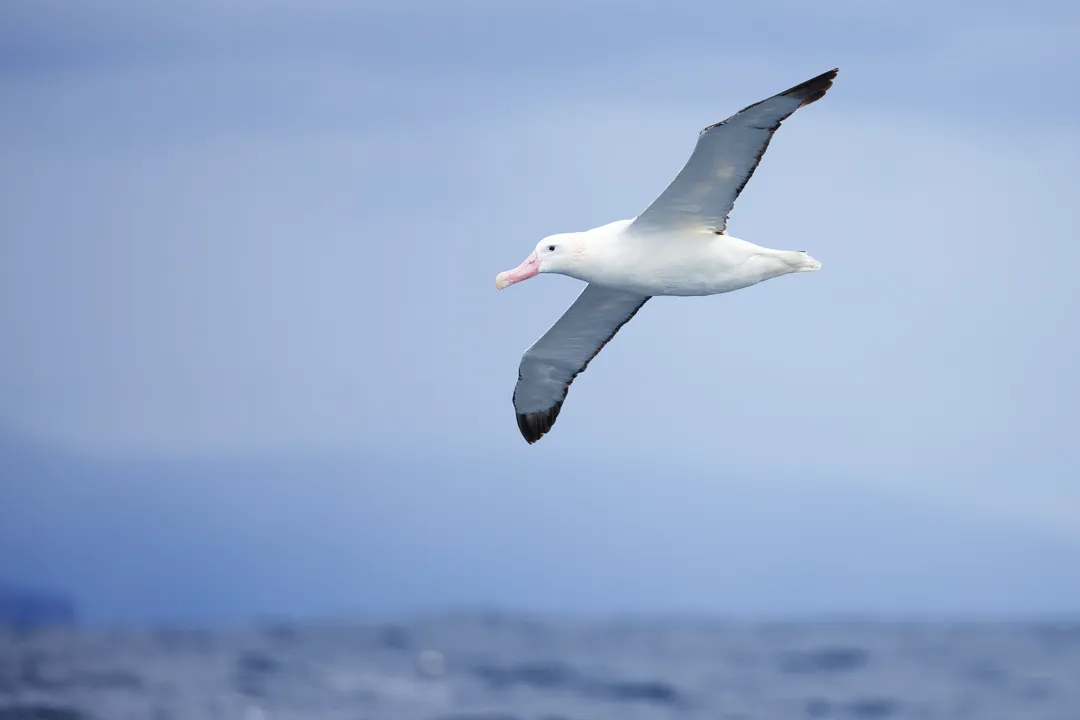
The efficiency of dynamic soaring is fundamentally based on the albatross's ability to manipulate atmospheric mechanics right above the ocean surface. This technique allows the bird to borrow or harness the kinetic energy present within the wind gradient. The wind gradient describes the increasing wind speed encountered as altitude increases just above the water. By flying high into the wind to gain altitude and then plunging down through the wind shear layer close to the waves, the bird effectively translates the difference in wind speed across those small vertical changes into forward momentum and renewed altitude without needing to exert significant muscular effort through flapping.
Related Questions
What is the maximum measured wingspan for the Wandering Albatross, the largest of any living bird?What specialized flight technique do Wandering Albatrosses employ to travel vast distances without repeated flapping?How long is the incubation period for the single egg laid by a female *Diomedea exulans*?What characteristic defines the plumage of mature adult Wandering Albatrosses?What is the typical reproductive frequency for a successful breeding pair of Albatrosses?Which specific marine items form the primary components of the Wandering Albatross diet?Where are the isolated nesting grounds used by the circumpolarly distributed Wandering Albatrosses located?What is the scientific name for the magnificent seabird known commonly as the Snowy Albatross?What specific risk associated with longline fishing operations causes high mortality rates in Wandering Albatross populations?By alternating between high and low flight paths near the ocean, what energy source does the Wandering Albatross harness via wind shear?