What specific pigment mechanism is lacking in white tigers, independent of their metabolic genes?
Answer
A lack of pheomelanin pigment.
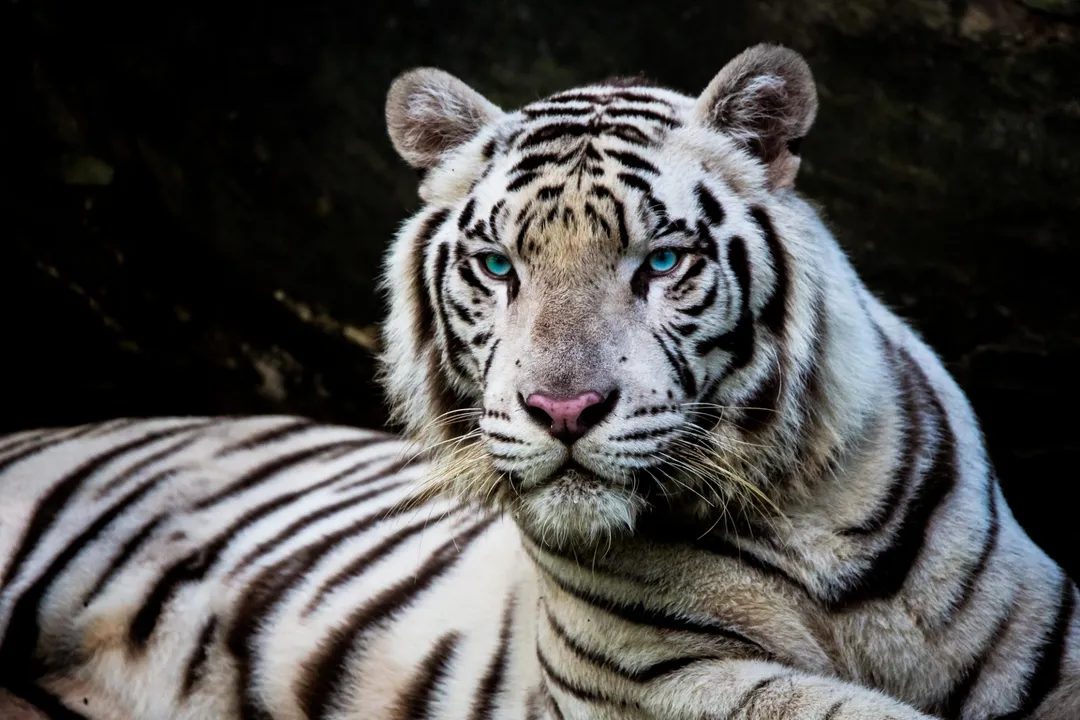
The distinct visual characteristic of the white tiger—its coat color—is directly attributable to a specific genetic expression. This expression results in the absence or severe reduction of pheomelanin, which is the pigment responsible for red and yellow coloration in animals. Importantly, the text emphasizes that this specific pigment deficiency mechanism operates entirely separately from the genes that govern essential metabolic processes, digestion rates, and the biological imperative to consume large, fatty carcasses, ensuring that nutritional needs remain uniform across all color morphs.
Related Questions
What are common staple prey animals for tigers in their historical wild habitats?How does the recessive gene causing the white coat affect a tiger's essential protein and fat requirements?How much meat might a healthy adult wild tiger consume in a single feeding session?Which specific raw meats are often fed to captive white tigers in zoos or sanctuaries?What crucial nutrients supplied by wild prey parts like organs and bone marrow must be supplemented in a captive diet?What is a common feeding schedule frequency for an adult tiger maintained in captivity?What does it mean for tigers to be classified as obligate carnivores regarding plant matter?What typical location do tigers target to quickly subdue large prey animals during an ambush?What is the primary goal of incorporating enrichment feeding strategies for captive tigers?What specific pigment mechanism is lacking in white tigers, independent of their metabolic genes?