White-Eyed Vireo Diet
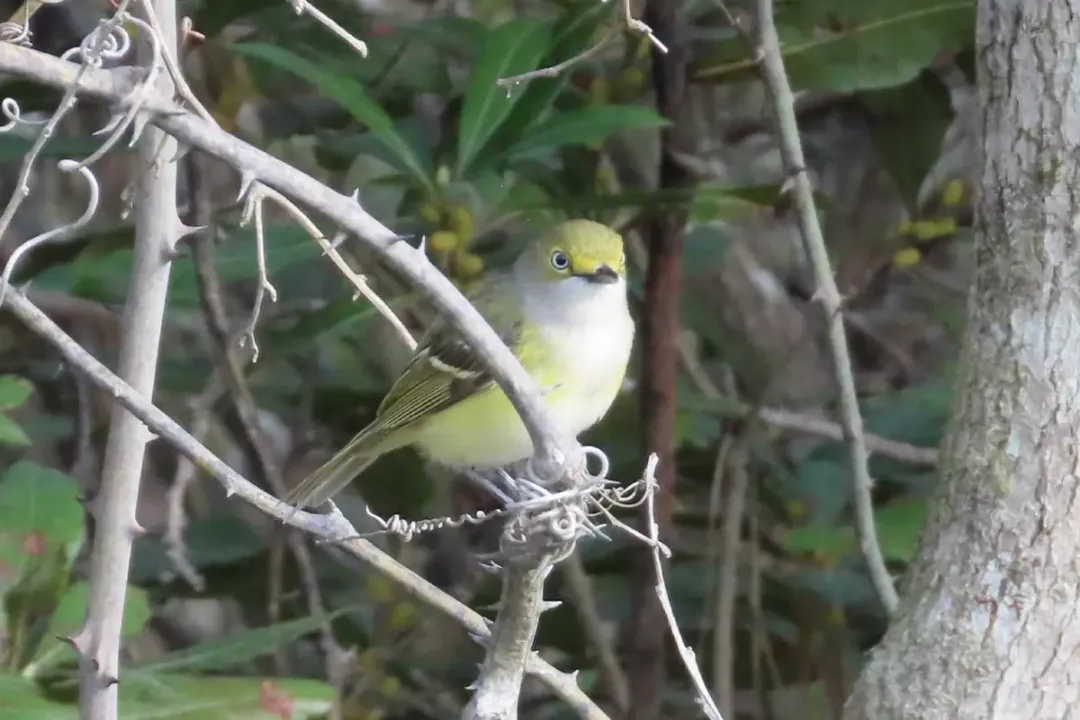
The White-Eyed Vireo, often more readily heard than seen due to its secretive nature within dense foliage, maintains a diet that shifts noticeably with the seasons, reflecting its movements between breeding grounds and wintering habitats. Primarily an insectivore during the warmer months when energy demands for breeding are highest, this small songbird transitions to incorporating more fruit as the weather cools and migration commences.
# Insect World
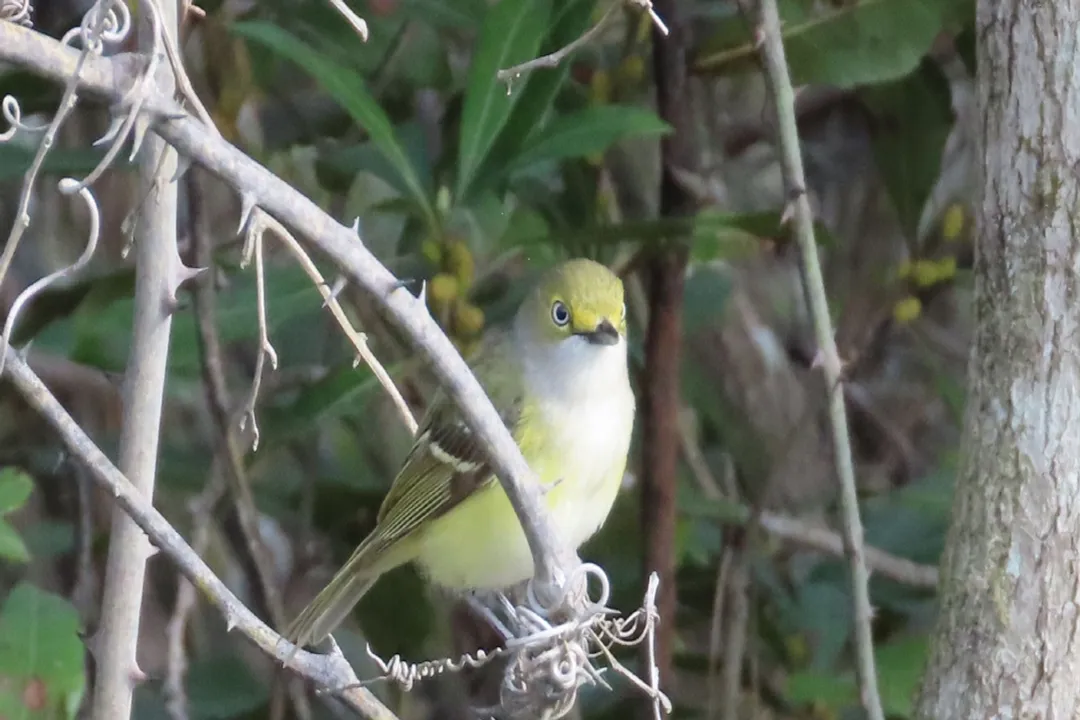
The core of the White-Eyed Vireo's sustenance, particularly while nesting and raising young across the eastern United States, comes from a wide variety of small invertebrates. A substantial portion of this summer diet is composed of soft-bodied larvae, with caterpillars being a particularly important food source. In fact, caterpillars, moths, and butterflies combined can make up nearly one-third of the diet during the breeding season.
Beyond these lepidopteran larvae, the vireo consumes an impressive inventory of other arthropods. The menus consistently mention spiders and various beetles. Also regularly taken are flies, grasshoppers, and lacewings. Other noted insect prey includes true bugs, moths, wasps, and bees.
It is interesting to note that the variety of prey, spanning slow-moving caterpillars to fast-moving flies and hard-shelled beetles, suggests a high degree of adaptability in their hunting, though their habitat preference keeps them within the thickest vegetation where these creatures reside. Furthermore, the inclusion of small prey like snails and even occasionally small lizards indicates that they are opportunistic feeders, taking whatever high-protein item presents itself within their dense shrubbery environment.
# Foraging Technique
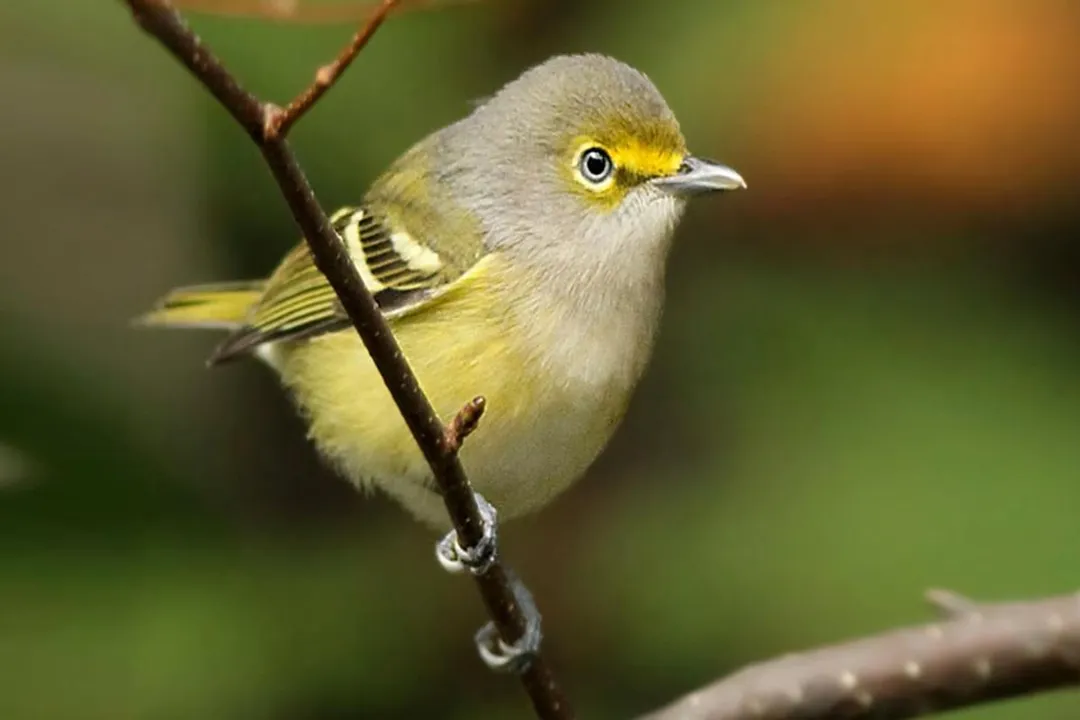
The White-Eyed Vireo is described as a "foliage gleaner". Their movement style is deliberate, marked by slow hopping along branches while constantly scanning the surroundings before striking at prey. This contrasts somewhat with the quicker, darting movements often associated with warblers, another family of insectivores that the vireo is sometimes superficially compared to.
When capturing food, the vireo employs a practical method depending on the size of the catch. Smaller items are typically swallowed right away. However, a larger or more awkward piece of prey requires a technique where the bird pins the item down with its foot before consuming it piece by piece. This reliance on dense, low cover—such as thickets, brambles, and overgrown pastures—is crucial, as their foraging style involves moving actively among the twigs and leaves, sometimes hovering momentarily to snatch insects directly from leaf surfaces. Their dedication to staying hidden in these tangles, while feeding, is precisely why birdwatchers often find them challenging to observe directly.
# Seasonal Shift
As the summer breeding season concludes and the birds prepare for migration south, their diet undergoes a significant change, integrating fruits and berries to build up necessary fat reserves. This frugivorous element supplements, rather than completely replaces, their insect consumption, especially during the autumn migration phase.
The variety of fruits consumed is geographically dependent, reflecting the flora available in their specific habitats, whether breeding or wintering grounds. Sources catalog a number of key plant sources. Berries from the dogwood, wax myrtle, and wild grapes are specifically mentioned as dietary components in the fall and winter. Those found further south or in their non-breeding range might also feed on fruits from sumac, poison ivy, and pokeweed, along with tropical fruits from Bursera trees. The bird's ability to transition to these carbohydrate-rich foods is vital for fueling the long migratory flights ahead.
When planning a late summer or early fall birding trip to an area known for White-Eyed Vireos, focusing observations near thickets that contain dogwood or wax myrtle could prove more rewarding than searching solely for active insect hunting, as the birds will be heavily invested in these supplementary food sources as they fatten up for the journey south. This dietary emphasis on high-energy berries aligns with the general pattern seen in many migratory songbirds that must maximize caloric intake before undertaking long-distance travel.
# Practical Observation
For those hoping to spot this visually distinctive but behaviorally shy bird, understanding its feeding schedule offers an advantage. Since the diet is so heavily weighted toward insects during the nesting period, locating active insect populations in the shrub layer is key to finding them during the spring and early summer. In many regions, early spring observation is aided by the fact that they arrive relatively early and linger later than many other vireo species.
Conversely, if you are searching in late fall or winter in the southeastern U.S., Mexico, or Central America where these birds reside outside the breeding season, pay close attention to fruiting shrubs. If a thicket is loaded with berries from sumac or dogwood, it becomes a prime foraging spot for the wintering vireos, even if they are less active overall than their breeding counterparts. Knowing which plants are in season can effectively narrow down the search area considerably. Also, remember that the juveniles, which have dark eyes initially, develop the distinctive white irises only as they mature; therefore, an adult's diet is likely more stable than a family group's varied needs during the post-fledging period. This means the energy-intensive caterpillar phase is primarily directed toward supporting the growing nestlings, while adults may start diversifying their intake as soon as breeding responsibilities ease.
Related Questions
#Citations
White-eyed Vireo | Audubon Field Guide
White-eyed Vireo Life History
White-eyed Vireo (Vireo griseus) - Texas Master Naturalist
White eyed vireo | U.S. Fish & Wildlife Service
White-eyed Vireo (Vireo griseus) identification - Birda
Vireos
White-eyed vireo