How does the recessive gene causing the white coat affect a tiger's essential protein and fat requirements?
Answer
It does not alter the essential protein and fat requirements necessary to sustain the animal.
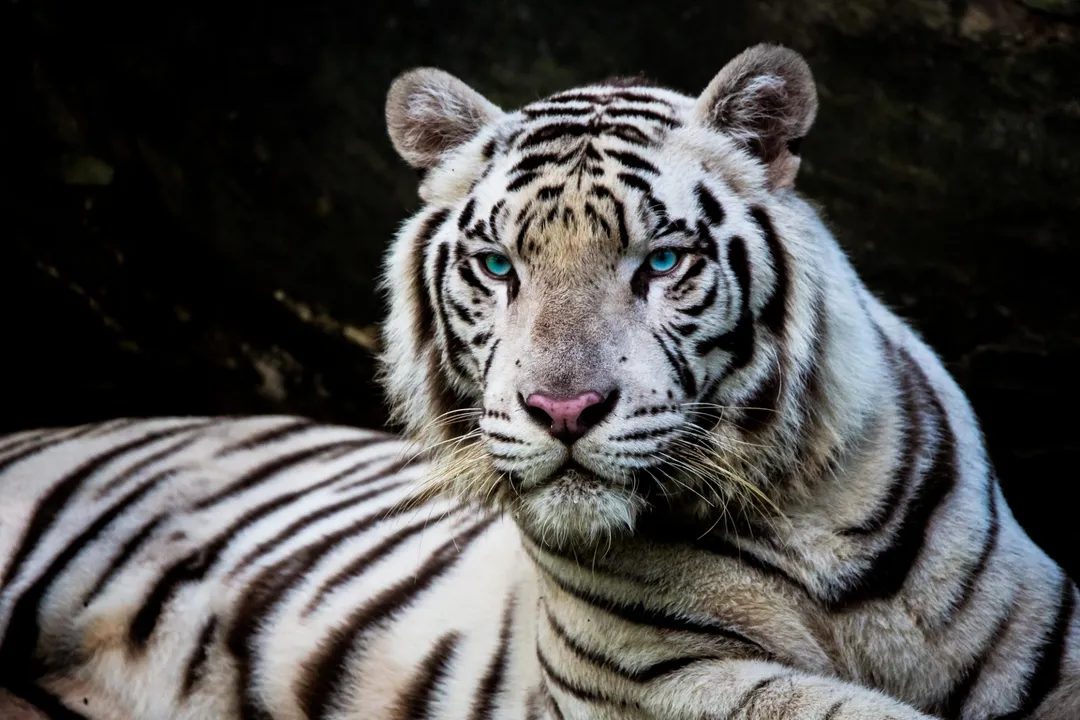
The genetic mechanism responsible for the white coat color in tigers is linked to a specific recessive gene that dictates pigmentation, specifically resulting in a lack of pheomelanin pigment. This genetic difference is entirely independent of the genes that control fundamental metabolic functions, digestion, or the structural needs of the tiger's musculature and energy reserves. Consequently, whether an individual is white or orange, its biological machinery demands the exact same ratios of animal protein and fat derived from prey to maintain muscle mass, support body temperature, and store essential energy reserves required for a large carnivore.
Related Questions
What are common staple prey animals for tigers in their historical wild habitats?How does the recessive gene causing the white coat affect a tiger's essential protein and fat requirements?How much meat might a healthy adult wild tiger consume in a single feeding session?Which specific raw meats are often fed to captive white tigers in zoos or sanctuaries?What crucial nutrients supplied by wild prey parts like organs and bone marrow must be supplemented in a captive diet?What is a common feeding schedule frequency for an adult tiger maintained in captivity?What does it mean for tigers to be classified as obligate carnivores regarding plant matter?What typical location do tigers target to quickly subdue large prey animals during an ambush?What is the primary goal of incorporating enrichment feeding strategies for captive tigers?What specific pigment mechanism is lacking in white tigers, independent of their metabolic genes?