What specific morphological trait separates the common warthog genus *Phacochoerus* from other Suidae like *Sus scrofa*?
Answer
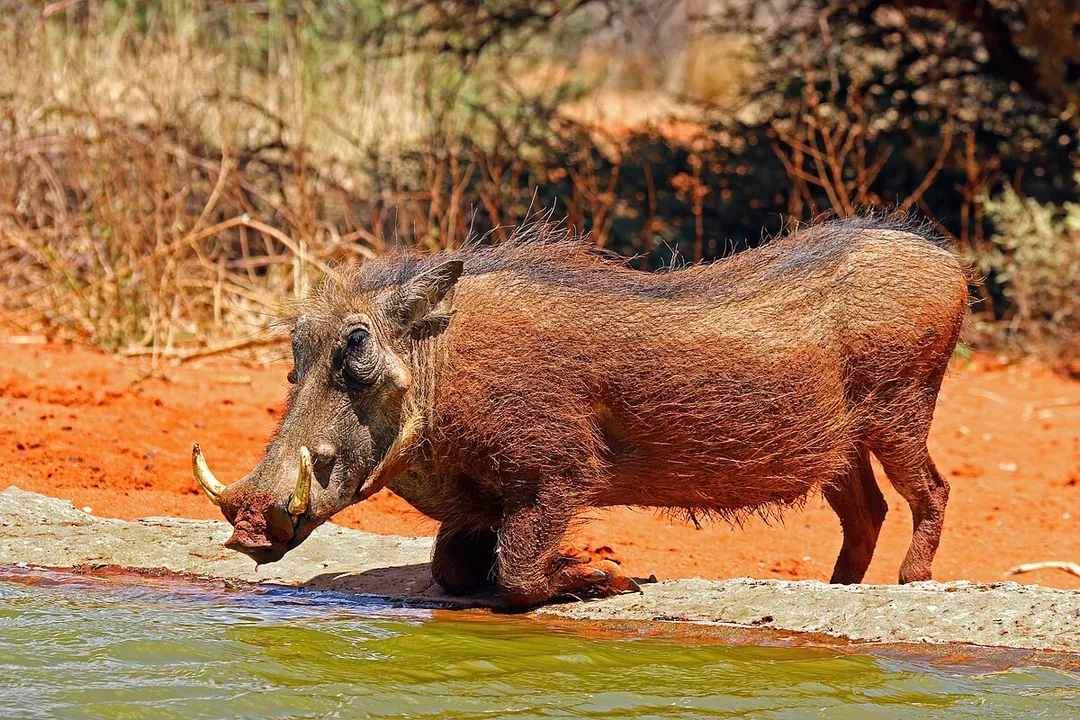
The presence of unique facial warts
While both the warthog and domestic pigs (*Sus scrofa*) belong to the Family Suidae, sharing traits like rooting behavior and having two pairs of continuously growing tusks, the genus *Phacochoerus* possesses unique morphological specializations. The most visible distinction leading to its common name is the presence of large facial warts, which are not found on other pig lineages within the family. Additionally, while both root, the warthog exhibits a more specialized skull structure adapted for grazing and digging in open savanna environments, setting its evolutionary path apart from the more generalized omnivorous relatives.
Related Questions
What characteristic is definitive for classifying an organism in Class Mammalia?What feature defines the common warthog's placement in Phylum Chordata?What defines the structural adaptation characterizing the Order Artiodactyla?What must occur for the species name *Phacochoerus africanus* following binomial nomenclature rules?How does the genus *Phacochoerus* derive its meaning based on Greek derivation?What specific morphological trait separates the common warthog genus *Phacochoerus* from other Suidae like *Sus scrofa*?What is the implication of the warthog belonging to Kingdom Animalia regarding its nutrition?What conservation consideration is directly influenced by recognizing the Desert Warthog as *Phacochoerus aethiopicus*?What evidence suggests the genus *Phacochoerus* experienced a long period of independent evolution within Suidae?When identifying a specimen using the Linnaean hierarchy, what step follows confirmation that it is in Family Suidae?