What defines the structural adaptation characterizing the Order Artiodactyla?
Answer
Bearing weight primarily on an even number of toes, usually two or four
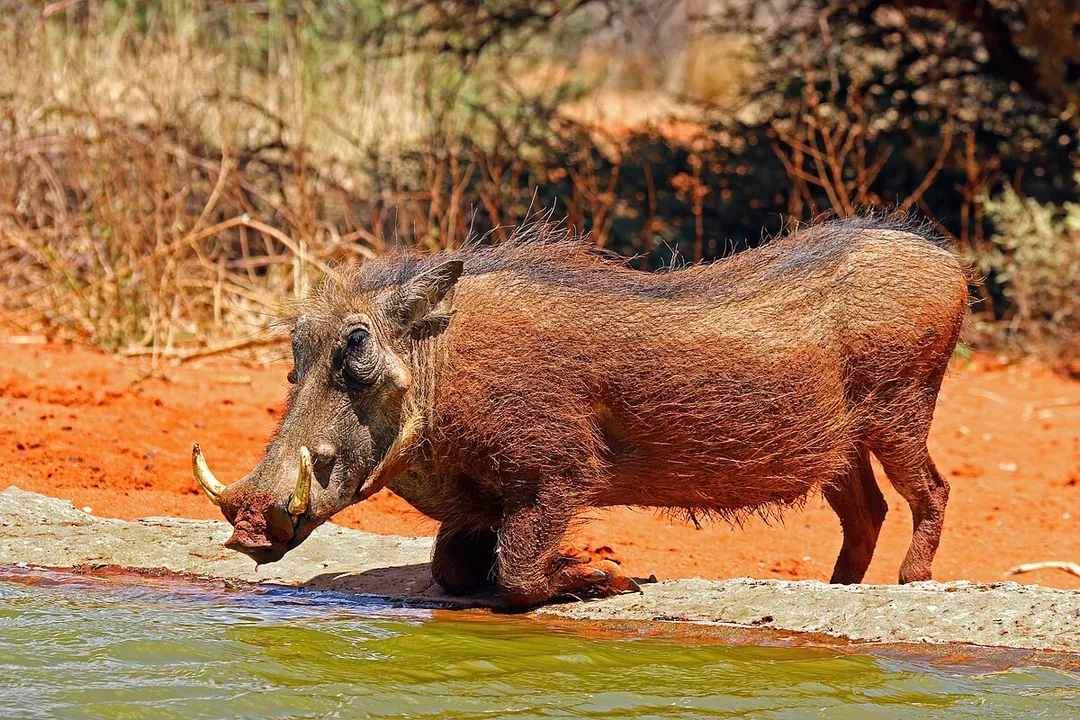
The Order Artiodactyla specifically groups even-toed ungulates. This classification is based on the structure of the feet, where the animal's weight is predominantly supported by an even number of toes, most often the third and fourth digits. These animals are considered ungulates because they walk upon the very tips of these toes, which are encased in hard structures known as hooves. This morphology is an adaptation typically associated with cursorial or running lifestyles, allowing for efficient movement across open terrain like savannas. This contrasts significantly with odd-toed ungulates (Perissodactyla).
Related Questions
What characteristic is definitive for classifying an organism in Class Mammalia?What feature defines the common warthog's placement in Phylum Chordata?What defines the structural adaptation characterizing the Order Artiodactyla?What must occur for the species name *Phacochoerus africanus* following binomial nomenclature rules?How does the genus *Phacochoerus* derive its meaning based on Greek derivation?What specific morphological trait separates the common warthog genus *Phacochoerus* from other Suidae like *Sus scrofa*?What is the implication of the warthog belonging to Kingdom Animalia regarding its nutrition?What conservation consideration is directly influenced by recognizing the Desert Warthog as *Phacochoerus aethiopicus*?What evidence suggests the genus *Phacochoerus* experienced a long period of independent evolution within Suidae?When identifying a specimen using the Linnaean hierarchy, what step follows confirmation that it is in Family Suidae?