What specific fishing activity makes the slow-growing Atlantic Wolffish highly susceptible to population decline?
Answer
Bottom-trawling fishing activities
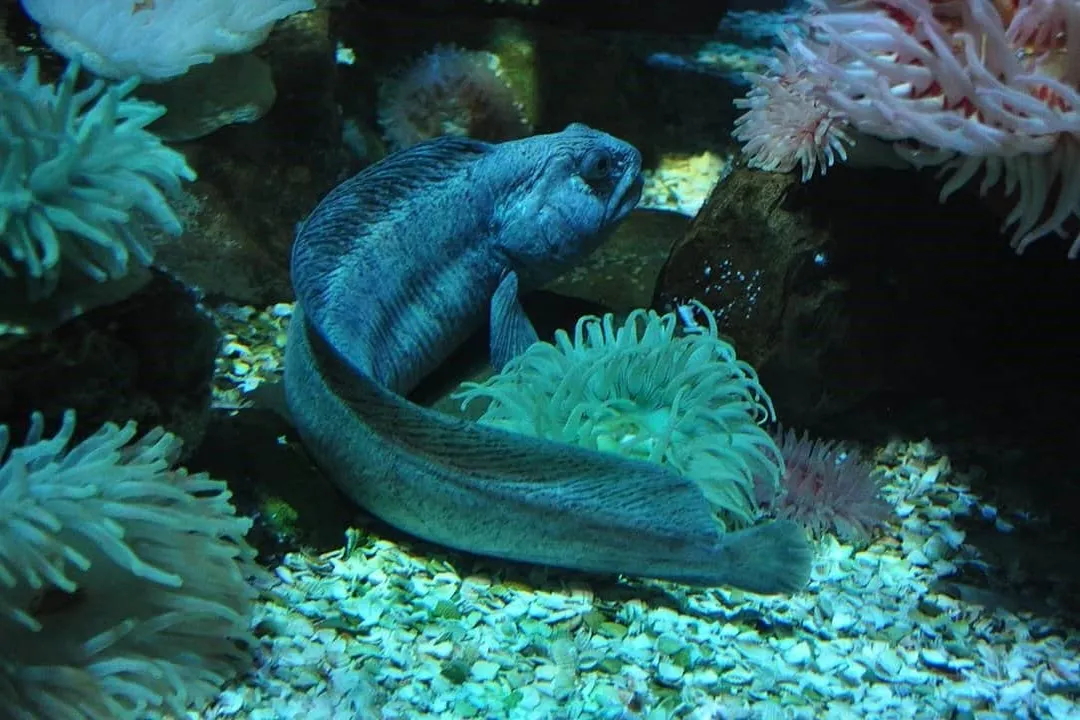
The specialized evolutionary history of wolffishes, characterized by being slow-growing, late-maturing, and closely associated with the bottom substrate, makes them exceptionally vulnerable to intensive, non-selective fishing methods. Bottom-trawling involves dragging heavy nets across the seafloor, directly targeting and mechanically removing benthic species like the wolffish. Because their life history traits evolved over millennia in stable environments, they lack the biological capacity for rapid population rebound necessary to withstand this mechanical pressure imposed by large fishing nets.
Related Questions
What taxonomic order contains the specialized fish family *Anarhichadidae*?What specific dental structure in wolffishes is adapted for pulverizing hard shells?What pair of fins is structurally absent in the wolffish body plan due to its benthic specialization?What primary characteristic of prey drives the necessity for the wolffish's heavy dental apparatus?What substance covers the scaleless skin of wolffishes for protection?Which genus, *Anarhichas*, includes the Atlantic Wolffish, known for commercial relevance?Wolffishes typically inhabit cold, demersal zones down to what maximum depth mentioned in the text?What specific fishing activity makes the slow-growing Atlantic Wolffish highly susceptible to population decline?How is the wolffish body plan described in terms of shape, often compared to another type of fish?How many recognized genera make up the entire family *Anarhichadidae*?