Wolffish Evolution
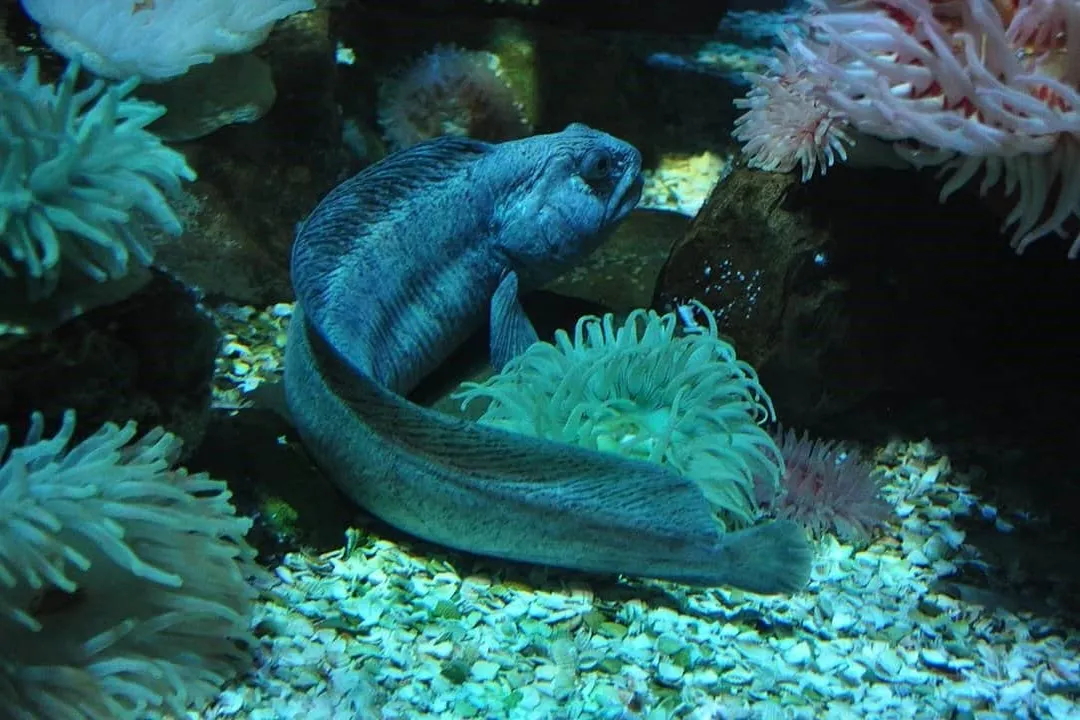
The deep, cold waters of the northern seas conceal some of the most singularly specialized fish inhabiting the globe. Among them is the family Anarhichadidae, commonly known as the wolffishes—creatures whose very appearance speaks to a highly focused evolutionary path driven by the need to consume hard-shelled prey. These are not the streamlined, swift hunters of the open ocean; instead, they are benthic specialists, possessing intimidating dentition that sets them apart dramatically from most other bony fishes. To understand the wolffish, one must examine the successful adaptations that allowed this lineage to thrive in challenging, resource-specific environments across the North Pacific and North Atlantic.
# Family Classification
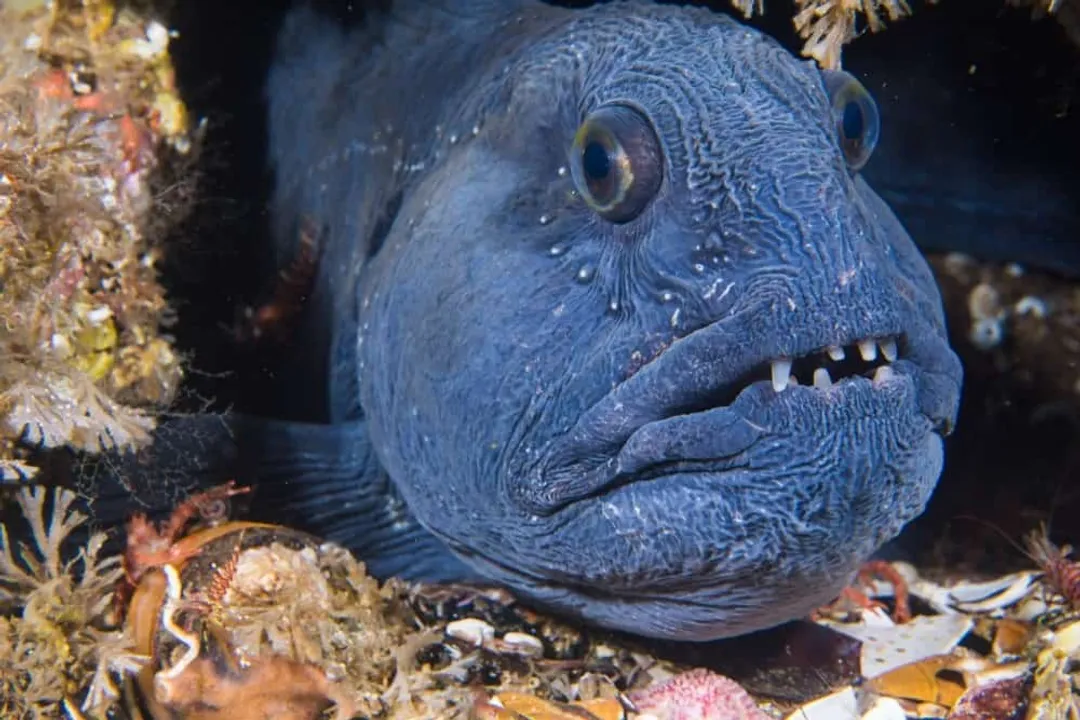
The wolffishes belong to the family Anarhichadidae, a group nested within the vast order Perciformes. While sharing the broad category with thousands of other fish, the Anarhichadidae have diverged significantly, developing a distinct suite of characteristics centered around their feeding mechanism and habitat preference. Current taxonomic understanding places the family as comprising four recognized genera and six distinct species. This relatively small number suggests a lineage that has achieved high specialization within specific ecological niches rather than broad diversification across varied environments.
The genera include Anarhichas, Anariichthys, Chirolophis, and Pseudalutarius. The most widely known, and perhaps the most ecologically studied due to its commercial and conservation relevance, is the Atlantic Wolffish (Anarhichas lupus). However, the family also includes the Bering Wolffish (Anarhichas orientalis) and the Greenlands Wolffish (Anarhichas orientalis is sometimes listed separately or synonymously depending on classification scheme, but the general group is established). Comparing these species reveals patterns of convergent or divergent evolution based on specific geographic barriers and local prey availability within the Arctic and subarctic zones.
# Dental Adaptations
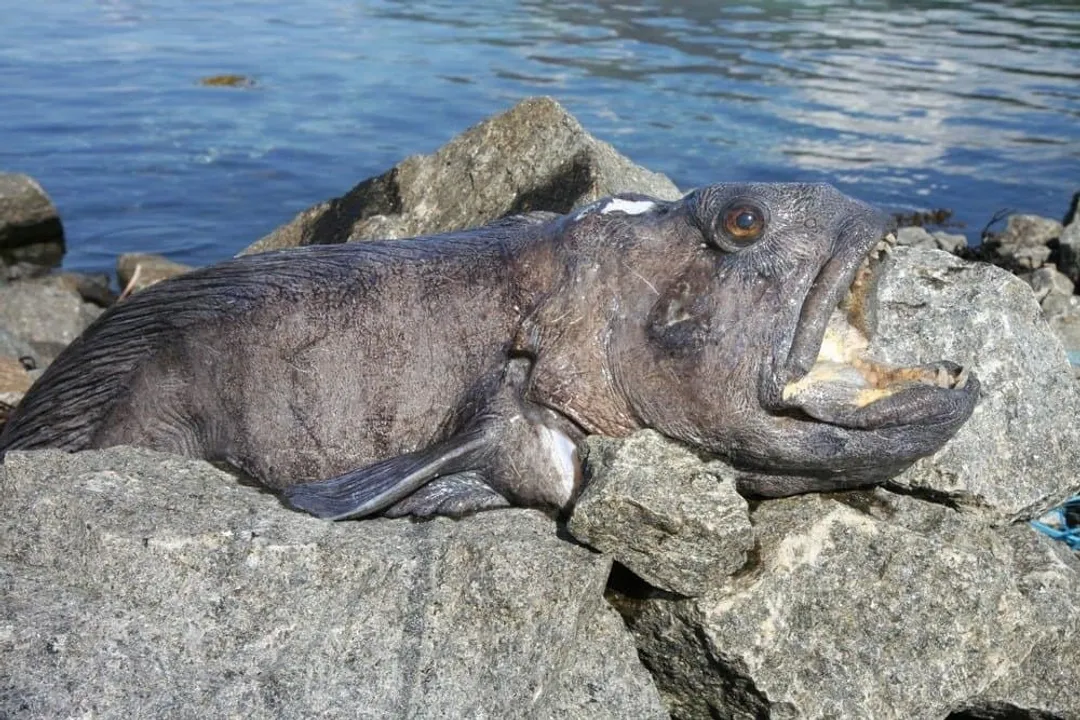
The defining evolutionary success story of the wolffish family lies in its teeth. These fish are often described as having the jaws of a sea wolf, thanks to their pronounced, canine-like anterior teeth used for seizing prey. However, the real crushing power resides further back in the mouth. The jaws are equipped with large, blunt, pavement-like teeth adapted specifically for crushing the shells of mollusks, crustaceans, and echinoderms.
This dual dental arrangement—sharp points for initial capture and thick plates for final pulverization—represents a significant evolutionary investment towards a specific diet. In many fish families, teeth are generalized for tearing or gripping soft-bodied prey. The wolffish, conversely, has streamlined its entire dental apparatus to handle the structural resilience of bottom-dwelling invertebrates. For instance, the Atlantic Wolffish preys heavily on crabs, sea urchins, and clams. If we consider the energetic costs, developing and maintaining such heavy dental structures must be balanced by consistent access to high-energy, hard-shelled prey—a classic evolutionary optimization problem solved by these fish through jaw architecture. This specialization means they likely face little competition from generalized feeders in their preferred benthic zones.
# Body Structure
Beyond the mouth, the body plan of the wolffish reflects a life spent navigating the seafloor rather than swimming in the water column. They possess an elongated, tapering body shape, sometimes described as being similar to an eel, although they are distinct from true eels. Their skin is thick and scaleless, covered instead by loose, thick mucus, which likely offers protection against abrasion while moving across rocky or shelly substrates.
A key structural absence further defines their benthic nature: wolffishes lack pelvic fins. Most bony fishes possess these fins, which aid in stability and maneuvering during swimming. By omitting the pelvic fins and relying on a strong, continuous dorsal and anal fin, the wolffish has sacrificed the agility needed for pelagic movement for the stable, anchoring presence required on the seafloor. This morphological trade-off suggests a very early split in the family’s evolutionary history, favoring substrate-hugging over mid-water existence.
# Benthic Lifestyle
Wolffishes inhabit the cold, demersal zones, typically found on rocky bottoms ranging from shallow coastal areas down to depths exceeding 1,000 meters. This requirement for low-temperature water is a fundamental aspect of their physiology, suggesting adaptations for efficient metabolism and enzyme function in near-freezing conditions. The Atlantic Wolffish, for example, is strongly associated with cold, subtidal environments.
Their tendency to inhabit crevices and holes is another behavioral adaptation tied to their morphology and diet. In these sheltered spaces, they can ambush prey or rest securely, protected from larger predators that might find their heavy armor of teeth less intimidating than their solid build might suggest.
Consider the implications of their habitat preference in the context of global climate change. Since these species are highly adapted to cold, stable environments—a prerequisite for maintaining their unique physiology—even minor warming trends could restrict their habitable zones, potentially leading to localized extirpations. A fish whose evolutionary success is predicated on low temperatures faces an existential challenge when those temperatures shift, highlighting how deeply evolution locks a species into its historical ecological parameters.
# Species Comparison
While the overall design is conserved, subtle evolutionary divergence has occurred across the family, resulting in the recognized species differences. For example, the specific prey composition shifts geographically, driving minor variations in jaw structure and body size between the Atlantic and Pacific members.
| Species Group | Primary Habitat Zone | Noteworthy Feature |
|---|---|---|
| Atlantic Wolffish (A. lupus) | North Atlantic Coasts | Strong commercial/recreational interest |
| Bering Wolffish (A. orientalis) | North Pacific, Bering Sea | Adaptation to deeper Pacific conditions |
| Spotted Wolffish (Eschrichtius robustus - Note: This is sometimes listed but its taxonomy can vary) | Deep water | High degree of specialization |
The differences are not just superficial; they reflect minor evolutionary responses to regional resource availability. While the Atlantic species evolved alongside crabs and larger bivalves typical of its range, Pacific counterparts adapted to the slightly different invertebrate populations found in the vastness of the Bering Sea. These variations show evolution continuing to fine-tune the primary crushing mechanism based on local materials encountered.
# Conservation Context
The specialized nature that defines wolffish evolutionary success also makes them particularly vulnerable in the modern era. Because they are slow-growing, late-maturing, and spend much of their lives closely associated with the bottom substrate, they are highly susceptible to bottom-trawling fishing activities.
The Atlantic Wolffish, in particular, has faced significant population declines, leading to measures like the Committee on the Status of Endangered Wildlife in Canada (COSEWIC) assessing its status. When a species has evolved for extreme specialization—powerful jaws for hard food, slow life history traits—it cannot rapidly adjust to external pressures like intense, non-selective fishing. Its evolutionary trajectory did not prepare it for mechanical removal by large nets. Understanding the deep history of their adaptation to stable, resource-rich but geographically constrained benthic zones underscores why recovery programs must be stringent; the species’ inherent life history traits, shaped by millennia of evolution, work against rapid population rebound. The persistence of this lineage depends not just on cold water, but on the integrity of the seafloor structure it inhabits.
Related Questions
#Citations
Wolffish Fish Facts - A-Z Animals
Atlantic Wolffish - Our Breathing Planet
Anarhichadidae - Wikipedia
[PDF] atlantic wolffish - Conservation Law Foundation
A Life History Study of Atlantic Wolffish Resolves Bias and ...
[PDF] Atlantic Wolffish,Anarhichas lupus - Species at risk public registry
The Toothy Sea Wolf | Smithsonian Ocean
Wolffish | Deep-Sea, Arctic, Predator - Britannica
Anarhichas Lupus - an overview | ScienceDirect Topics
A Life History Study of Atlantic Wolffish Resolves Bias and ...