What specialized trait allows walleye to hunt effectively in low light?
Answer
Ghostly, vitreous eyes
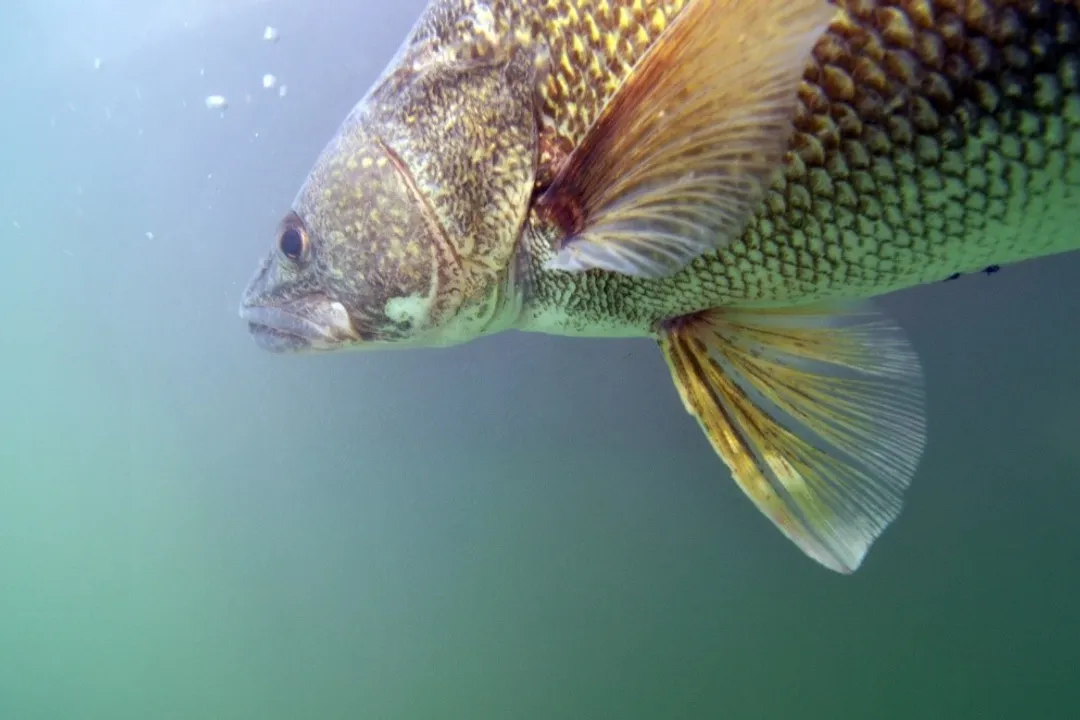
The most obvious physical specialization of the walleye is its large, forward-facing eyes, often described as ghostly or vitreous. This morphology grants the fish superior visual acuity specifically during the crepuscular hours—dawn and dusk—or in deeper, darker waters. This enhanced low-light vision provides a decisive hunting advantage over its prey, which often rely on sight, allowing the walleye to occupy a successful predatory niche in environments where other sight-dependent predators struggle. This visual specialization appears to be under stabilizing selection across its range because reduced visual acuity would directly lead to diminished foraging success and consequently lower reproductive fitness.
Related Questions
To which genus does the walleye (*Sander vitreus*) belong alongside the sauger?What specialized trait allows walleye to hunt effectively in low light?What major geological events caused initial separation of distinct walleye genetic groups?What water characteristics does the Federal government screening process suggest walleye generally prefer?What concept describes how larval conditions influence adult walleye size and maturity decades later?Which growth strategy is favored where predation risk is high for young walleye?What physiological tolerances fundamentally restrict the walleye’s colonization potential?What two drainage systems define the northernmost and southernmost limits of the walleye's native range?What type of selection favors earlier maturity at a smaller size due to heavy fishing?What niche did key evolutionary innovations in the *Sander* lineage enable walleye to exploit?