Which fin structure effectively replaces the ventral fins and serves as the primary means of locomotion?
Answer
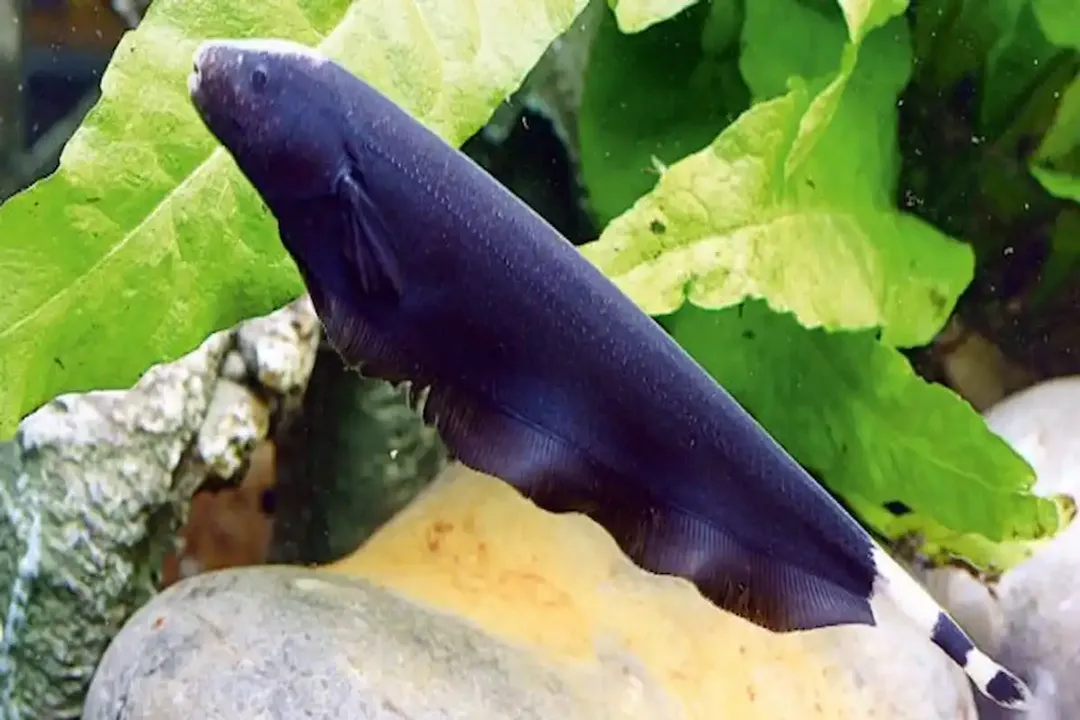
A greatly extended anal fin that runs nearly the entire length of the underside.
A critical identifying feature is the presence of a greatly extended anal fin that runs almost the entire length of the fish's underside, which functions as the primary engine for movement.
Related Questions
What is the primary reason the common designation 'knifefish' is applied to these species?Which fin structure effectively replaces the ventral fins and serves as the primary means of locomotion?What unique method of locomotion do knifefishes employ using their extensive anal fin?What functional priority dictates the knifefish body shape over the classic fusiform shape?Why must a knifefish maintain a relatively straight body profile while swimming?When swimming to optimize their electrical sense, what specific posture do many knifefish adopt regarding their snout angle?What trade-off is noted when knifefish angle their snouts downward for maximum electrical field pickup?What classification issue arises when comparing South American knifefish to African and Asian knifefish?Which order do the electric knifefishes primarily found in South America belong to?How does the anal fin propulsion system allow knifefish to change direction compared to typical caudal fin propulsion?What sensory adaptation is nearly exclusive to South American knifefish (Gymnotiformes) for mapping their environment?