Walleye Fish Physical Characteristics
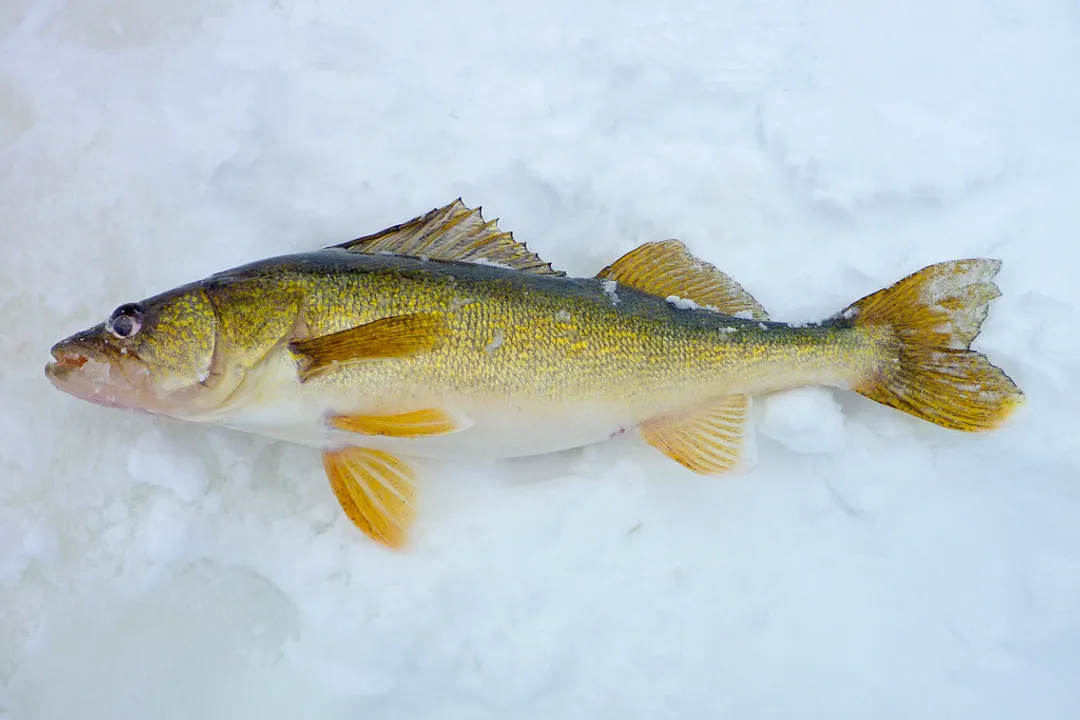
The walleye, scientifically classified as Sander vitreus, presents an anatomy perfectly tuned for its role as a top predator across the freshwater systems of North America. [1][7] Often recognized by its sheer size potential and its reputation on the dinner plate, its physical structure holds several key adaptations that define its survival strategy. [3] To truly appreciate this fish, one must look closely at the details of its build, which are far more specialized than its often muted coloration suggests. [6]
# Body Profile
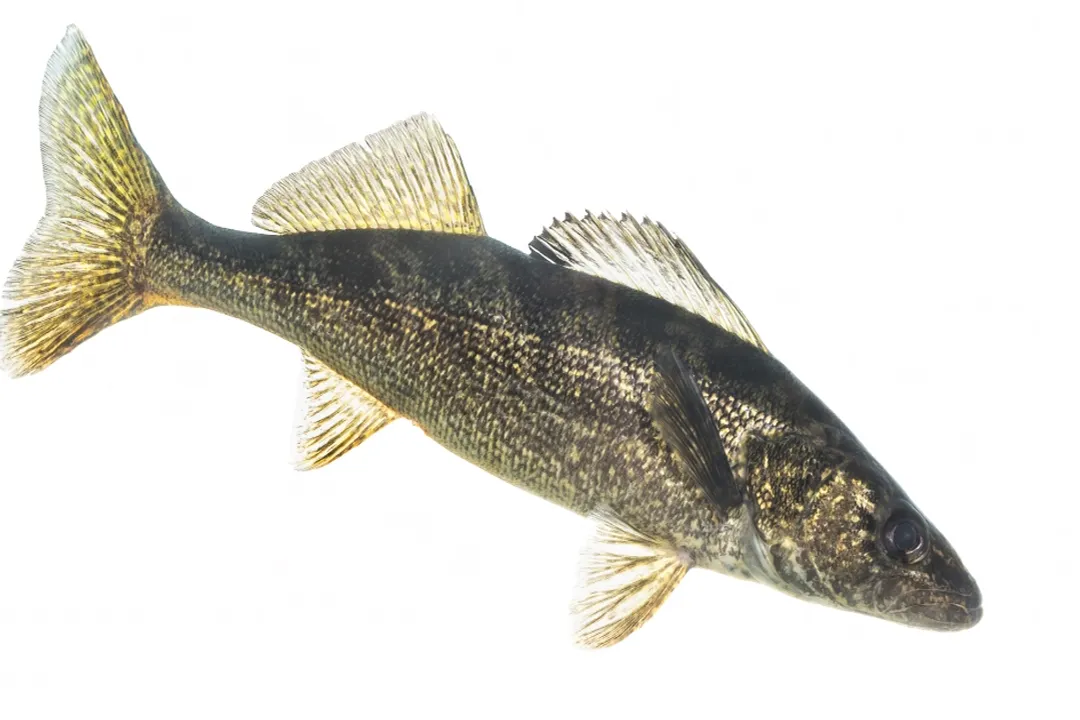
The general physique of the walleye is elongated and somewhat slender, giving it a torpedo-like appearance well-suited for navigating complex underwater environments. [4][5] This streamlined shape is indicative of a predator that relies on quick bursts of speed to overtake prey, rather than sustained, long-distance pursuits. [2] While they are powerful swimmers, their structure prioritizes efficiency in the deeper, cooler, or turbid waters they favor during much of the day. [6]
Size varies significantly depending on genetics, water quality, and feeding opportunities. While many anglers target fish in the common 10 to 15-pound range, these fish possess the capacity to grow much larger. [3] Some individuals have been recorded reaching lengths nearing 36 inches and weights approaching 30 pounds, although typical state records usually hover around the upper teens or low twenties for trophy catches. [2] The robust musculature supports these impressive dimensions, contributing to their fighting ability once hooked. [4]
# Opaque Eyes
The most defining characteristic of the walleye, and the feature from which its common name is derived, is its eyes. [1][4] They possess large, distinctively opaque or glassy eyes. [4][5] This unique structure is not merely aesthetic; it is a crucial sensory adaptation. [6] The eye contains a light-sensitive layer called the tapetum lucidum, which reflects incoming light back across the retina. [1]
This reflective quality allows the walleye to gather significantly more light than fish with clear eyes, granting them superior vision in low-light conditions. [1][6] This translates directly into their behavior, enabling them to feed actively at dawn, dusk, and even throughout the night or in heavily stained or deep water where sunlight penetration is minimal. [6] The milky, almost ghostly appearance under direct light is what gives them their distinctive look, clearly setting them apart from many other common freshwater species. [4]
# Coloration Variation

A key aspect of walleye physical description is that they do not adhere to a single, static color pattern; rather, their appearance is highly context-dependent, acting as an excellent example of natural camouflage. [1][6] Their primary coloration often consists of an olive, golden, or greenish-brown coloration across the back, which gradually fades into lighter sides before meeting a creamy white or yellowish belly. [4][5][6]
However, the intensity of these hues shifts dramatically based on the environment. Fish inhabiting clearer water systems, lakes with sandy bottoms, or bright, well-lit environments tend to exhibit lighter, more yellowish or golden tones. [6] Conversely, walleye dwelling in turbid rivers, lakes with muddy bottoms, or deep, dark basins will adopt significantly darker, often dusky green or brown pigmentation. [2][6] This plasticity in coloration allows them to effectively disappear against the substrate, whether it is dark mud or pale sand. [1] Understanding this, an observer can often make an educated guess about the clarity of the water a specific specimen came from just by noting its overall brightness or darkness. [6]
# Fins and Markings
The fin structure of the walleye is characteristic of the perch family (Percidae). [2] They possess two separate dorsal fins. [4] The front dorsal fin is composed of strong, sharp spines, providing a defensive barrier against potential predators. [2][5] Immediately following this spiny fin is a second, softer dorsal fin composed of rays. [2][4]
One of the most reliable field marks for positive identification, particularly when differentiating a walleye from its close relative, the sauger, is found on that first spiny dorsal fin. [2][5] Walleye characteristically display one or more prominent dark spots or bands on this fin, most notably a distinct, dark blotch located right at the posterior edge or tip of the spiny dorsal fin. [2][4] The sauger, by contrast, usually exhibits rows of dark spots across the fin without that singular, pronounced tail-end spot. [5] Paying close attention to this specific marking pattern can eliminate misidentification, which is vital for anglers practicing catch-and-release in areas where both species coexist. [2]
The other fins contribute to stability and maneuverability. The pectoral fins are generally transparent. [4] The tail, or caudal fin, is distinctly forked. [4] Furthermore, the anal fin is present, completing the standard array of fins for a bottom-to-mid-water column predator. [2][4]

# Mouth and Texture
The business end of the walleye, its mouth, is large and equipped with pronounced, canine-like teeth. [2][5] These teeth are built for grasping and holding slippery prey, such as smaller fish, which make up the bulk of their diet. [2]
The entire body is covered in scales, which are notably rough to the touch, typical of many predatory freshwater fish. [2] Running along the lateral line, sensory organs help the fish detect vibrations and movements in the water, an essential tool when hunting in the low-visibility conditions its eyes are adapted for. [6]
# Comparing Related Species
While the walleye (Sander vitreus) is often mistaken for its smaller cousins, the sauger (Sander canadensis) or the Pikeperch, physical characteristics are key to differentiation. [2][5] Beyond the critical dark spot on the spiny dorsal fin already mentioned, there are subtle differences in body shape and markings. [5] Sauger tend to have a more distinct, dark saddle or bar pattern running across their backs, and their eyes, while still large, are often described as less opaque or "glassy" than those of the true walleye. [2][5] Additionally, walleye often exhibit a more continuous color transition from top to bottom, whereas sauger frequently show more defined horizontal barring. [5]
| Feature | Walleye (S. vitreus) | Sauger (S. canadensis) |
|---|---|---|
| Dorsal Spot | Single, dark spot on posterior edge of spiny fin [2][5] | Rows of distinct dark spots across the spiny fin [5] |
| Eye Appearance | Large, distinctly opaque or glassy [1][4] | Large, but typically less milky/opaque [5] |
| Body Coloration | More uniform transition, variable based on habitat [6] | Often shows more distinct dark horizontal barring [5] |
| Body Profile | Generally more slender and elongated [4] | Shorter and stockier in comparison [5] |
Observing the placement of the dorsal fin's dark pigmentation provides an immediate field test; if the spot is primarily concentrated at the very rear edge of the spiny fin, it strongly suggests a walleye, even if the water clarity has made its general body color very dark. [2][5] This level of physical discernment is important when regulations or conservation efforts target one species specifically in certain waters. [1]

# Summary of Key Features
To distill the defining physical traits of the walleye, an angler or biologist should look for this combination:
- Elongated Body: Streamlined for quick movement. [4]
- Glassy Eyes: The adaptation for low-light vision. [1][6]
- Dorsal Mark: A distinct black spot at the rear tip of the spiny dorsal fin. [2][5]
- Color Range: Highly variable, ranging from pale yellow-gold in clear water to deep olive-brown in turbid conditions. [6]
- Teeth: Visible, sharp teeth in a large mouth for grasping prey. [2][5]
The entire physical package of Sander vitreus is a masterclass in specialized adaptation for feeding successfully in diverse and often challenging underwater light regimes across its native range. [1][6] The combination of exceptional night vision and camouflage capabilities ensures its dominance as a premier predator. [2]
Related Questions
#Citations
Walleye (Sander vitreus) | U.S. Fish & Wildlife Service
Walleye - Wikipedia
Walleye - Dakota College at Bottineau
What Does a Walleye Fish Look Like? - Totem Resorts
Walleye - Chesapeake Bay Program
Walleye biology and identification | Minnesota DNR
Walleye | Washington Department of Fish & Wildlife
Fish Species - Walleye - Iowa DNR
Walleye - WVDNR