Why are knife fish called knifefish?
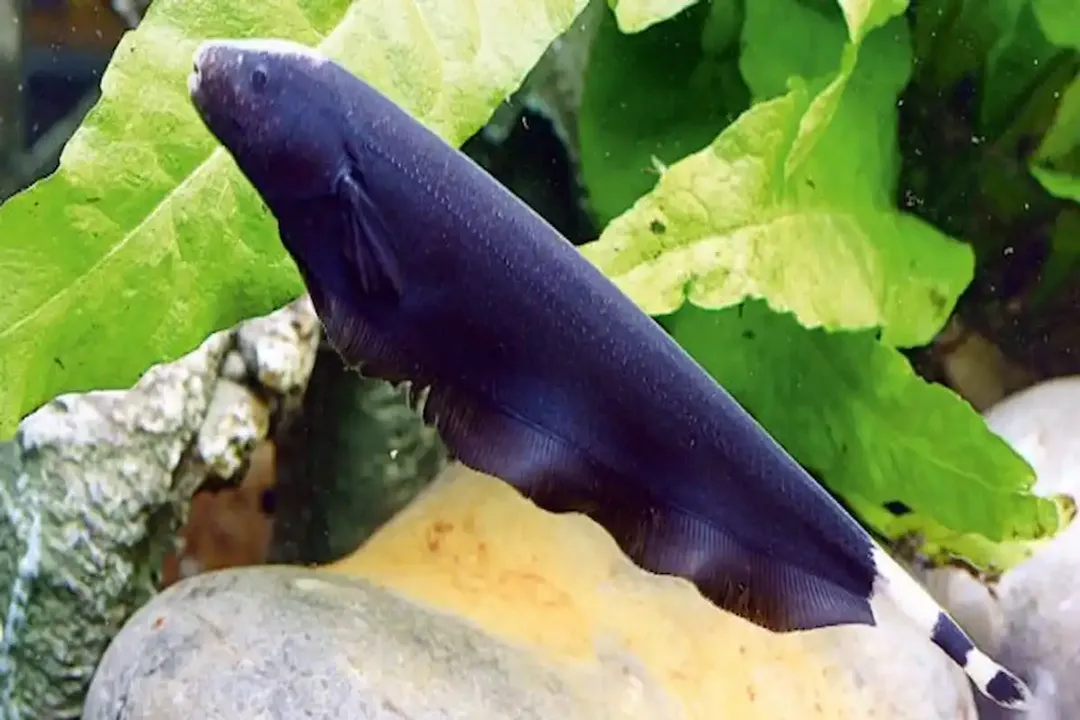
The common designation given to various fish species across different continents—knifefish—stems directly from their remarkably distinctive body architecture. It is a name earned through visual association, describing a shape that is strikingly long, laterally compressed, and thin, giving the distinct impression of a flat, slender blade. This unusual morphology sets them apart in most aquatic environments and is the fundamental reason for their nomenclature.
# Body Shape
The silhouette of a knifefish is immediately recognizable, particularly among the New World members of the suborder Gymnotoidei. They possess an elongated form that is sideways-flattened, resulting in that blade-like profile when viewed head-on or from above. Unlike many other fish that might be round or torpedo-shaped, the lateral compression is extreme, creating a profile closer to a ribbon or, indeed, a knife.
This physical description is further refined by the structure of their fins. A critical identifying feature, beyond the overall shape, is the presence of a greatly extended anal fin that runs nearly the entire length of the fish's underside, effectively replacing the ventral fins. This fin is not merely decorative; it is the primary engine for movement. The combination of the flattened body and this extensive, continuous fin creates an aesthetic that is simultaneously streamlined and structurally unique, cementing the "knife" comparison.
Considering this morphology, one can observe an interesting functional compromise. A classic fusiform, or torpedo, body shape is hydrodynamically optimal for rapid bursts of speed common in open-water predators. Knifefish, however, prioritize stealth, navigation, and precise maneuvering in complex, often dark, habitats. Their blade shape, propelled by the rippling anal fin, allows for highly controlled movement across different vectors—forward, backward, or hovering—without significant body flexion, which would otherwise interfere with their primary sensory tool. The straightness enforced by their swimming style is key to maintaining the integrity of their electrical navigation field; any significant bending of the body to generate thrust, like typical fish use, would disrupt their 'view' of the environment. This dedication to maintaining a straight, predictable profile, dictated by sensory necessity, perpetually reinforces the straight-edged, knife-like appearance in motion.
# Fin Propulsion
The sheer scale of the anal fin is what converts the static, blade-like shape into a functional aquatic design. Knifefishes employ a unique method of locomotion known as undulatory or rheotactic propulsion, where waves travel along the long anal fin to generate thrust. This mechanism allows them to swim both forward and backward with surprising agility, often backtracking instantly when encountering prey or an obstruction.
For many species, especially the Gymnotus genus, this ability to instantly reverse direction without turning is a significant advantage in tight quarters. They can essentially stop, slide backward, and realign their attack vector almost instantaneously. This contrasts sharply with the typical caudal (tail) fin propulsion used by many teleost fish, which requires a complete body turn to change direction effectively. The long anal fin acts as a single, highly articulate rudder and propeller combined.
# Sensory Adaptation
While the name originates from the visual shape, the function enabled by that shape is inseparable from their ecology. Knifefish, particularly the South American Gymnotiformes, are often nearly blind or entirely so, relying almost exclusively on self-generated, low-voltage electrical discharges for electro-navigation and communication. This sensory system functions much like echolocation in bats, allowing them to map their surroundings in dark or turbid waters.
To optimize the range of this electrical "sense," many knives adopt a specific posture, swimming with their snouts angled downward at approximately 30 degrees. This angle maximizes the field pickup, though the sources note this action imposes a hydrodynamic cost, suggesting the fish actively forgo energy conservation in favor of maximizing their sensory range. This functional need for an unimpeded electrical field directly explains why their bodies must remain relatively straight, reinforcing the straight lines that result in the "knife" impression. The visual appearance is thus an emergent property of a deeper, sensory requirement.
# Diversity and Names
The term "knifefish" is not exclusive to a single, closely related group, which is an important distinction. It is a common name applied to groups that have converged on a similar body plan, even if they are not closely related taxonomically.
The most commonly discussed are the South American knifefishes, belonging to the order Gymnotiformes, which include families like Gymnotidae, Apteronotidae, and Rhamphichthyidae. These species are known for their electric capabilities. An interesting variation within this group is the Mouse-tailed knifefish, such as Gymnorhamphichthys, which possesses a long, whip-like extension off the rear end, further playing into the elongated, pointed motif.
However, the name is also applied to African and Asian fishes belonging to the family Notopteridae, which are from an entirely different order (Osteoglossiformes). While these fish share the elongated, compressed body characteristic, their relationship to the South American electric knives is distant. For instance, the African and Asian families may still retain a dorsal fin, which the American gymnotids lack. This shows that the name is a descriptive label based on superficial, though striking, similarity in shape rather than strict monophyletic ancestry. When observing an aquarium specimen like the Black ghost knifefish (Apteronotus albifrons) or the Clouded Ghost Knifefish (Adontosternarchus nebulosus), this characteristic, flattened, knife-like profile is precisely what owners and aquarists note.
# Ecological Niche
Their shape and sensory capabilities position knifefish perfectly within their environments—quiet lakes, lagoons, and dark river areas. They are predominantly nocturnal predators. Because they navigate via electricity, vision becomes a secondary or tertiary sense, indicated by their small eyes. Their diet generally consists of smaller aquatic creatures, such as small characins or other invertebrates, which they can fit into their mouths, which are often small and sometimes tubular.
This lifestyle—operating in the dark, requiring stealth, and needing fine positional control—is perfectly accommodated by the knife morphology. If they were broad-bodied, they would struggle to navigate dense submerged roots or vegetation that offer nocturnal cover. The slim profile allows them to slip into tight spaces, while the anal fin propulsion allows them to enter and retreat from those spaces with equal ease.
For aquarists, understanding this fundamental design principle helps in providing appropriate environments. The preference for caves, dense décor, and subdued lighting is a direct consequence of their visual limitations and electrical navigation strategy. Attempting to keep them in brightly lit, open tanks fundamentally contradicts the evolutionary pressures that shaped them into what we call knifefish. Even an apparent trick for visibility—like placing them inside clear tubing, where they might not realize they are visible—only works because their primary awareness relies on their electrical field, not on light detection.
# Summary of Naming
In essence, the fish are named knifefishes because their primary physical identifier—their body plan—mimics a knife blade. This shape is characterized by:
- Extreme lateral compression.
- An elongated form.
- A continuous, long anal fin that dictates their unique swimming style.
This morphology is not just arbitrary; it is inextricably linked to their specialized, electrical sense which requires a relatively straight body axis for optimal function. Thus, the name serves as an immediate descriptor of their most visible and defining physical trait, even though it applies across distantly related lineages that have independently arrived at the same solution for navigating low-light habitats.
Related Questions
#Citations
Predators: The knifefishes - Practical Fishkeeping
Knifefish | electric, nocturnal & freshwater | Britannica