What specialized sensory organs aid the zebra shark in locating bottom-dwelling prey?
Answer
Barbels
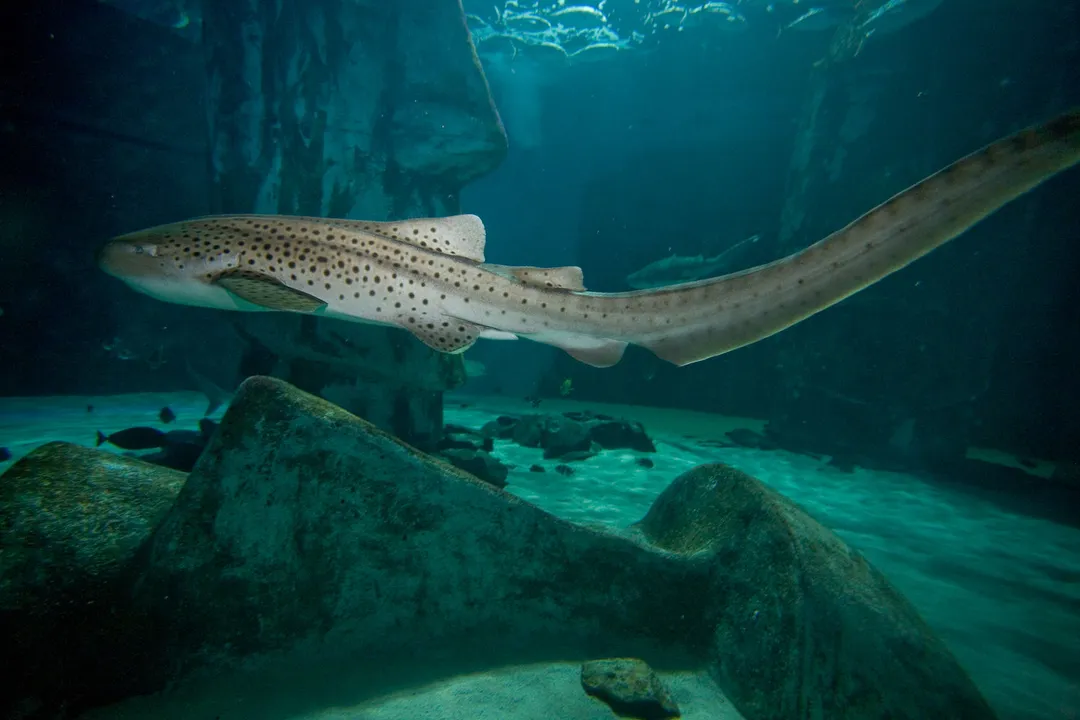
The zebra shark possesses specialized sensory organs located just in front of its small, blunt snout, known as barbels. These whisker-like structures serve a crucial function in locating food, especially when the shark is foraging in dark or murky water conditions common on the sea floor. This sensory input is integral to their specialized nocturnal foraging strategy, allowing them to detect hidden prey, which primarily consists of bottom-dwelling mollusks and crustaceans, even when visual cues are unavailable.
Related Questions
Why does the Stegostoma tigrinum earn the common name zebra shark?What common name replaces the zebra shark designation in places like the UK?What environmental feature is mimicked by the juvenile zebra shark's striping pattern?What physical trait is present on adult zebra sharks but absent in juveniles?What specialized sensory organs aid the zebra shark in locating bottom-dwelling prey?How do zebra sharks manage respiration without constant swimming?What is the reproductive classification for zebra sharks that lay eggs in tough casings?What biological process allows female zebra sharks to reproduce without fertilization?What is the IUCN conservation status of zebra sharks throughout most of the Indo-Pacific?How do researchers safely induce tonic immobility in a zebra shark for sampling?