What are some interesting facts about the dogfish shark?
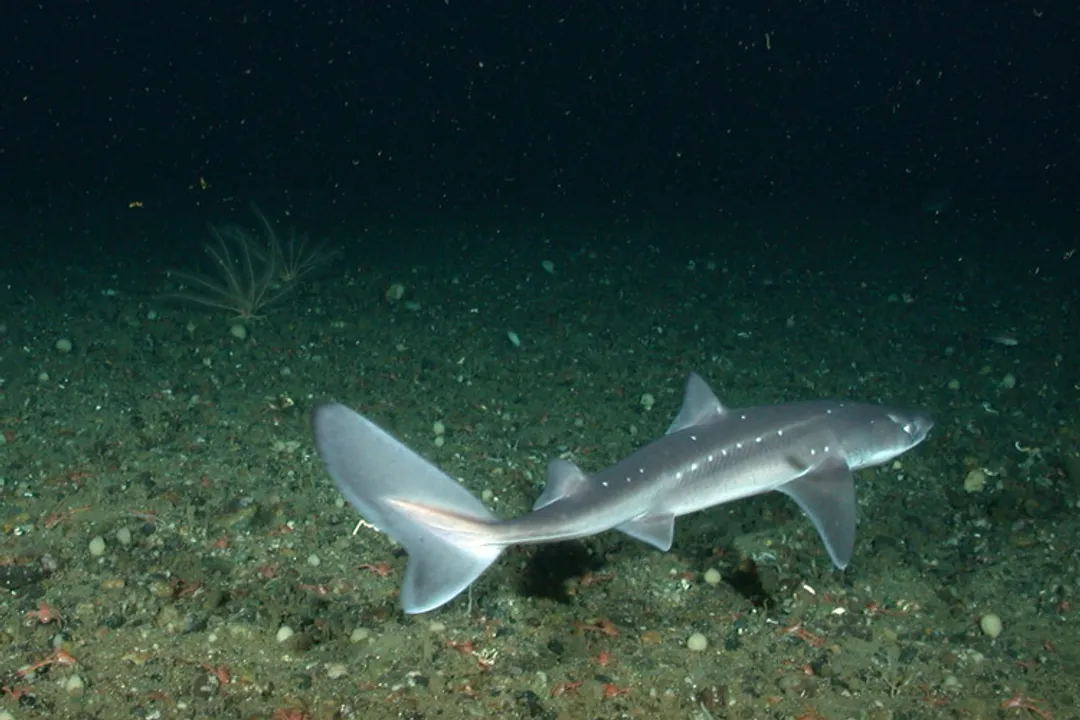
Dogfish sharks, despite their common name which suggests a terrestrial, friendly companion, are fascinating, often misunderstood residents of our oceans, belonging to the order Squaliformes, the second-largest order of sharks. While "dogfish" can refer to a broad group, the most frequently discussed species are the Spiny Dogfish (Squalus acanthias) and the Smooth Dogfish (Mustelus canis). These sharks exhibit a remarkable diversity in lifestyle, from deep-sea camouflage artists to coastal scavengers, all wrapped up in a small, slender package.
# Naming and Kinship

The "dog" in dogfish stems not from affection but from their observed behavior; fishermen noted how they chased down fish together in large groups, reminiscent of a pack of dogs. The Spiny Dogfish, scientifically known as Squalus acanthias, is noteworthy as one of the most abundant sharks historically, though its numbers have fluctuated significantly. A key distinction within this group is that populations in the northern Pacific have recently been recognized as a separate species, the Pacific Spiny Dogfish (Squalus suckleyi). The Squaliformes order is expansive, also including relatives with unique features such as the bramble sharks, which have rough, brambly skin due to bumps on their surface, and the imposing sleeper sharks, which inhabit frigid Arctic waters and prey on seals.
# Defining Features
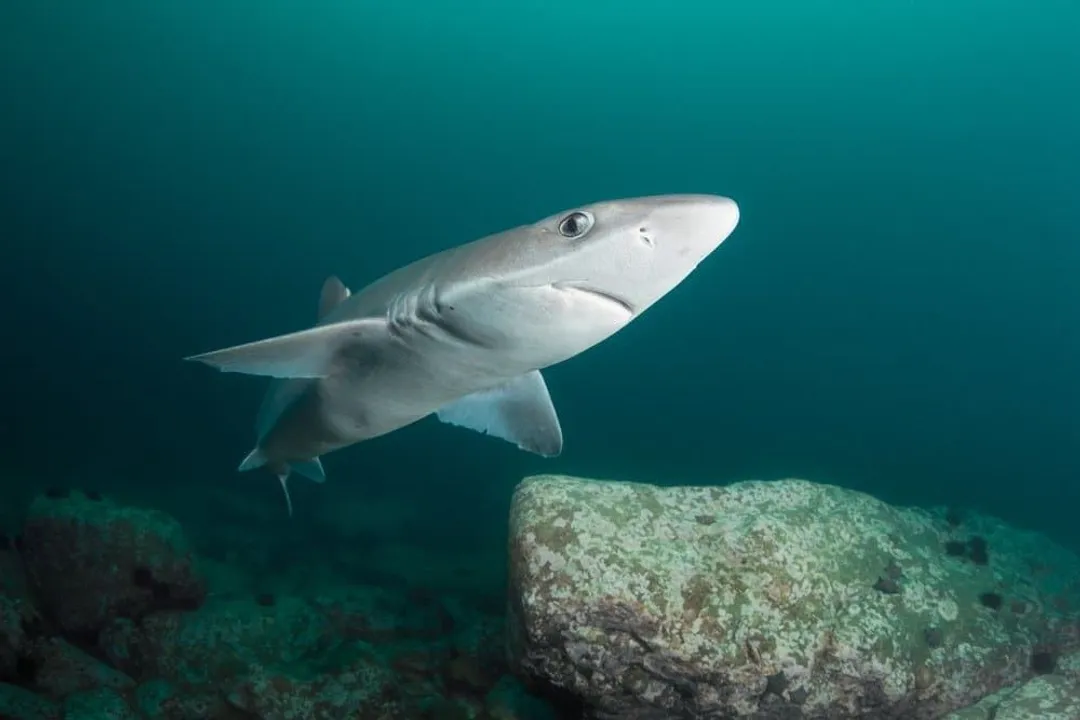
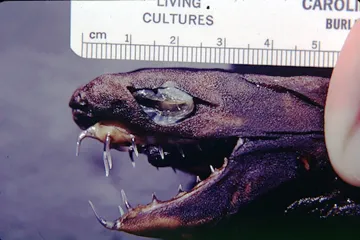
The primary physical characteristic separating the two common types is right in the name of one: the spine. Spiny Dogfish possess two distinct, large spines, one situated immediately in front of each of their two dorsal fins. These spines are not just for show; they secrete a mild venom, serving as a crucial defense mechanism against predators like seals and larger sharks. Spiny Dogfish typically have gray or brownish backs, a white underside, and distinctive white spots along their sides, which tend to fade as the shark ages. Males might reach about $3.3$ feet, while females can grow slightly larger, up to $4$ feet.
In contrast, the Smooth Dogfish, Mustelus canis, lacks these dorsal spines entirely. Smooth Dogfish are characterized by their slender build, triangular fins, and notably large, oval, cat-like eyes. While the Spiny Dogfish is armed with spines, the Smooth Dogfish relies on a different tool for survival: its teeth. Unlike many sharks with sharp, blade-like teeth designed for tearing, the Smooth Dogfish sports rows of flat, pavement-like teeth ideal for crushing and grinding the hard shells of its preferred diet.
# Deep Water Secrets
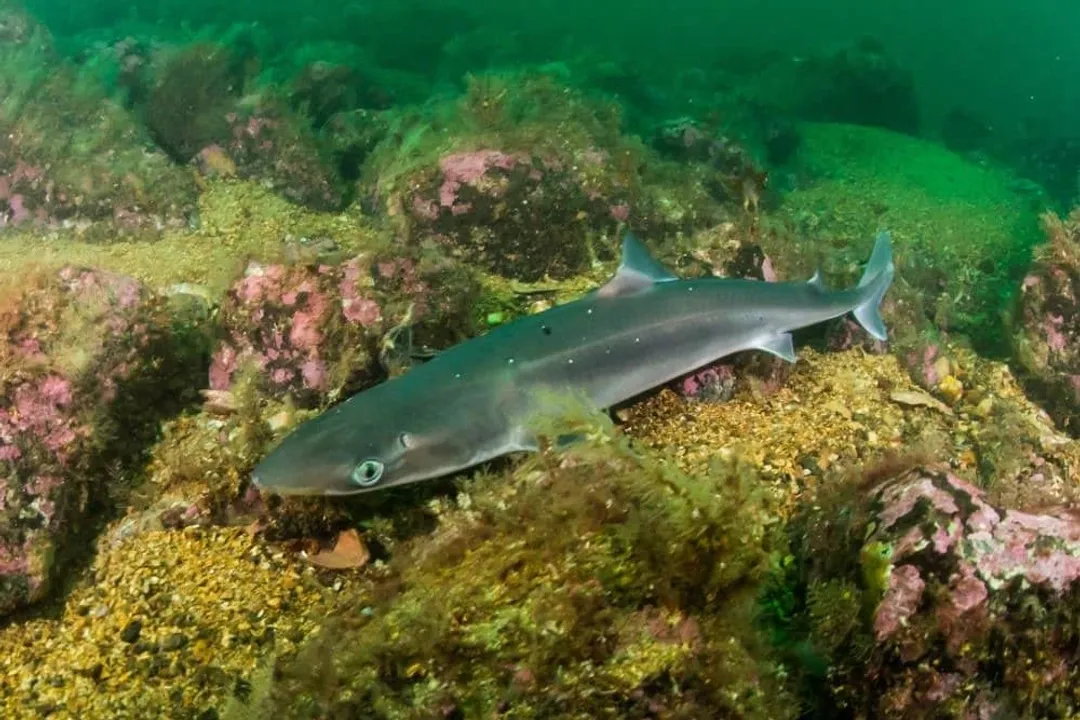
While many dogfish species frequent coastal areas, some deepwater varieties of Spiny Dogfish have developed incredible adaptations for life in the low-light environment. These sharks possess specialized organs along their sides that produce light—a trait known as bioluminescence. Scientists theorize this serves a dual purpose: attracting prey, such as squid, and providing counter-illumination camouflage by neutralizing the shark's shadow against the faint light filtering down from the surface, thus making them harder for bottom-feeding predators to spot. Their eyes in these deep-dwelling relatives are also exceptionally large and sensitive to light, a necessity where natural illumination is scarce.
The behavior of dogfish is often gregarious, which links back to their common name. They are famous for swimming and hunting in massive schools that can number in the thousands. This tendency to travel in a "pack" remains a defining feature of the Spiny Dogfish.
# Diet and Ecology
Dogfish are opportunistic feeders, meaning they consume whatever prey is most readily available in their environment. Spiny Dogfish prey includes a wide spectrum of smaller marine life: octopuses, crabs, squid, jellyfish, shrimp, and even smaller sharks. It is hypothesized that they might eat less during the winter months when they move to deeper waters, often appearing quite thin when they return to shallower coastal areas in the spring.
The Smooth Dogfish also fills an important niche, particularly as a nocturnal feeder. Their flattened teeth are perfectly suited for crunching through the tough exoskeletons of large crustaceans like crabs, lobsters, and shrimp, as well as mollusks. Younger Smooth Dogfish tend to focus on smaller shrimp and polychaete worms. Given their role in the food web, they are considered ecologically important keystone predators in their niche. However, they are preyed upon by a variety of larger marine animals, including seals, orcas, large sharks, cod, and tuna.

# A Slow Clock of Life
Perhaps the most striking facts about the Spiny Dogfish concern its slow life cycle, a characteristic that directly impacts its resilience against human pressure. Spiny Dogfish are estimated to have the longest gestation period of any vertebrate known to science, lasting up to two full years (approximately 24 months). Following internal fertilization, the embryos develop, and the eggs hatch inside the mother, but gestation continues for nearly two years. This means a female dogfish may be concurrently carrying one litter while the embryos for the next litter are already developing.
This extreme parental investment results in small litters, typically averaging six pups, though this can range from two to fifteen. The late arrival of maturity compounds this slow recovery rate: females might not reproduce until they are 12 or 14 years old, while males mature around age 6 or 11, depending on the study. Their potential lifespan is also considerable, with some individuals documented living up to 80 years. This slow reproductive pace makes the species highly vulnerable to population decline; a period of heavy fishing pressure can take decades to recover from. To put this slow pace into perspective for coastal enthusiasts: a Spiny Dogfish swimming off Maryland today might have been born before the internet age, potentially during World War II, given their maximum documented lifespan of 80 years. While the Smooth Dogfish matures faster—males around 2-3 years and females 4-5 years—its lifespan is much shorter, with females documented to live about 16 years and males only 10. This contrast between the two common types highlights the varied life history strategies within the dogfish family.
# Human Impact and Culinary Identity
Dogfish sharks, particularly the Spiny variety, have a complicated relationship with humans, both as a source of concern for conservationists and as a commodity in the seafood market.
Historically, the Spiny Dogfish was one of the most abundant shark species globally, but overfishing led to significant population crashes. The International Union for Conservation of Nature (IUCN) lists the species as vulnerable globally, with the Northeast Atlantic population facing a critically endangered status. The very slow reproductive rate, long gestation, and late maturity make them exceptionally susceptible to overexploitation, a classic vulnerability for slow-growing shark species. Management of the Atlantic Spiny Dogfish is a joint effort involving NOAA Fisheries, the Mid-Atlantic and New England Fishery Management Councils, and the Atlantic States Marine Fisheries Commission (ASMFC). Regulations include setting annual catch limits, trip limits, and establishing gear restrictions, such as those to reduce bycatch of the Atlantic sturgeon. Interestingly, despite the conservation concerns, U.S. wild-caught Atlantic spiny dogfish is considered a smart seafood choice due to the existing sustainable management structure under U.S. regulations.
The Spiny Dogfish is frequently caught commercially and recreationally, though recreational anglers in places like Maryland often consider them "undesirable" and release them due to their tendency to be caught in groups. In European cuisine, Spiny Dogfish is widely consumed under various aliases. It is famously the fish used in fish and chips in England, sold as rock salmon or huss. In France, it might be called small salmon, and in Germany and Belgium, it is known as sea eel. In Chinese cuisine, the fins and tails are sometimes processed to create fin needles as a more affordable substitute for true shark fin soup. The complexity of this culinary identity—being called "salmon" or "rock"—might actually obscure its true identity as a vulnerable shark from the average consumer, making simple calls for conservation based on the word "shark" less effective than clarifying these common market names.
The Smooth Dogfish has also seen commercial interest, especially along the mid-Atlantic coast of the U.S., with landings jumping significantly in the 1990s. Thankfully, this species is considered harmless to humans due to its small size and blunt, crushing teeth.

# Beyond the Plate
The importance of dogfish extends into the laboratory. Research on these sharks offers insights applicable to human health. For instance, studies on the dogfish rectal gland assist scientists in better understanding the function of human kidneys. Furthermore, the compound called squalamine, secreted by dogfish, has shown promise as it possesses strong antibiotic characteristics and potential anti-cancer properties. This fact underscores a broader principle in marine biology: species facing conservation threats may hold undiscovered biomedical secrets, meaning every loss of a population means the potential loss of future medical breakthroughs. Observing the management approach for the Spiny Dogfish—a species historically overfished but now rebuilding under strict federal/state quotas—offers a working case study in how slow-maturing marine populations can potentially be brought back from the brink, provided the fishing pressure is consistently controlled and the slow life cycle is respected.
# Size and Distribution Summary
Dogfish are generally small, bottom-dwelling sharks found across the globe in temperate and boreal waters, though they are known to undertake long migrations; one specimen was recorded traveling from Washington state to Japan, a journey of $5,000$ miles.
| Feature | Spiny Dogfish (S. acanthias) | Smooth Dogfish (M. canis) |
|---|---|---|
| Key Feature | Spine in front of each dorsal fin (venomous) | Lacks dorsal spines |
| Teeth | Sharp, designed for biting | Flat, pavement-like, for crushing |
| Coloration | Gray/brown with white spots (fading with age) | Gray to brown with yellowish-gray/white underside |
| Max Length (Female) | Approx. 49 inches | Approx. 59 inches (150 cm) |
| Gestation | Up to 24 months (longest of any vertebrate) | 10–11 months |
| Maturity (Female) | ~12–14 years | 4–5 years |
It is fascinating to consider the evolutionary divergence between two species that share a common name and overlapping ranges. The Spiny Dogfish relies on venom and schooling to survive in cooler, deeper waters, while the Smooth Dogfish, with its specialized crushing jaws, thrives in warmer, shallower western Atlantic inshore waters, migrating seasonally. This difference in feeding apparatus alone—teeth adapted for grinding versus defense adapted for piercing—suggests distinct ecological pressures shaping their evolutionary paths despite their superficial similarities.
# Consumer Choices
For consumers interested in seafood options, understanding the regulatory landscape is becoming increasingly important. In the U.S., the management framework applied to Atlantic Spiny Dogfish is designed to prevent overfishing, meaning that the product available commercially is part of a system intended to maintain the stock. When ordering or purchasing dogfish, knowing the local market names—like rock salmon—can help prompt questions about sourcing, which might lead consumers to seek out sustainably managed US-caught products over potentially unregulated international sources. The mild and sweet flavor, flaky yet firm texture, and high protein/selenium content make it an appealing food choice when sourced responsibly. Ultimately, whether you encounter one of these small sharks while angling or see it listed on a menu, the dogfish family presents a rich case study in marine biology, from extreme longevity to complex chemical defenses and challenging conservation demands.
#Videos
All About Pacific Spiny Dogfish - Shark and Ray Awareness Day
Related Questions
#Citations
Everything You Need to Know About Dogfish - Ocean Conservancy
Spiny Dogfish | Oceana
Dogfish sharks | Research Starters - EBSCO
Atlantic Spiny Dogfish - NOAA Fisheries
Smooth Dogfish – Discover Fishes - Florida Museum of Natural History
All About Pacific Spiny Dogfish - Shark and Ray Awareness Day
Spiny Dogfish Fish Facts - Squalus acanthias - A-Z Animals
Spiny Dogfish Shark - Maryland Fish Facts