What significant historical southern limit did the Atlantic walrus range once reach off the coast of Nova Scotia?
Answer
Sable Island
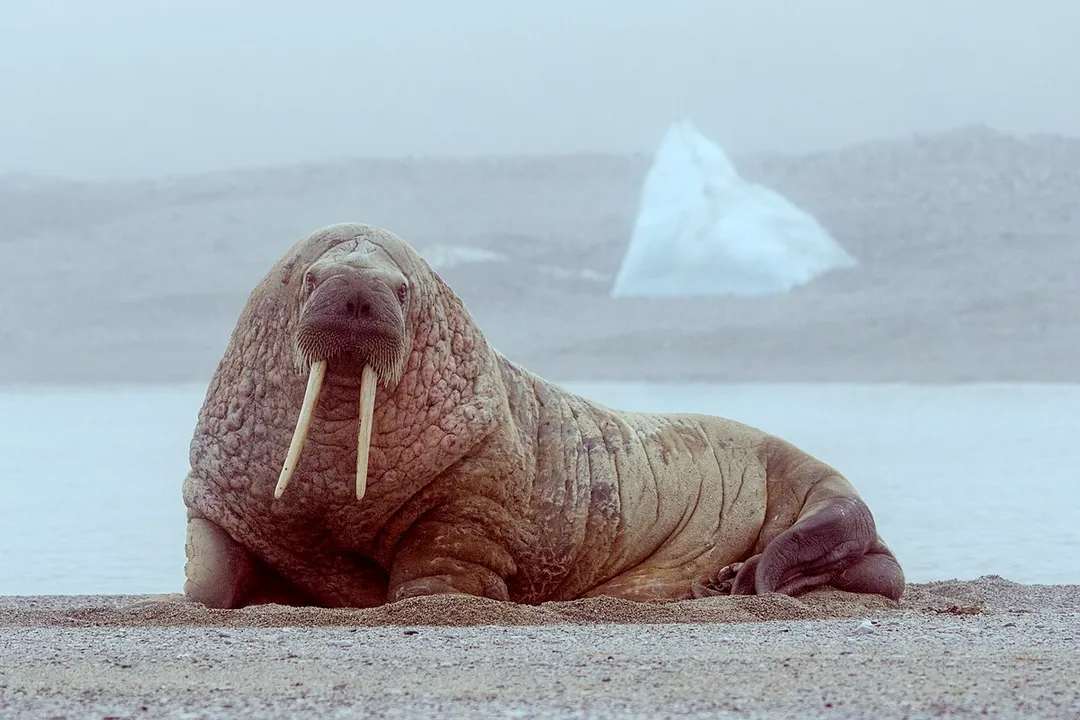
Historically, the Atlantic walrus subspecies possessed a much broader distribution than is currently observed, pushing significantly further south than their modern, more segmented Arctic range. Specifically, evidence points to colonies flourishing historically as far south as Sable Island, which is an island located off the coast of Nova Scotia, Canada. This historical southward extension also included the area around the Greater Gulf of St. Lawrence region, demonstrating a previous ability to utilize more temperate, southerly feeding grounds compared to today's restricted Arctic habitat.
Related Questions
What is the approximate population size of the Atlantic walrus (*Odobenus rosmarus rosmarus*)?What does the scientific name *Odobenus rosmarus* translate to, referencing the animal's behavior?What term locally refers to the massive, traditional coastal haul-out sites where Pacific walruses aggregate when sea ice vanishes?What critical intersection of features dictates the establishment location for walrus populations?Which specific regions spanning the United States and Russia are dominated by the much larger Pacific walrus population?What significant historical southern limit did the Atlantic walrus range once reach off the coast of Nova Scotia?Why do Atlantic walruses in island chains like the Canadian Arctic tend to rest on land more routinely than their Pacific relatives?Where do Pacific walruses undertake dramatic seasonal migration movements during the winter months?Which European archipelago is cited as one of the most reliable and accessible places to observe Atlantic walruses hauled out during summer and autumn retreats?When observing walruses, what behavior should viewers avoid due to the risk of causing deadly stampedes?