Walrus Locations
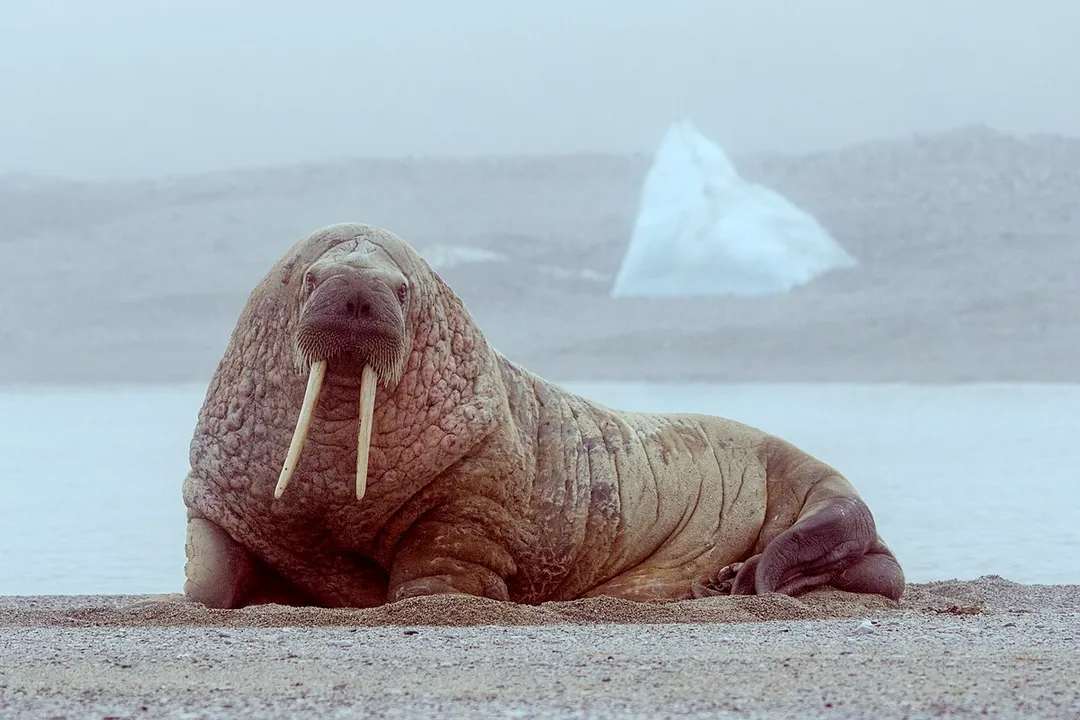
The vast, icy expanse of the Arctic is home to one of the ocean’s most recognizable giants: the walrus (Odobenus rosmarus). These magnificent, tusked marine mammals possess a discontinuous distribution circling the North Pole, meaning they are not found everywhere in the Arctic, but rather concentrated in specific, vital regions. [1][2][9] Their world is one defined by the presence and retreat of sea ice, which serves as their primary platform for resting, giving birth, and accessing the shallow benthic feeding grounds they depend on. [3][4][5][10] The geography of the walrus is essentially split into two primary arenas, corresponding to the two widely recognized subspecies: the Atlantic and the Pacific. [2][5][9]
# Subspecies Division
The global distribution of the walrus is divided primarily along oceanic boundaries, creating distinct genetic and ecological groups. [2][3] The scientific name itself, Odobenus rosmarus, translates roughly to "tooth-walking sea horse," a nod to how they use their prominent tusks to pull their massive bodies onto the ice. [3][9]
The Pacific walrus (Odobenus rosmarus divergens) dominates the sheer numbers and occupies the vast regions spanning the Bering and Chukchi Seas, primarily between Alaska in the United States and Russia. [1][4][5] This population is significantly larger, estimated to be around 200,000 individuals or more in recent decades, though estimates have fluctuated due to hunting pressures and environmental changes. [1][4][5]
Conversely, the Atlantic walrus (Odobenus rosmarus rosmarus) is much smaller in population size, with estimates hovering around 25,000 individuals. [5] Historically, the Atlantic subspecies ranged further south than today, with colonies once flourishing as far south as Sable Island, off the coast of Nova Scotia, and throughout the Greater Gulf of St. Lawrence region. [1][3] Today, their range is more segmented across the Atlantic sector of the Arctic. [2]
A third, debated population, sometimes classified as O. r. laptevi, is sometimes cited as being restricted to the Laptev Sea region of Russia; however, recent genetic studies tend to link it to the Pacific walrus lineage. [1][3]
# Pacific Realm
The Pacific walrus population exhibits a strong migratory pattern closely tied to the seasonal dynamics of the sea ice over the continental shelf—the ideal area for their specialized bottom-feeding diet of clams and mollusks. [2][5][10]
During the summer months, the bulk of the Pacific walruses moves far north from the Bering Strait into the Chukchi Sea. [3][4] This area, including the waters along the northern coast of eastern Siberia and near Wrangel Island, provides expansive shallow feeding grounds supported by lingering ice floes that act as resting platforms between foraging dives. [2][5][10]
As autumn approaches and the sea ice over the productive continental shelf melts away, a dramatic shift occurs. [8][9] Lactating females and calves are particularly vulnerable as they are forced to move toward shore. [2][8] They concentrate in enormous aggregations, sometimes numbering in the tens of thousands, at traditional coastal haul-out sites known locally as ooglit on the Arctic coasts of both the U.S. and Russia. [4][8] Locations like Point Lay in Alaska and Cape Serdtse-Kamen' in Russia have become famous, or perhaps infamous, for hosting these massive, ice-free gatherings. [8][9] Historically, when ice persisted over the feeding grounds, these coastal congregations were less frequent or smaller, but the decline in summer sea ice has made these terrestrial haul-outs an increasingly common, yet perilous, feature of the Pacific walrus's annual cycle. [8][9] Smaller numbers of males might spend summers further south in areas like the Gulf of Anadyr or Bristol Bay off Alaska. [3]
When winter sets in, these groups move back south, congregating throughout the Bering Strait and concentrating in the Bering Sea along the eastern coast of Siberia and the southern coast of Alaska to overwinter. [3]
# Atlantic Territory
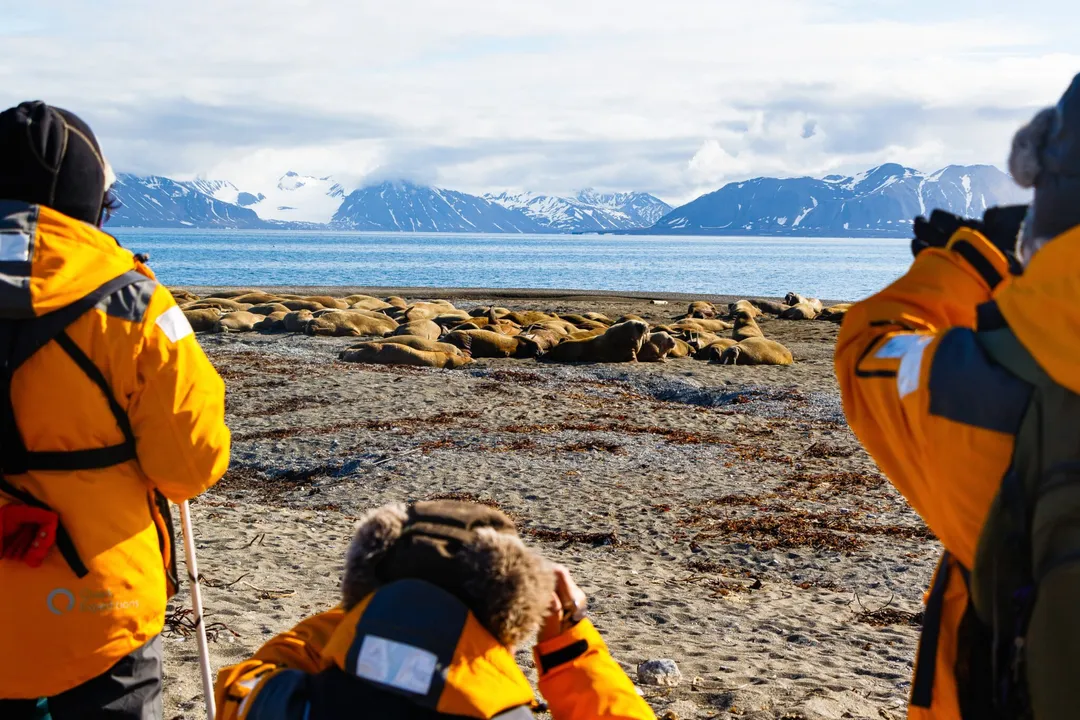
The Atlantic walrus inhabits the eastern Canadian Arctic, Greenland, Svalbard (Norway), and the western edges of Arctic Russia, such as the Kara Sea. [1][5][10] This subspecies tends to be slightly smaller than its Pacific cousins, with males averaging around 900 kilograms. [1]
In the Canadian Arctic, Atlantic walruses are distributed from the southern reaches of Hudson Bay up to the top of Ellesmere Island, with the majority concentrated within Nunavut. [1] Key areas include the Foxe Basin, which has supported the largest recorded herds, and Lancaster Sound, known for rich marine life. [1] It is notable that Atlantic walruses in island chains, like those in the Canadian Arctic, seem to rest on land more routinely than Pacific walruses because their prime feeding grounds are often situated closer to shore. [1] This can result in the formation of large, more easily observable herds on land. [1]
In European waters, the archipelago of Svalbard (Norway) hosts a significant population that has seen a remarkable recovery following historical commercial hunting bans. [3][10] Observations here are quite reliable, with specific haul-out locations frequently visited by wildlife watchers. [10] Greenland also supports populations, particularly along its north and east coasts, though land-based sightings can be less predictable than in Svalbard. [10] The recovery in Svalbard, where the population grew from near extinction to over 5,000 by 2018, stands as a significant, if localized, conservation success story when contrasted with the more fragmented and lower numbers elsewhere in the Atlantic range. [3][10]
# Ice and Shore Dependence
The fundamental requirement dictating where a walrus population establishes itself is the intersection of shallow water and a productive food base of benthic invertebrates. [2][10] Walruses generally stick to the shallow continental shelves, rarely venturing into deep water, as their dives (typically two to five minutes, though capable of up to 30 minutes) focus on the seabed, usually no deeper than 80 to 100 meters. [4][5][10]
The choice between sea ice and land for hauling out is driven almost entirely by ice availability, which is directly influenced by the season and increasingly by climate change. [2][8] Walruses use the ice platform for safety, warmth, and as a resting place between dives. [5]
The Pacific walrus, facing extensive summer sea ice loss across its vast feeding grounds in the Chukchi Sea, has become the poster child for this ice dependency shift, creating the spectacular and sometimes tragic coastal stampedes when tens of thousands must come ashore. [8][9] The distance from the shore-based haul-out to the offshore foraging grounds becomes a critical energetic equation for nursing mothers and their young. [2][8]
This difference in substrate reliance shapes population behavior distinctively. The Pacific walrus, particularly the larger group, seems to undertake far longer, more dramatic seasonal migrations dictated by the retreating sea ice edge across the vast shelf of the Chukchi Sea, often resulting in massive, tightly packed coastal haul-outs when ice is gone. In contrast, the Atlantic walrus, particularly around the islands of the Canadian Arctic and Svalbard, benefits from a more fragmented coastline offering numerous feeding grounds close to terrestrial rest spots, suggesting their migration patterns might be less about massive geographic shifts and more about optimizing local food patch proximity to stable resting areas. This difference in reliance on drifting ice versus stable land proximity significantly structures where and how these two subspecies are encountered. [1][4][10]
# Viewing Locations
For those seeking to observe these powerful animals, the location choice directly relates to which subspecies they hope to find. [4] Because the Atlantic walrus populations in certain areas rest ashore more routinely during feeding seasons due to food sources being closer to land, they can sometimes be easier to locate in large herds than the migratory Pacific groups. [1]
The Svalbard archipelago in the European Arctic is repeatedly cited as one of the most reliable and accessible places to see Atlantic walruses hauled out, especially during the summer and autumn months when the ice retreats. [2][10] Specific points like Poolepynten, Torellneset, and Smeerenburg are well-known gathering spots where expedition groups frequently observe them resting or engaging in social behavior. [10] Similarly, the Canadian Arctic, especially Nunavut and areas like the Foxe Basin, offers opportunities to view Atlantic populations on ice haul-outs or land. [1]
If the goal is to witness the sheer scale of the Pacific walrus, the focus shifts to Alaska and eastern Russia. [4][7] Viewing here is often focused on the massive, climate-driven coastal haul-outs that occur when summer sea ice disappears from the productive Chukchi Sea shelf. [8] These viewing opportunities, while potentially involving much larger numbers, are inherently less predictable and more subject to the environmental conditions forcing the massive congregations ashore. [8][9]
For the traveler prioritizing a high certainty of seeing Atlantic walruses hauled out in predictable summer/autumn aggregations, Svalbard often presents a more logistically contained observation window compared to the Pacific range. While the Pacific population is numerically superior, accessing their haul-outs in remote coastal Alaska or Russia usually requires specialized, often logistically complex, expeditions focused on specific ice-loss scenarios, whereas Svalbard provides recognized, recurring haul-out sites accessible via established expedition routes. [1][4][10]
When planning such an encounter, responsibility is key, as walruses are highly susceptible to disturbance; noise or sudden movements can trigger deadly stampedes. [2][5][10] Responsible viewing means approaching quietly, moving slowly, and paying close attention to any signs of stress displayed by the herd, aiming for presence without imposing pressure on their vital resting periods. [10]
# Status and Change
Despite their intimidating size, adult walruses have few natural predators, primarily polar bears and orcas, who usually target the young or infirm. [1][3][9] The greatest contemporary concern regarding the location and survival of these animals is the reduction of their preferred sea ice habitat due to rising ocean temperatures. [2][5][9] The IUCN currently classifies the walrus species overall as Vulnerable. [3][9] The ecological shifts in their primary locations—the Bering and Chukchi Seas for the Pacific group, and the Atlantic regions affected by ice loss—mean that where walruses were found historically, and where they must now gather, is undergoing rapid, stressful changes. [2][3] Their very survival hinges on the stability of their specific high-latitude addresses. [2]
Related Questions
#Citations
Walrus - Wikipedia
The global view of walruses - WWF Arctic
All About the Walrus - Habitat and Distribution | United Parks & Resorts
Where To See Walruses - Arctic Kingdom
Here are our top 10 facts about Walrus - WWF-UK
Pacific Walrus Range Map, Alaska Department of Fish and Game
Where can I see the Walrus in the wild - Geeky Planet
Walruses in the Arctic | Life, behaviour, and conservation challenges
More than 160 years of Walrus Haulout Observations Reported by ...
Walrus Fact Sheet | Blog | Nature - PBS