What results from the resource concentration and exclusion of other insects by supercolonies?
Answer
Simplification of the biodiversity of the affected area
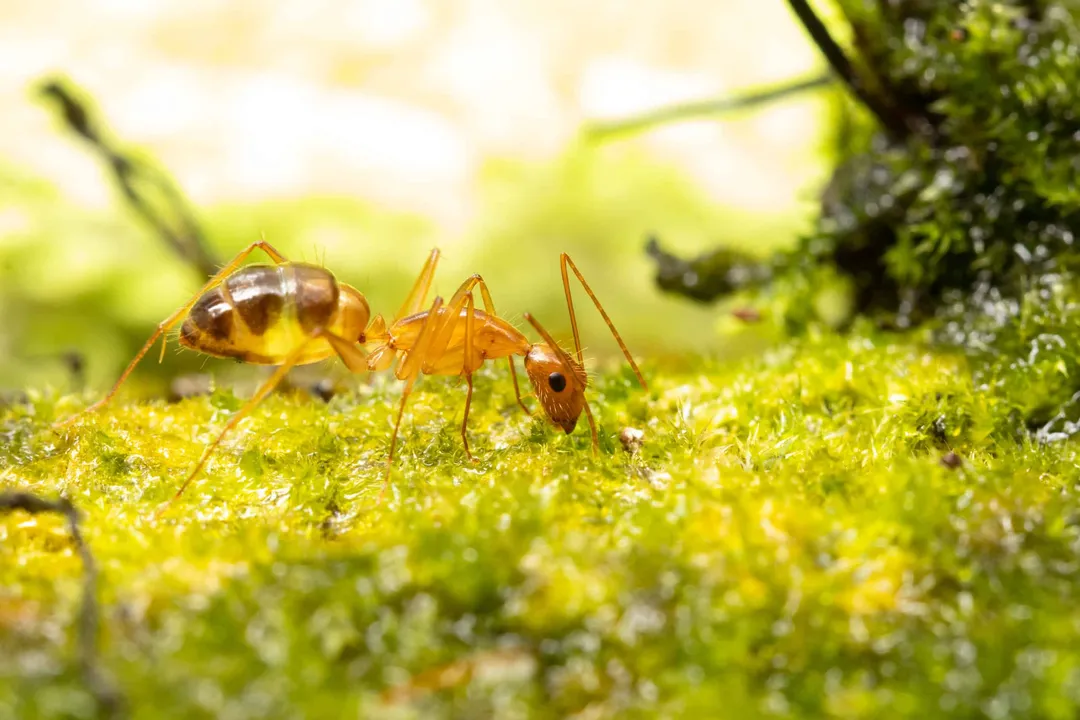
When *A. gracilipes* establishes hyper-dominant supercolonies, they achieve population densities that lead to the near-total exclusion of other ground-dwelling insects and arthropods through direct competition and predation. This concentration of resources and elimination of other insect life results in an ecological void, leading directly to the simplification of the local biodiversity. This simplification inherently makes the ecosystem more fragile, as fewer species exist to fill critical roles if the dominant ant population later faces a threat.
Related Questions
What is the scientific classification of the yellow crazy ant?What movement pattern gives the yellow crazy ant its common name?How long do yellow crazy ants rarely exceed in length?What is the unusual reproductive mechanism key to A. gracilipes colonization success?What pitfall of asexual reproduction does A. gracilipes genetic flexibility help bypass?Which caste in A. gracilipes incorporates stored paternal genes in a specialized manner?What is the main defense mechanism noted that A. gracilipes lacks compared to Solenopsis invicta?What endemic fauna on Christmas Island suffered catastrophic population crashes due to A. gracilipes predation?What results from the resource concentration and exclusion of other insects by supercolonies?What advantage does the ability to generate a genetically diverse reproductive caste give a single founding A. gracilipes queen?