Yellow Crazy Ant Evolution
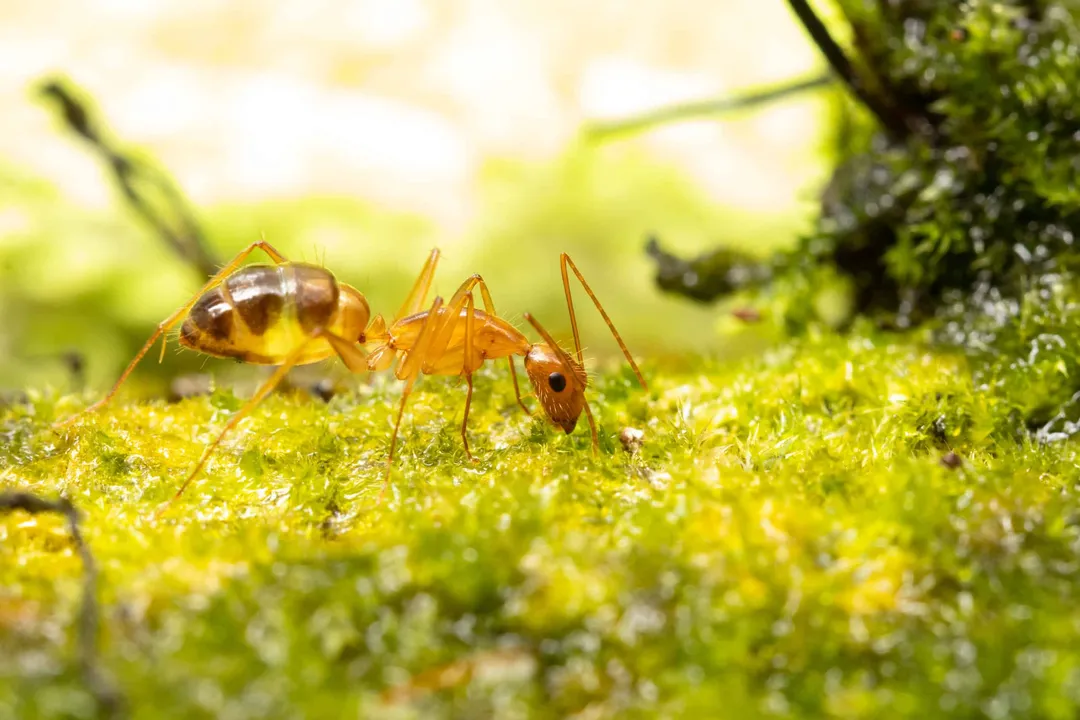
The yellowish-brown to orange insect known colloquially as the yellow crazy ant, scientifically classified as Anoplolepis gracilipes, represents one of the most ecologically destructive invasive species across the globe. [1][4] These small ants, rarely exceeding three millimeters in length, earn their common name from their strikingly erratic and fast movement patterns, which can appear almost frantic when disturbed or foraging. [1] Originating in Asia, their global spread has been a biological catastrophe in many island ecosystems, largely because their inherent biology allows them to establish massive, dominant supercolonies with frightening efficiency. [4]
# Ant Identity
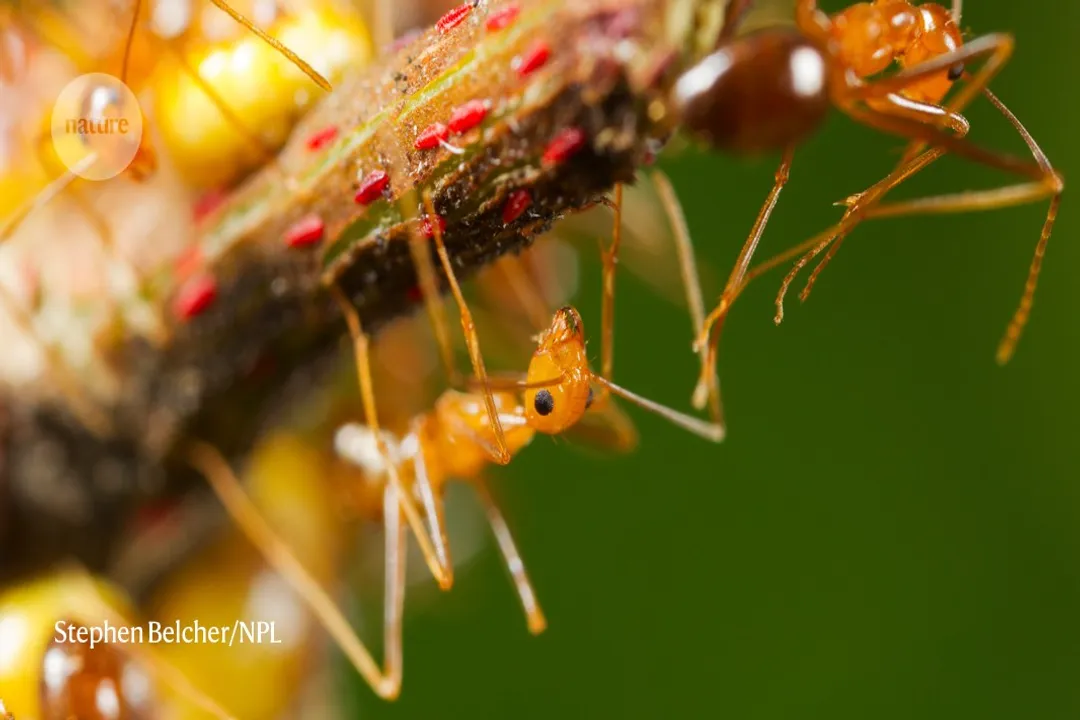
Identifying a yellow crazy ant often starts with noting their color—a pale, somewhat translucent yellowish-brown or orange hue. [9] They are generally smaller than many other aggressive ants, which sometimes makes their collective impact initially underestimated. [1] Unlike the distinctive stinging defense of the Red Imported Fire Ant (Solenopsis invicta), the yellow crazy ant relies on sheer numbers and unique chemical defenses, though they can bite. [1] Their native habitat spans various parts of Asia, but their arrival in sensitive, isolated environments, such as Christmas Island and various Hawaiian islands, signals the beginning of severe ecological disruption. [1][4]
# Erratic Motion
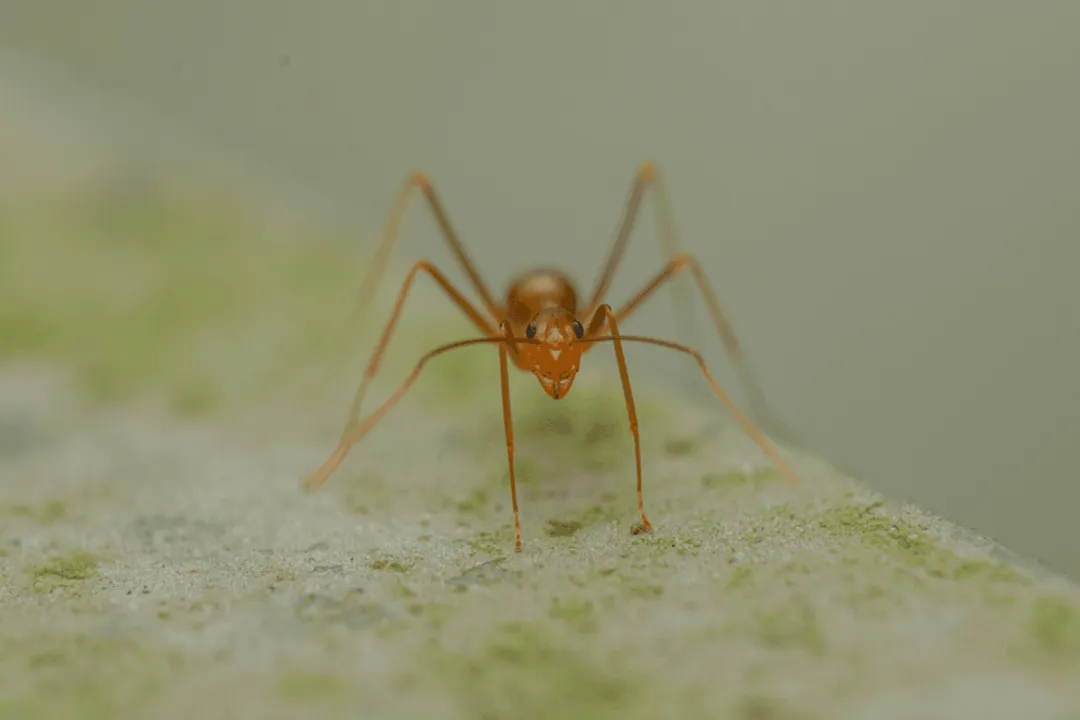
The speed and seemingly random path taken by these ants when they move is a defining characteristic. [1] This rapid, unpredictable movement makes them difficult to track or target individually. When a colony is disturbed, this frenetic activity intensifies, often leading to thousands of ants swarming quickly across a surface. [1] While this behavior is distinct, it is secondary to the reproductive strategies that truly facilitate their evolutionary success as an invasive species. [2]
# Reproductive Secret
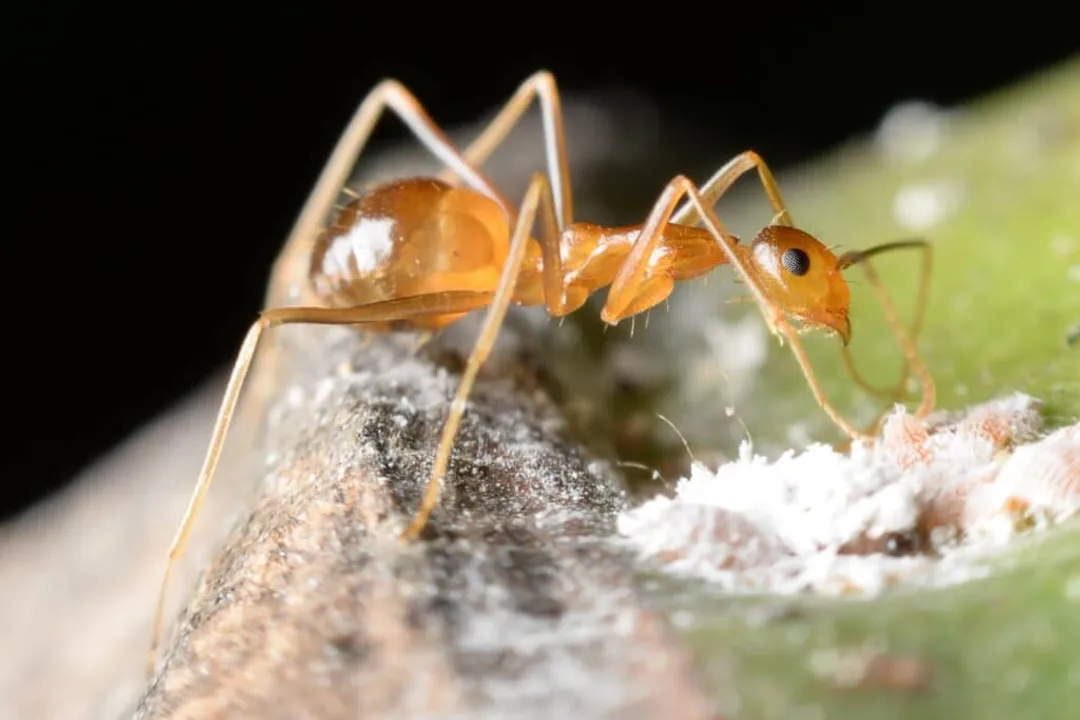
The key to the yellow crazy ant's ability to rapidly colonize new territories lies in a bizarre and highly unusual reproductive mechanism involving chimerism. [2][3] In many ant species, reproduction is strictly governed by the queen, who mates once and then lays eggs that produce genetically similar workers, or they reproduce purely asexually, leading to high levels of inbreeding over time. [3] A. gracilipes operates differently. The queen mates early in her life, storing the sperm for the remainder of her lifespan. [2][3]
What is truly unique is how that stored sperm is then passed on to her offspring. [7] In a process that has astonished entomologists, the reproductive output is genetically split between the resulting castes. The female workers, which form the bulk of the colony and do the foraging and defense, often develop through a mechanism where the queen’s own genetic material plays a highly dominant or sole role, or the sperm is utilized in a way that minimizes genetic variation among workers. [7] Conversely, the new queens destined to found new colonies are generated through a process that incorporates the stored paternal genes in a specialized manner. [2][7]
# Genetic Mixing
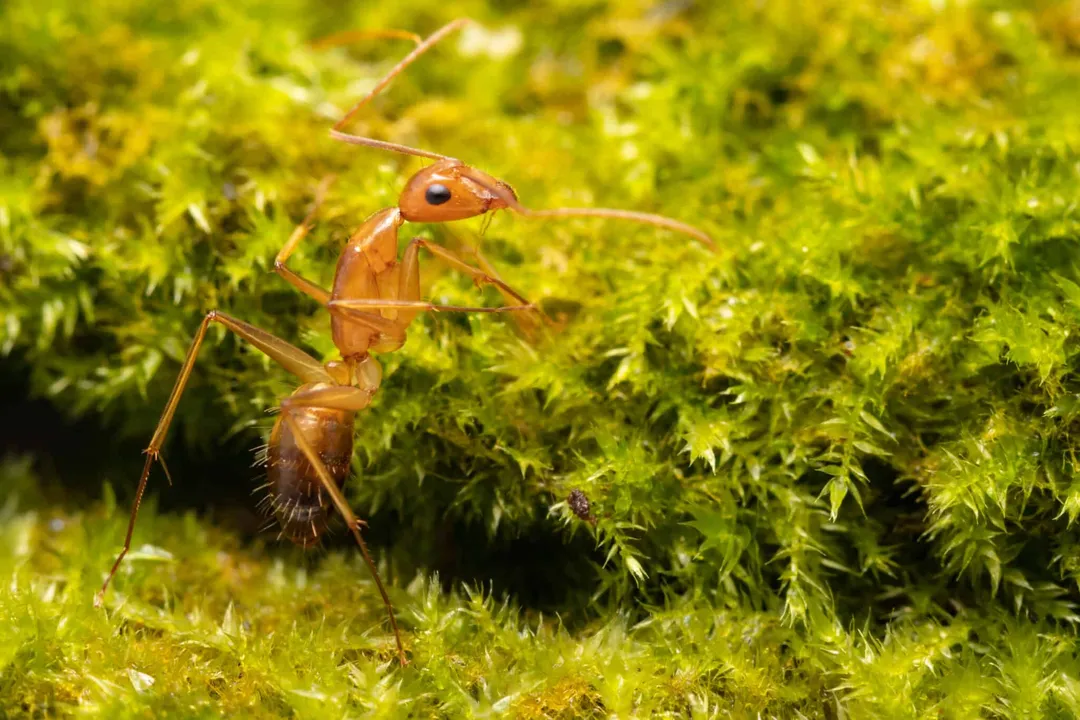
This differential use of stored sperm results in offspring that are genetic chimeras—individuals composed of cells with more than one distinct genotype. [3][7] The resulting queens carry a different genetic blueprint than the workers they produce. [7] This mechanism appears to be a sophisticated adaptation that bypasses common pitfalls seen in other successful invasive species that rely heavily on cloning or asexual reproduction. [2]
For instance, many clonally reproducing species suffer from inbreeding depression as deleterious recessive genes accumulate over generations without the "shuffling" benefit of sexual reproduction. [3] The yellow crazy ant seems to have hedged its evolutionary bets. The sterile worker caste can be maintained with high levels of genetic similarity, ensuring efficient colony function and specialization, while the reproductive queens are continually refreshed or differentiated through this complex chimerism, introducing necessary genetic variation to maintain long-term fitness and adaptability in a new environment. [2][3] This inherent genetic flexibility allows the species to adapt rapidly to novel pressures, whether they be new predators, different climates, or novel food sources. [2]
If we consider an isolated scenario, like a new island colonization event, most invasive ant species rely on the rare chance of two queens meeting and starting a nest, or a single queen reproducing clonally until inbreeding becomes a factor. With A. gracilipes, a single founding queen can generate a genetically diverse, robust reproductive caste right from the start, maximizing the chance of establishing a colony that can persist and spread for decades without needing external genetic input. [3] This is a profound departure from typical haplodiploid ant genetics. [7]
# Invasion Power
The biological success inherent in their reproductive strategy translates directly into ecological dominance. When these ants establish a colony, they often form massive supercolonies that can span vast areas, sometimes incorporating multiple nests into one cooperating unit. [1] This lack of aggression between nests, combined with their high reproductive output, allows them to achieve population densities that entirely exclude native ant species and overwhelm other insects. [1]
The most notorious example of this power is found on Christmas Island. Before the arrival of A. gracilipes, the island boasted numerous endemic species of large, flightless crabs, which were a crucial part of the ecosystem. [6] The yellow crazy ants, in their search for food and perhaps driven by their sheer population size, began aggressively preying upon the eggs and vulnerable young of these crabs. [6] The result was catastrophic: the crab populations crashed dramatically, fundamentally altering the island’s ecology. [6] The ants’ omnivorous diet means they consume everything from nectar and sugary secretions (honeydew from scale insects) to small invertebrates and eggs, making them highly resilient generalists, but their predatory nature, when populations explode, is what causes acute ecological damage. [9][1]
# Ecological Fallout
The damage caused by these hyper-dominant colonies is not just limited to one type of native fauna. Wherever they establish, they tend to displace native ground-dwelling insects and arthropods through direct competition or predation. [1] The concentration of resources and the near-total exclusion of other insect life create an ecological void, simplifying the biodiversity of the affected area. [1] This simplification means that if the ants themselves face a future threat, the entire ecosystem they support is much more fragile because of the lack of other species that might otherwise fill critical roles. [6] The persistence of the supercolonies, facilitated by that complex chimerism, means that eradication efforts are incredibly difficult, often requiring intense, sustained application of baits across massive territories to ensure every queen is eliminated. [1]
The evolutionary trajectory of Anoplolepis gracilipes serves as a potent reminder that sometimes, the most successful invaders are not the strongest or the largest, but those possessing the most adaptable and genetically flexible means of reproduction, allowing them to exploit new environments quickly and resist the genetic stagnation that often cripples less adaptable invasive lineages. [2][3]
Related Questions
#Citations
Yellow crazy ant - Wikipedia
Crazy ants' strange genomes are a biological first - Nature
Yellow Crazy Ants' Intriguing Chimerism - QPS
Anoplolepis gracilipes - AntWiki
Chimerism and the yellow crazy ant: A mode of reproduction ...
Crazy Ants - Texas Field Station Network
Yellow Crazy Ant Chimeras Are Born Through Bizarre Reproduction ...
[PDF] A crazy ants' crazy form of reproduction: Causes and consequences
Yellow Crazy Ant - Anoplolepis gracilipes - A-Z Animals
First Polycipivirus and Unmapped RNA Virus Diversity in the Yellow ...