What is the scientific name for yellow crazy ants?
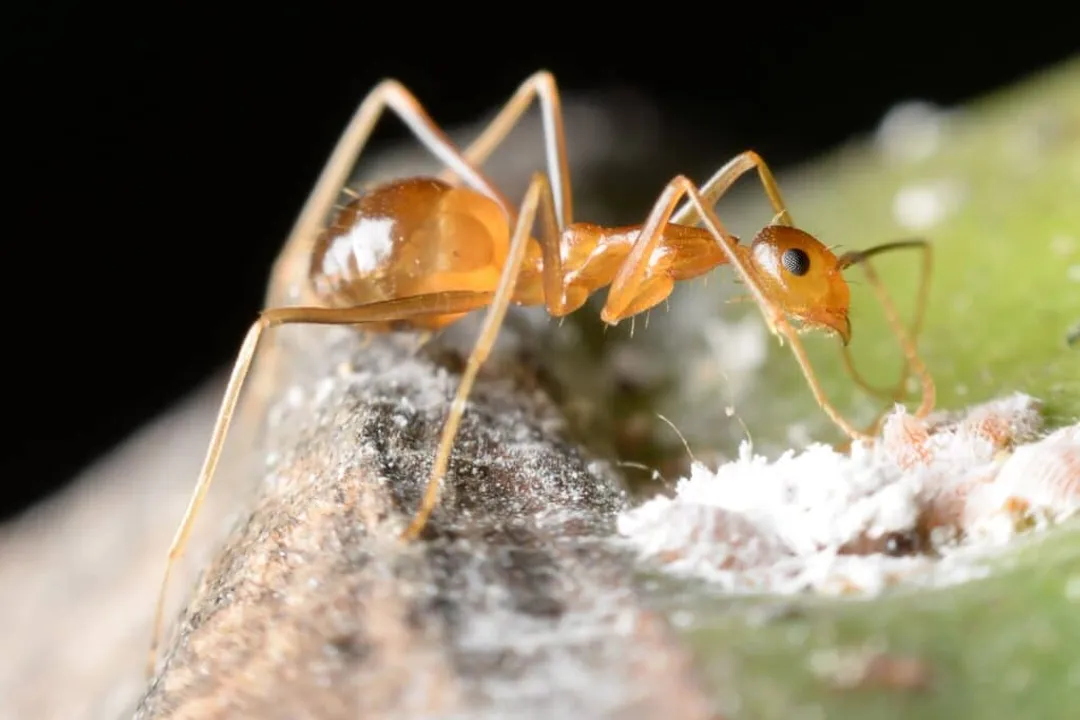
The creature officially known as Anoplolepis gracilipes presents a stark reminder that some of the smallest invaders can cause the largest ecological catastrophes across the globe. Colloquially referred to as the yellow crazy ant, or sometimes the long-legged ant or Maldive ant, this species commands significant attention from biosecurity agencies worldwide. Its notoriety stems not only from its aggressive dominance in new habitats but also from its unique, almost unprecedented, reproductive biology.
# Naming Origin

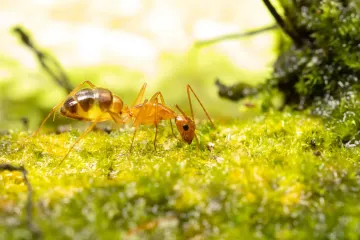
The common moniker "yellow crazy ant" is derived directly from two primary physical and behavioral observations. First, the ants are typically yellow to orange in coloration, although their abdomen can be a darker brown. Second, the qualifier "crazy" speaks to their frantic, erratic movements when they encounter disturbances. This behavior contrasts with the more predictable pathfinding of many other ant species. Looking deeper into the nomenclature, the genus name, Anoplolepis, translates from Latin roots as "without scales," which refers to the lack of certain body scales, distinct from the scale insects they famously farm. The species epithet, gracilipes, neatly means "thin-legged," referencing the species’ most striking physical attribute: its relatively slender body and exceptionally long legs and antennae. At around 5 mm in length, they are considered one of the larger invasive ant species.
# Tramp Status
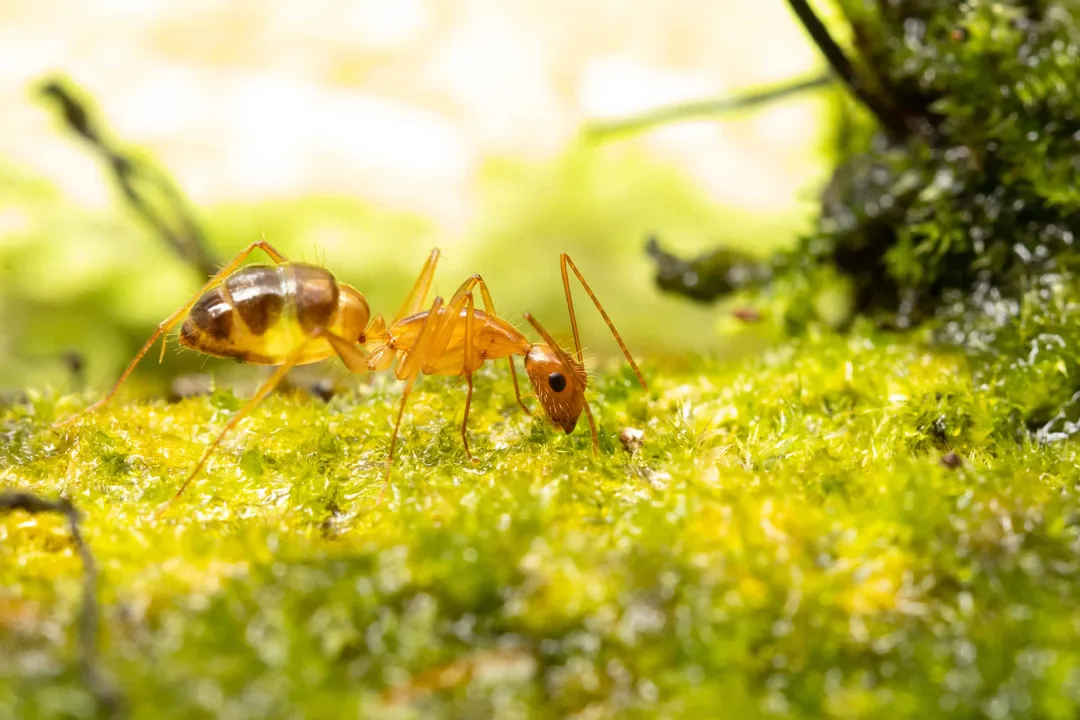
Like other successful global infiltrators such as the Argentine ant or the red imported fire ant, A. gracilipes is categorized as a "tramp ant". This designation signifies a species that readily establishes itself and achieves dominance in novel environments due to a suite of traits: low aggression toward their own kind, high aggression toward competitors, effective recruitment of nestmates, and the ability to form very large colonies. This combination has seen them accidentally introduced across vast tropical and subtropical regions, earning them a spot on the International Union for Conservation of Nature’s (IUCN) list of "one hundred of the world's worst invasive species". Their natural home is generally considered the moist tropical lowlands of Southeast Asia. Human commerce, specifically through the transport of agricultural products, machinery, and shipping containers, is the primary vehicle for their long-distance dispersal, allowing them to hop between islands and continents.
# Unprecedented Reproduction
One of the most scientifically compelling aspects of Anoplolepis gracilipes lies in its method of reproduction, particularly concerning the males. In most ant species, males develop from unfertilized eggs and thus carry only a single, maternal copy of each chromosome. However, genetic analysis revealed that male yellow crazy ants possess two copies of each chromosome, an unexpected finding.
This unusual observation led to groundbreaking research that identified a reproductive cycle unique in the animal kingdom: obligate chimerism in males. Normally, a fertilized egg results in a queen (diploid organism) or a sterile worker (diploid organism). In the case of A. gracilipes, an egg fertilized by a sperm carrying a 'W' genome, rather than fusing its nuclei with the maternal 'R' genome nucleus, can undergo separate nuclear division within the same egg. This results in a male ant whose body is composed of cells derived from two different parental genomes—some cells carrying the 'R' lineage and others the 'W' lineage. Astonishingly, the distribution is uneven; sperm cells themselves are predominantly derived from the 'W' cell line, suggesting an evolutionary advantage for this mechanism to pass on the 'W' alleles. This discovery marks the first known case of obligate chimerism in animals.
# Supercolony Formation
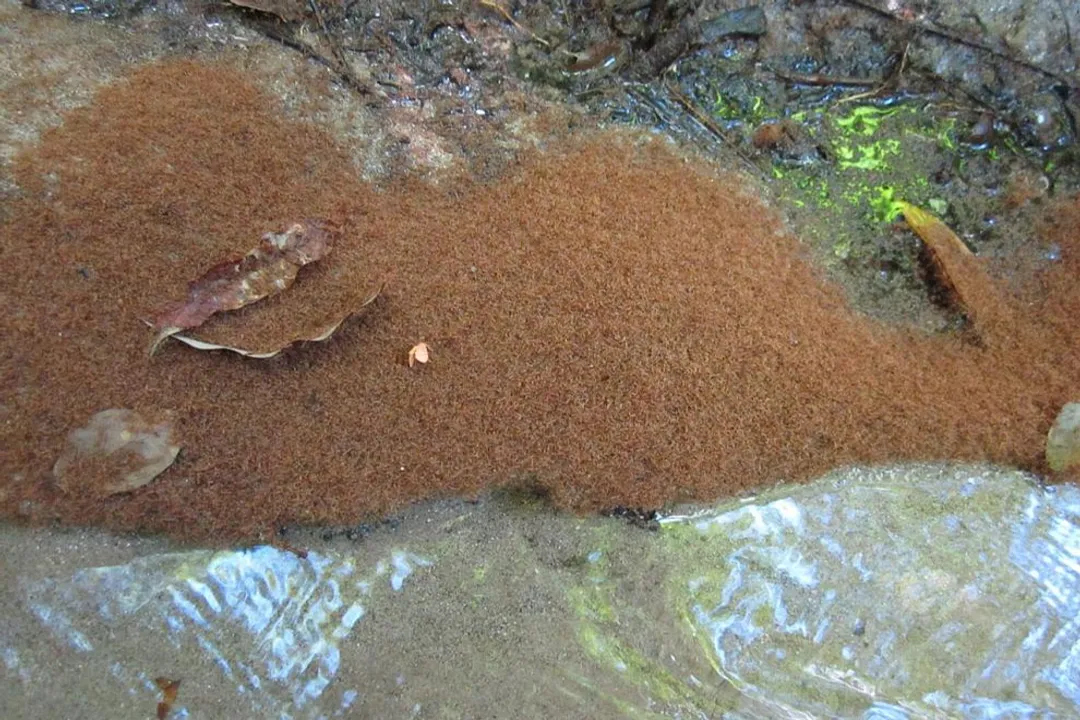
The success of this species in overwhelming new environments is directly linked to its social organization: the formation of supercolonies. Unlike typical colonies, which can be aggressive toward neighboring groups of the same species, supercolonies are unicolonial, meaning individuals from different nests within the massive structure show little to no aggression toward one another. This structure allows the population to grow exponentially, effectively functioning as one single, gigantic reproductive unit. Christmas Island holds the record for some of the largest known supercolonies, which, at their peak, could cover 750 hectares and sustain densities exceeding 1,000 ants per square meter on the forest floor.
The engine driving this massive growth appears to be a mutualistic relationship with sap-sucking insects, such as aphids, scale insects, and mealybugs. The ants fiercely protect these pests from natural enemies in exchange for their carbohydrate-rich waste product, honeydew. The ants essentially farm their primary energy source. Limiting this honeydew supply in laboratory settings drastically reduces worker aggression and exploratory behavior while increasing worker death rates and decreasing queen fertility—the direct opposite of what fuels a supercolony.
# Ecological Disaster Zones
When A. gracilipes establishes a supercolony, the ensuing ecological disruption can be termed a "meltdown". The severity of this impact is often dictated by the pre-existing, dominant native fauna.
# Island Cascades
On Christmas Island, the native invertebrate community was historically dominated by millions of land crabs, particularly the iconic red crabs, which are keystone species responsible for tilling the soil and cycling nutrients by consuming leaf litter. The arrival of supercolonies leads to a systematic eradication of these crabs—tens of millions have been killed—as the ants swarm them, blinding them with formic acid spray until they die from exhaustion or dehydration. With the crabs removed, the ecosystem shifts radically: leaf litter accumulates, soil health degrades, and native seedling growth is suppressed, leading to thickets of weeds and changes in forest structure. Furthermore, the scale insects tended by the ants multiply unchecked, reaching outbreak densities that stress and can ultimately kill large canopy trees through sheer drain on sap and secondary sooty mold growth. The displacement of the keystone crab has even allowed other secondary invaders, like the giant African land snail, to flourish where they were previously controlled.
# Mainland/Agricultural Shifts
In continental settings, such as the Wet Tropics of Queensland, Australia, the immediate impact is a fierce competitive displacement of native ant species. Research samples indicated that where yellow crazy ants were dense, the abundance of native ants significantly decreased. Intriguingly, while total non-ant invertebrate abundance sometimes increased, the specific species richness and abundance of native ants dropped sharply; larger native ants, in particular, were twice as common in areas where the crazy ants had not yet invaded. This suggests a functional replacement where aggressive generalists supplant specialized natives, altering soil processes and local nutrient pathways. In agricultural settings in Queensland, these ants also build nests at the base of crops like sugarcane, destabilizing the soil around the roots until the plants collapse, ruining the crop. This agricultural menace is why the ant is listed as a restricted invasive animal in Queensland, where full eradication is no longer considered feasible; the focus has shifted to management and minimizing biosecurity risks associated with moving them.
Here is a conceptual comparison of the ecological changes driven by the ants in two different contexts, highlighting how resource availability shapes the cascade:
| Ecological Feature | Christmas Island (Crab-Dominated) | Mainland/Agricultural (Honeydew-Dominated) |
|---|---|---|
| Primary Keystone Species Displaced | Land Crabs (Soil turnover, seedling control) | Native Ants (Interspecific competition) |
| Main Nutritional Fuel | High density of introduced Yellow Lac Scale | Various honeydew producers (scale insects, aphids) |
| Dominant Vegetation Change | Increased leaf litter, seedling thickets, weed invasion | Crop damage (e.g., sugarcane falling over) |
| Ant Defense Mechanism Result | Direct mortality of crabs via formic acid spray | Irritation/temporary blinding in livestock/humans |
# Management Strategies and Velocity Analysis
Control efforts vary significantly depending on the isolated nature of the ecosystem. On Christmas Island, control has focused heavily on indirect biological methods due to the catastrophic damage. Researchers successfully identified Tachardiaephagus somervillei, a micro-wasp native to Southeast Asia that parasitizes the female yellow lac scale insect, the primary honeydew supplier. By attacking the scale insects, the wasp starves the supercolonies of their carbohydrate supply, forcing the ants to rely more on protein, leading to reduced worker survival, lower queen fertility, and a collapse in supercolony density. This indirect approach is highly regulated, involving a multi-step approval process to ensure the wasp is host-specific and poses no risk to native scale insects.
In contrast, on mainland Australia, this indirect approach is less viable because the ants feed on a dozen or more different honeydew-producing insects, not just one primary source. Therefore, chemical intervention—spraying or baiting with neurotoxins like fipronil or growth regulators—remains a mainstay, though it is expensive, reactive, and faces the risk of resistance development.
Considering their method of spread, a telling observation is the difference in their dispersal rates across available information. On Christmas Island, where resources may have peaked, the spread rate was reported as high as 1,100 meters per year. Yet, in the Seychelles, the rate was much more variable, reported between 37 and 402 meters per year. This variation suggests that while A. gracilipes is inherently a rapid disperser, the presence of readily accessible, high-density food resources—like the endemic, unprotected scale insects on Christmas Island—supercharges their ability to expand quickly. In environments where resource density requires continuous migration or competition, as might be the case in the fragmented mainland habitats of Queensland, their rate of expansion appears constrained compared to the explosive growth supported by a monoculture-like resource base found on an isolated island.
The yellow crazy ant, Anoplolepis gracilipes, is much more than just an irritating pest; it is a complex biological entity whose unique genetics and resource exploitation strategies allow it to restructure entire environments. Understanding the scientific name is just the first step in appreciating the depth of the biosecurity challenge it presents across the tropics.
Related Questions
#Citations
Yellow crazy ant - Wikipedia
Anoplolepis gracilipes - AntWiki
Yellow Crazy Ants' Intriguing Chimerism - QPS
Yellow Crazy Ants Kick Out Native Ants
Yellow crazy ant - Pacific Invasive Ant Toolkit
[PDF] Christmas Island Yellow Crazy Ant Control Program - DCCEEW
Fact sheet - Yellow crazy ant (364) - Lucid Apps
Yellow crazy ant | Business Queensland
Yellow Crazy Ant - Anoplolepis gracilipes - A-Z Animals