Why are yellow crazy ants called crazy?

The common name assigned to the Nylanderia fulva ant immediately piques curiosity. To encounter them is to witness a phenomenon unlike the organized marches of the typical backyard ant; they move with a frantic, almost panicked energy that explains their reputation. When people ask why yellow crazy ants are called "crazy," the answer lies almost entirely in their astonishingly erratic movements. Unlike many ant species that follow precise, pheromone-laid trails to food sources, these tiny invaders dart about in seemingly random, unpredictable directions.
This haphazard motion is not merely a quirky trait; it is a defining characteristic that sets them apart from their more methodical cousins. Imagine an ant highway suddenly dissolving into dozens of individual, high-speed tangents. That is the visual representation of a yellow crazy ant foraging party. They do not appear to follow a leader or maintain a discernible formation, instead moving so erratically that they appear lost, or perhaps, truly frantic. This behavior has earned them widespread recognition and a place in pest control discussions across various continents.
# Erratic Motion
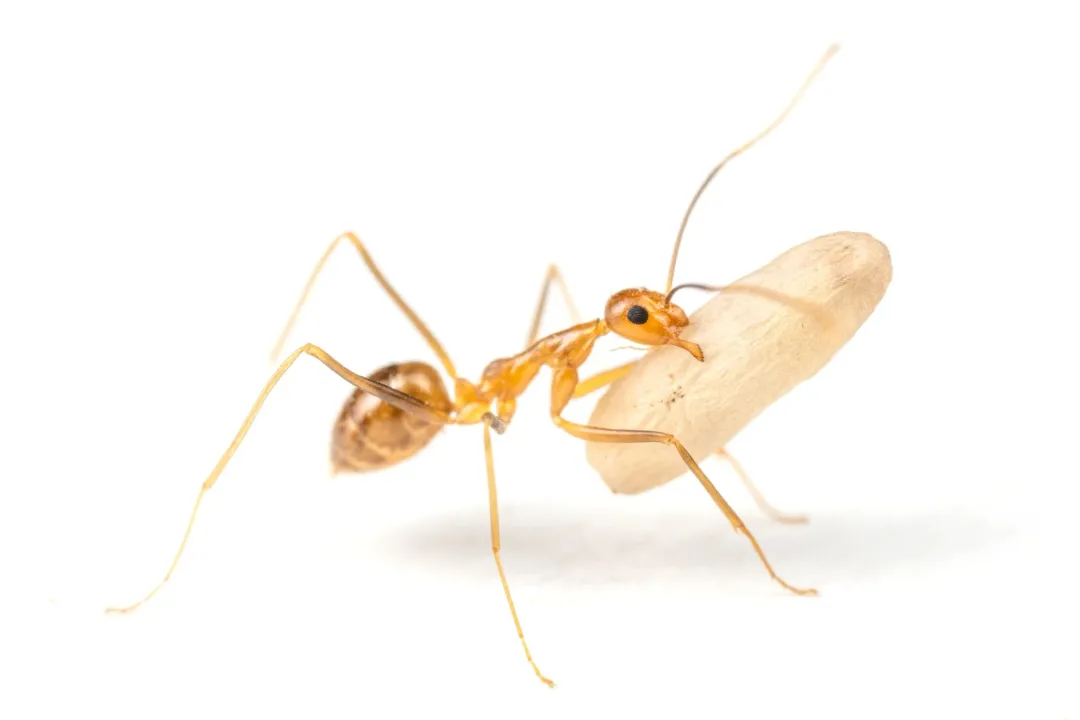
The term "crazy" stems directly from this signature lack of linear travel. While many ants operate like efficient commuters, sending scouts out in straight lines and then broadcasting the successful route for the colony to follow, the yellow crazy ant abandons this discipline. Observers frequently note that their movements look disorganized, characterized by sudden changes in direction and rapid bursts of speed. They often appear to be dashing about in circles or zigzags, sometimes pausing briefly before launching off in an entirely new, seemingly unconnected path.
It is important to understand that while their motion looks chaotic to the human eye, it is still a functional, albeit unusual, form of movement for the species. This randomness ensures that their search pattern, when aggregated across a large colony, covers a vast area quickly, increasing the chances of discovering dispersed resources or new nesting sites. Where a traditional ant colony might miss a small, isolated food drop because it falls outside the established trail corridor, a swarm of yellow crazy ants, moving in their characteristic jumble, is highly likely to stumble upon it.
# Behavioral Contrast
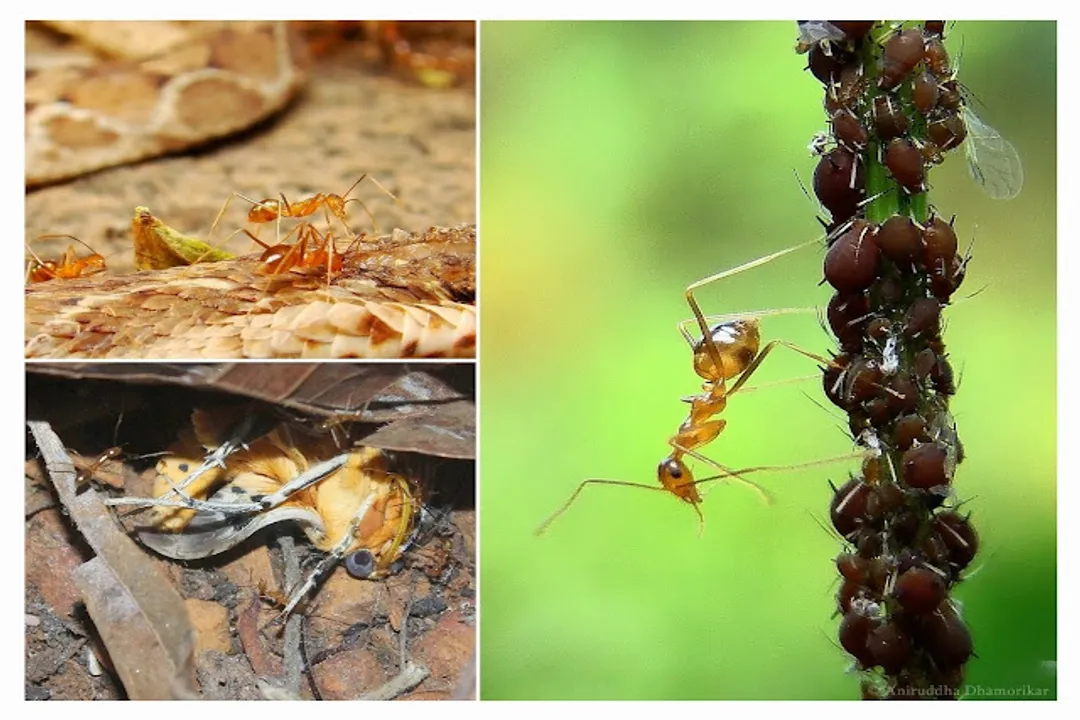
To truly appreciate the "crazy" designation, one must contrast this behavior with that of established, native ant populations. In many ecosystems, including those where yellow crazy ants have become established, ants are masters of chemical communication. They utilize complex pheromone trails—chemical scent markers left on the substrate—to guide nestmates to food or danger with remarkable precision. These trails are ordered, predictable, and optimized for collective efficiency.
The yellow crazy ant disrupts this established order. They are described as invasive species known for forming massive aggregations or supercolonies. When they invade an area, their foraging style appears to overwhelm the resident species precisely because it does not adhere to the standard rules of engagement. A home or garden already occupied by one type of ant might suddenly find itself dealing with a non-linear, high-density carpet of moving bodies, where the traditional defensive strategies of native species may be ineffective against such overwhelming, seemingly disorganized numbers. This massive infiltration, driven by their individual chaotic movement, leads to the effective displacement of many native insects, fundamentally altering the local insect ecology. Thinking about this from a local ecological perspective, imagine a local, efficient delivery service (native ants) suddenly being subjected to thousands of independent, uncoordinated delivery drivers (the crazy ants) all hitting the streets at once; the sheer volume and unpredictability can bring the entire established delivery network to a halt. [1]
# Invasion Success
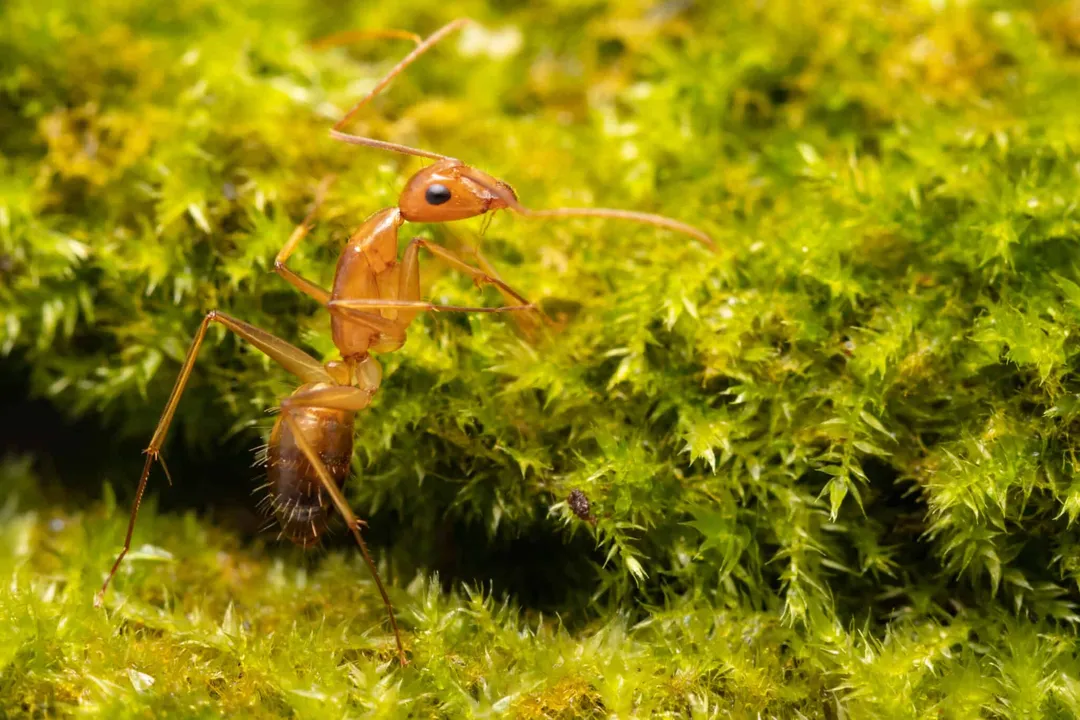
The erratic nature of their movement is intricately linked to their status as a successful invasive pest. Originating in Asia and the Pacific, their introduction to new territories, such as parts of the southern United States, has been highly problematic. This success is bolstered by their tendency to form unicolonial networks, meaning different nests within a large area often share chemical recognition cues, allowing them to cooperate into a single, massive supercolony that can cover significant ground.
When these supercolonies expand, the "crazy" searching behavior acts as a highly effective, albeit messy, exploratory mechanism. A colony needs to find reliable, widespread food sources quickly to support its exponential growth. The random dispersal ensures maximum ground coverage per unit of effort, compared to a rigid trail that might miss resources just centimeters away from the established route.
# Physical Traits
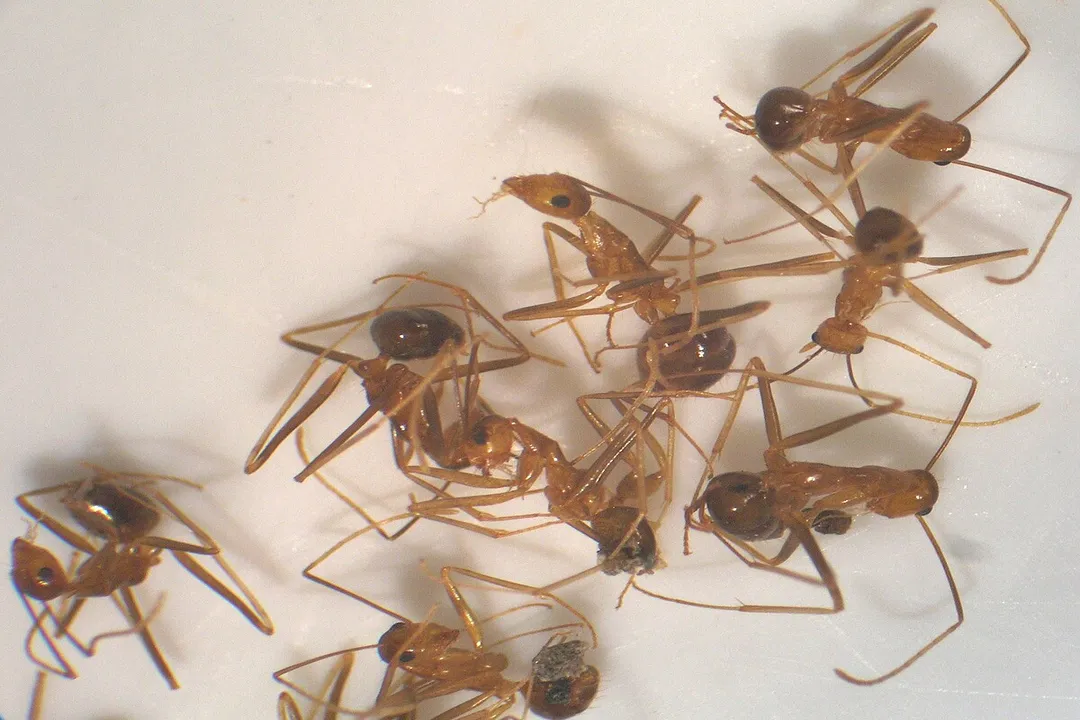
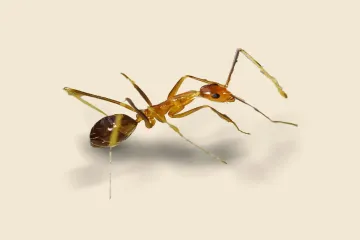
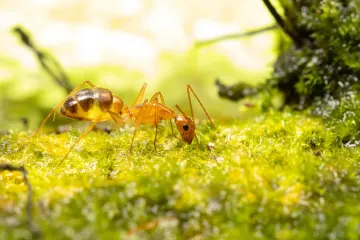
While the movement gives them their name, the ants themselves have distinct physical characteristics that aid in their identification, though they are often overlooked in the initial panic caused by their numbers. They are generally small, measuring about 1/16th of an inch long, and display a yellowish-brown or reddish-brown coloration. Their relatively slender appearance, combined with their speed, contributes to the perception of frantic activity.
# Chemical Response
Another, though secondary, aspect of their behavior that can add to the perception of agitation involves their defense mechanism. When disturbed or crushed, yellow crazy ants can release an irritating venom. This reaction is often coupled with their frantic scurrying. If a large number of these ants are disturbed—for example, by stepping near a nest—the ensuing dispersal involves both the signature erratic running and the defensive chemical release, creating a dual irritant response that certainly does not calm observers. [2] For instance, if a homeowner attempts to sweep up a small group, the ensuing frantic scattering combined with the irritation of the defensive chemicals only reinforces the idea that the ants are behaving irrationally, when in fact they are executing a synchronized retreat and defense mechanism based on perceived threat level.
# Global Distribution
Their ability to establish themselves so effectively across diverse, non-native environments speaks volumes about their adaptability, which is partly facilitated by their movement style. From their native range, they have spread to various tropical and subtropical locations. The fact that they are classified as a restricted invasive species in places like Queensland, Australia, highlights the seriousness with which their ecological disruption is viewed by regulatory bodies. Understanding the mechanisms—the crazy, non-linear search pattern—that allow them to become so dominant helps authorities devise control strategies that target the weakness in their method of invasion. If their strength lies in chaotic coverage, effective control might involve creating an environment that is too structured or too repulsive for their random search patterns to successfully exploit.
# Managing the Chaos
For those dealing with an infestation, recognizing that the chaos is intentional is the first step toward management. Simply spraying a single trail is ineffective because they rarely use one reliable trail. Instead, management often requires a broader approach targeting the supercolony structure they hide within. Because their movement is so generalized, baiting strategies become important, as the foraging ants will eventually encounter the bait regardless of which direction they choose to run next. If we were to create a simple reference for recognizing the unique threat level posed by this species versus a common pavement ant, it might look like this:
| Characteristic | Common Pavement Ant | Yellow Crazy Ant (N. fulva) |
|---|---|---|
| Foraging Path | Straight, defined pheromone trail | Erratic, random, darting movements |
| Colony Structure | Typically separate, competing colonies | Tendency toward large supercolonies |
| Impact on Natives | Moderate competition | High displacement of native species |
| Response to Disturbance | Organized retreat or aggressive defense on trail | Frantic, widespread scattering; irritant release |
The "crazy" behavior, therefore, is a highly successful, if visually alarming, evolutionary strategy for invasion. It is a form of ecological chaos that allows Nylanderia fulva to colonize and dominate new territories by maximizing search efficiency while simultaneously overwhelming the predictable defense mechanisms of established ant communities. The name is descriptive, not derogatory; it is a perfect encapsulation of how they operate in the world, making them one of the most recognizable and challenging invasive pests to manage.
Related Questions
#Citations
Why Do They Call Them Crazy Ants? - Aiken Pest Control
Yellow crazy ant - Wikipedia
There's a Reason They Call Them 'Crazy Ants' - The New York Times
a invasive species of ants that look "crazy" when disturbed as they ...
Yellow Crazy Ant - Anoplolepis gracilipes - A-Z Animals
Yellow Crazy Ants - Care Guide and Ecology - The Wild Martin
Yellow crazy ant | Business Queensland
The Invasive Yellow Crazy Ant | Critter Science
Story of the Yellow Crazy Ant - Sahyadrica