What physical barrier is advised for storing newly purchased susceptible items to prevent larval breach?
Answer
Airtight, rigid plastic or glass containers
Preventing re-infestation and initial infestation relies heavily on creating physical barriers that impede larval movement and feeding. Since larvae can easily chew through common materials like paper or cardboard packaging, the recommended practice is to transfer newly acquired susceptible items, such as grains or dried goods, into containers that are both rigid and airtight. Containers made of glass or durable plastic provide the necessary strength and seal to effectively block the larvae from accessing the protected food source.
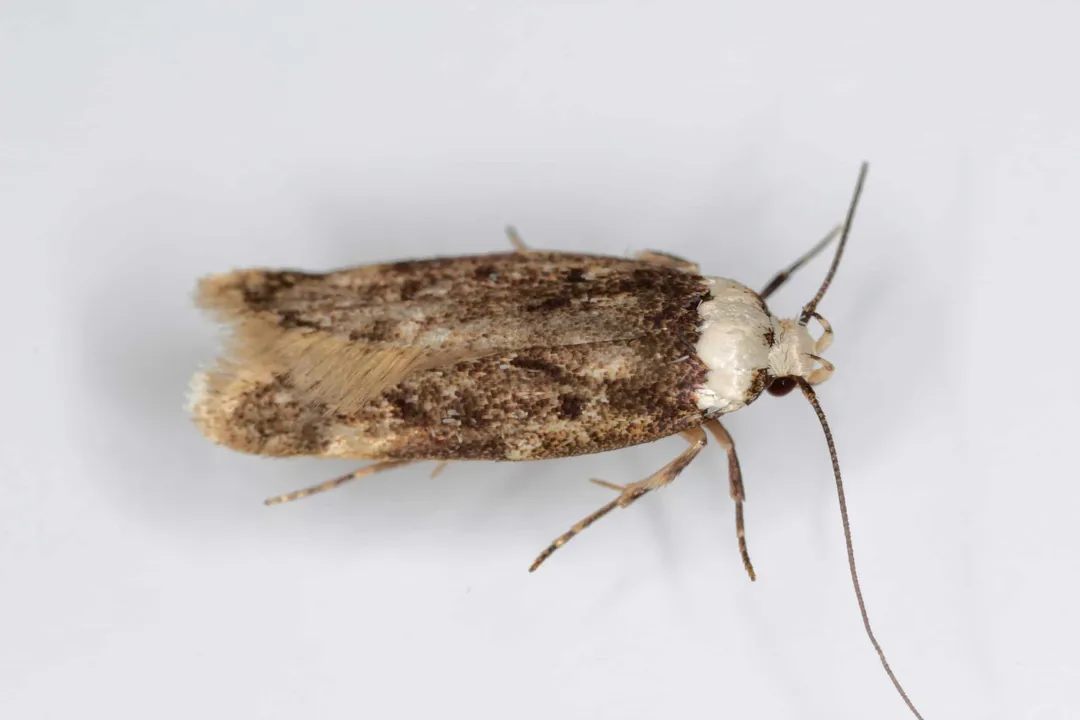
Related Questions
What is the scientific name for the White-shouldered House Moth?What is the typical wingspan range for the adult *Endrosis sarcitrella*?What key diagnostic feature gives the White-shouldered House Moth its common name?Which stage of the *Endrosis sarcitrella* life cycle is considered the most ecologically and economically significant?Larvae of *E. sarcitrella* exhibit a particular attraction to materials already compromised by what type of growth?What non-chemical temperature manipulation is recommended for treating smaller quantities of infested food items or fabrics?What term is used to describe the larval excrement, which appears as fine, granular dust mixed with silk near the feeding site?What physical barrier is advised for storing newly purchased susceptible items to prevent larval breach?Besides dried fruits and grains, what categories of natural materials are known larval hosts for *E. sarcitrella*?When are the adult White-shouldered House Moths typically most active during their daily cycle?