Larvae of *E. sarcitrella* exhibit a particular attraction to materials already compromised by what type of growth?
Answer
Molds or fungi
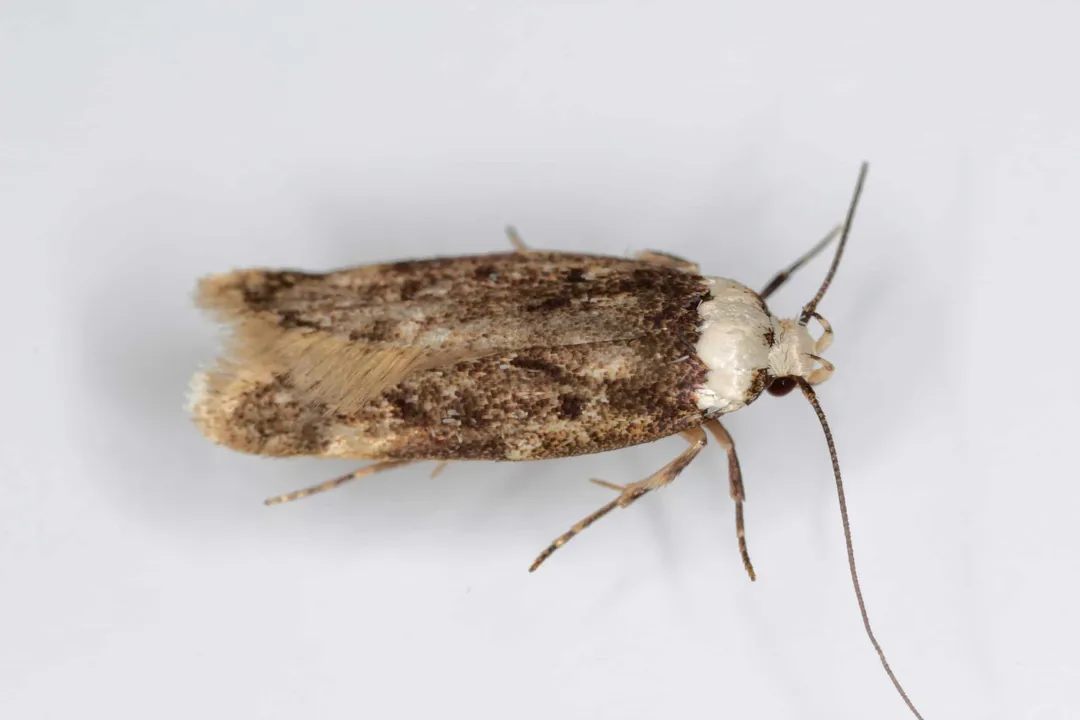
The feeding ecology of the White-shouldered House Moth larva is nuanced because it actively seeks out materials that are already degrading. Specifically, the larvae show a pronounced preference for dried organic matter, such as grains, that have developed molds or fungi due to slight moisture intrusion or dampness. This preference indicates that the larvae are likely capitalizing on the pre-digested or altered state of the material, supplementing their primary diet with the associated microbial growth, thus making them opportunistic colonizers of compromised stock.
Related Questions
What is the scientific name for the White-shouldered House Moth?What is the typical wingspan range for the adult *Endrosis sarcitrella*?What key diagnostic feature gives the White-shouldered House Moth its common name?Which stage of the *Endrosis sarcitrella* life cycle is considered the most ecologically and economically significant?Larvae of *E. sarcitrella* exhibit a particular attraction to materials already compromised by what type of growth?What non-chemical temperature manipulation is recommended for treating smaller quantities of infested food items or fabrics?What term is used to describe the larval excrement, which appears as fine, granular dust mixed with silk near the feeding site?What physical barrier is advised for storing newly purchased susceptible items to prevent larval breach?Besides dried fruits and grains, what categories of natural materials are known larval hosts for *E. sarcitrella*?When are the adult White-shouldered House Moths typically most active during their daily cycle?