What are some interesting facts about the oleander hawk moth?
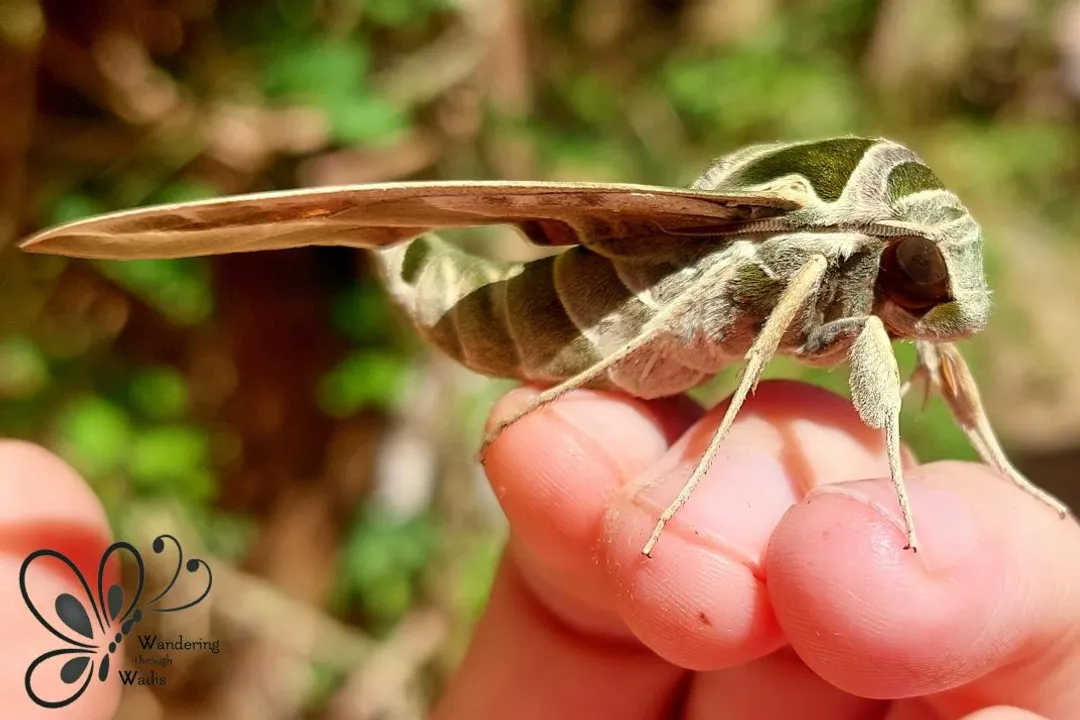
The Oleander Hawk Moth, scientifically designated as Daphnis nerii, cuts a truly memorable figure among the world of moths, often startling observers who mistake its impressive size and erratic flight for something else entirely. It is a magnificent insect known for its substantial wingspan, which can reach up to 12 centimeters. This size alone elevates it beyond the common moth encountered in a backyard light trap.
# Visual Impression
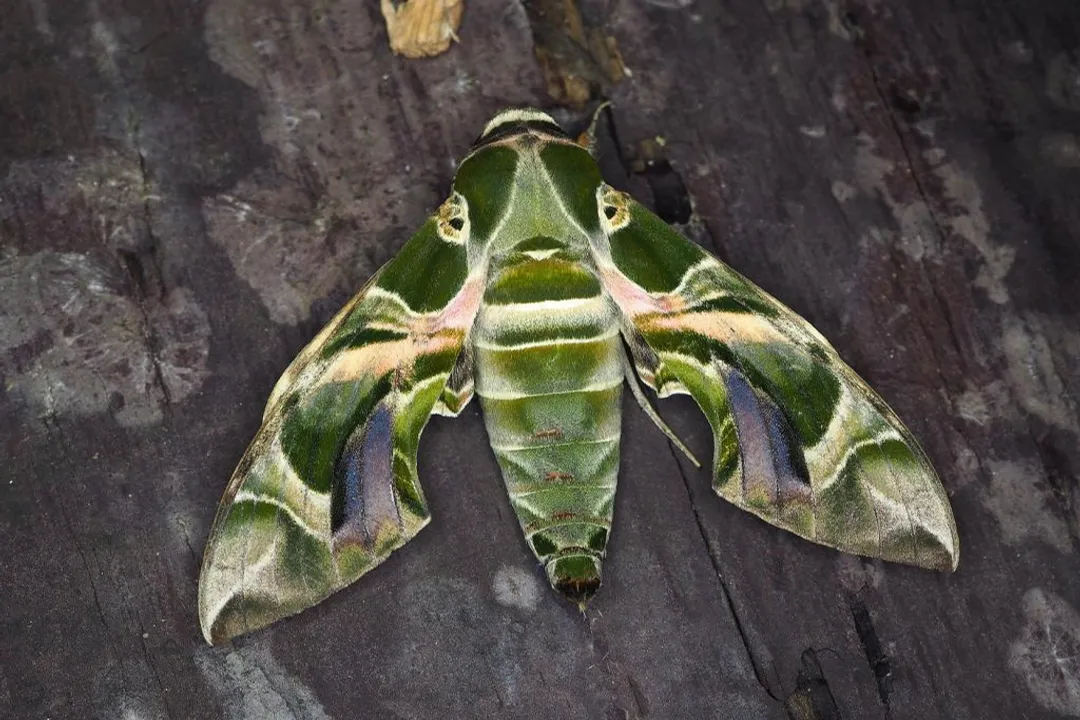
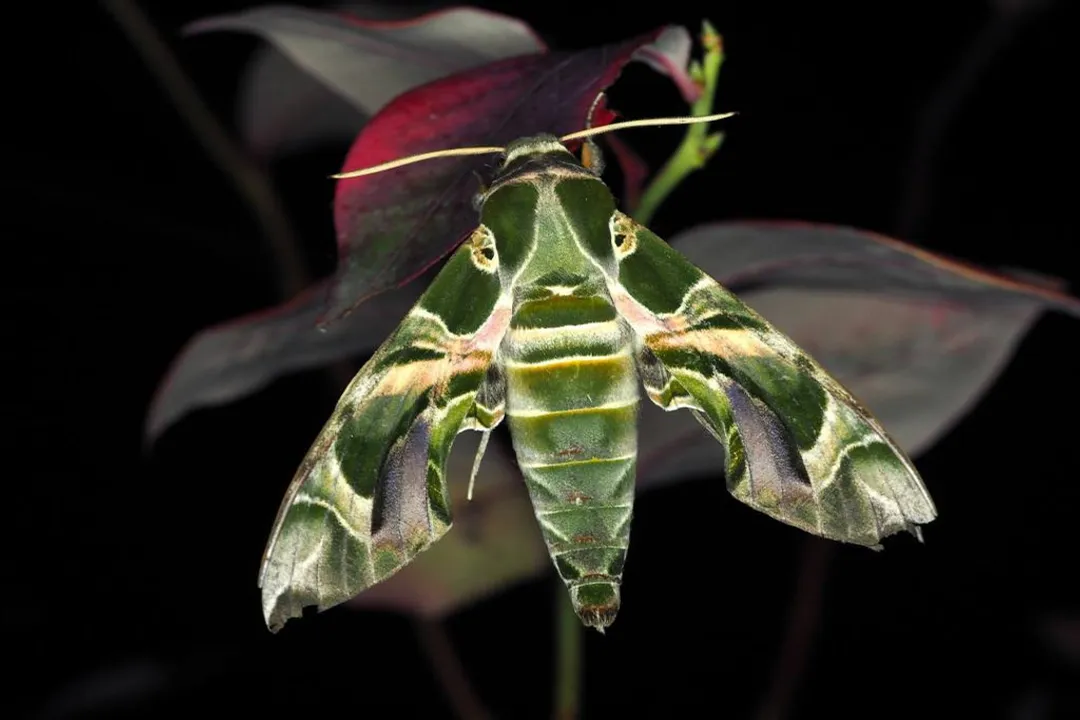
The adult moth displays a remarkable camouflage pattern, appearing olive-green overlaid with intricate brown markings, punctuated by splashes of pinkish, purplish, or white coloration. This vibrant yet complex appearance helps it blend into certain Mediterranean or tropical foliage when at rest. Looking closely at the wings, the forewings feature complex patterns, while the hindwings present a distinct olive-green shade adorned with dark cross-bands. If you happen to see one near a light source, its behavior can be reminiscent of a hummingbird, as it possesses the ability to hover while feeding. This combination of large size, striking coloration, and hovering capability sets it apart from many of its less flamboyant relatives.
# Geographic Reach
The native distribution of Daphnis nerii is extensive, covering vast territories across Africa, Asia, and extending into Southern Europe. It is generally considered a migratory species, constantly moving across its warmer primary range.
This migratory nature is what occasionally brings it into contact with observers much further north. In places like Britain, the Oleander Hawk Moth is categorized as a vagrant—an insect that appears outside its usual breeding range, often carried by weather systems. The pattern of these stray appearances offers a fascinating glimpse into atmospheric transport; for instance, sightings in the UK often follow periods of warm, easterly winds pushing across the continent. Thinking about its primary habitat—warm, sunny regions where Oleander thrives—its accidental arrival in, say, coastal England is entirely dependent on specific, powerful, and often short-lived meteorological nudges rather than a gradual, permanent expansion of its territory. This reliance on transient weather means that for many northern enthusiasts, seeing this moth is a rare, almost event-driven occurrence, rather than an expected annual sighting. For example, one of the earliest recorded instances of its presence in the UK dates back to a capture in Dover in 1833.
# Toxic Sustenance
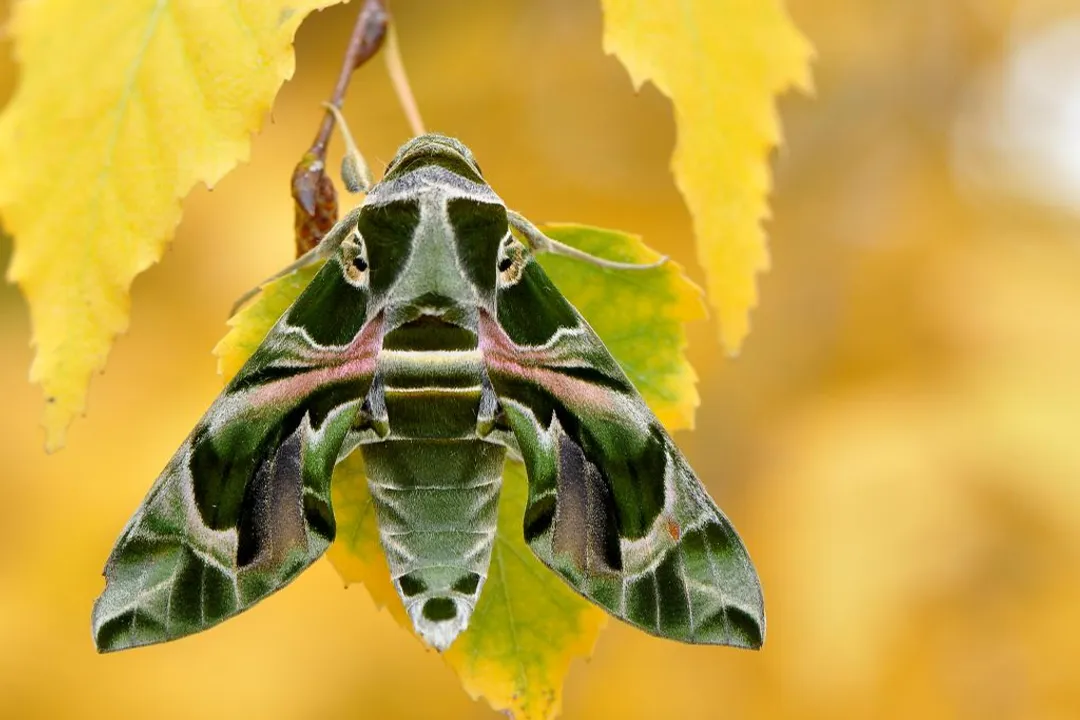
The life cycle of the Oleander Hawk Moth is inextricably linked to a single, highly toxic plant: Nerium oleander. The caterpillar stage feeds exclusively, or almost exclusively, on Oleander foliage. This plant is notorious for containing cardiac glycosides—poisons that affect heart function in mammals.
What makes the larval stage particularly interesting from a biological standpoint is its ability to ingest these toxins without succumbing to them. Instead, the caterpillar sequesters the poisons within its own tissues, making the resulting larva unpalatable, or outright poisonous, to potential predators. A gardener in the moth's native range observing significant defoliation on their Oleander bushes during the summer months should immediately suspect the presence of these caterpillars. However, if one discovers extensive damage but no large larvae are immediately visible, it could suggest that the caterpillars have already passed through their final instar and pupated, or perhaps the damage was inflicted by earlier, smaller instars that are harder to spot. The caterpillar itself is quite large when mature, typically yellowish-green and marked with conspicuous black and white spots. Furthermore, the terminal feature of the larva, often called a caudal horn, can display interesting color variation, sometimes appearing pinkish or bluish in the later developmental stages.
# Night Flight
As a typical hawk moth, Daphnis nerii is primarily nocturnal. Adults are generally active from dusk through to the early hours of the morning. Like many moths, they are strongly attracted to artificial lights, which often leads to their discovery by humans.
Their flight is fast and powerful, characteristic of the Sphingidae family. This strong flight capacity is essential for their migratory habits, allowing them to cover long distances when crossing barriers or searching for nectar sources. While they do feed on nectar, their large size and agility allow them to perform the characteristic hovering flight when sampling flowers, making them efficient pollinators in the dark hours.
# Life Cycle Details
The entire lifecycle, from egg to adult, generally takes place over the warmer months, though the precise timing can vary based on local climate and latitude. After the caterpillar feeds voraciously on Oleander, it pupates, often underground or in leaf litter, to undergo metamorphosis into the winged adult.
To put the range in perspective, while the moth is common in places like India or the Mediterranean basin, its appearance in more temperate areas is a short-term phenomenon. The fact that it is named for the Oleander plant—a genus known for its toxicity—is a perfect example of specialized adaptation. Few generalist insects can rely on such a potent chemical defense in their diet source, meaning the moth population is tied quite literally to the survival and distribution of its specific host plant. This dependency creates a natural biological bottleneck, limiting where the moth can successfully reproduce, regardless of how far the adults might fly on a summer night.
# Observing the Species
For naturalists and observers, the Oleander Hawk Moth presents several opportunities for study. Capturing detailed photographs often requires specialized equipment capable of handling low-light conditions, as their flight is rapid when disturbed or approaching a light trap. If one is interested in documenting their presence, particularly in marginal areas like the UK, recording the date, exact location, and noting any associated unusual weather patterns (like a recent spell of strong easterly flow) provides valuable data for researchers tracking migratory trends.
Interestingly, while the caterpillars are generally found on Oleander, other related plants in the Apocynaceae family might occasionally be sampled, though Oleander remains the staple food source documented across its main distribution. The moth's general appearance and flight style are sometimes confused with larger sphinx moths or even small bats, which speaks volumes about its impressive size and erratic movement once airborne at night. Its status as a rare visitor to Northern Europe makes every confirmed sighting a noteworthy event for local entomologists.
#Videos
Exploring the Fascinating World of Oleander Hawk Moth - YouTube
Related Questions
#Citations
Daphnis nerii - Wikipedia
Oleander hawk moth spotted in Bedford, NH - Facebook
Oleander Hawk Moth - Insect Identification
Exploring the Fascinating World of Oleander Hawk Moth - YouTube
Oleander Hawkmoth, Daphnis nerii - Wildlife Insight
Oleander Hawk-moth - Butterfly Conservation
Oleander Hawkmoth - Wandering through Wadis
Oleander Hawk-moth Daphnis nerii (Linnaeus, 1758)
An Oleander Hawk Moth was caught in Dover - in 1833