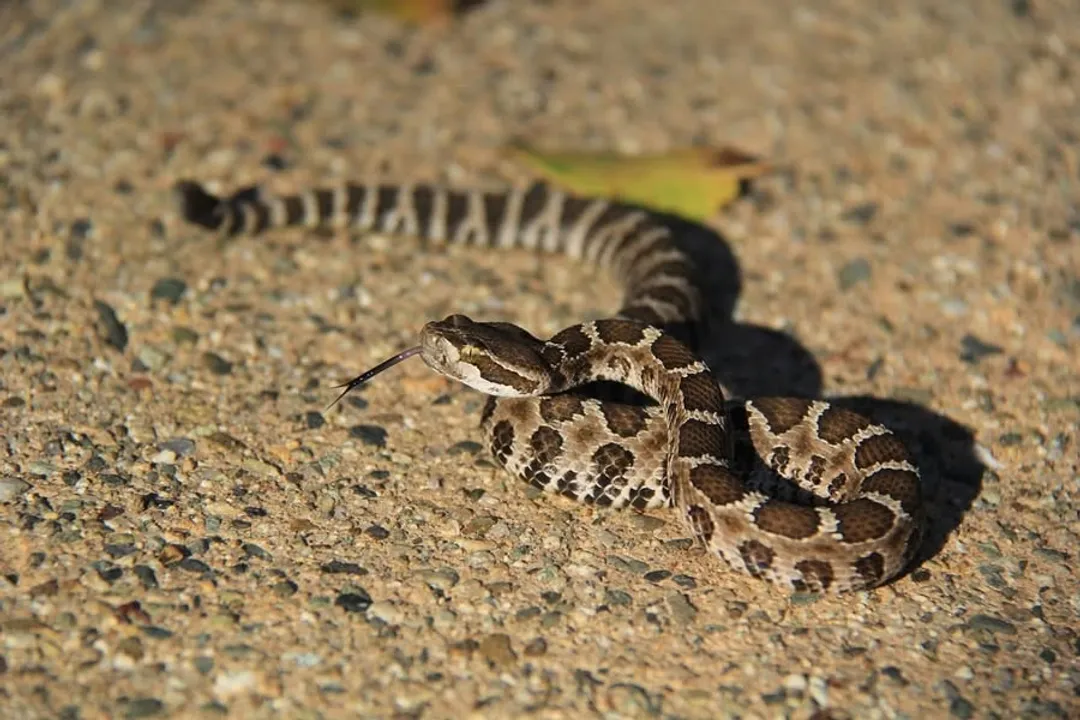
What physical aspect of the tail tip distinguishes juveniles or non-rattling Western Rattlesnakes from many harmless colubrids?
The tail segment preceding the rattle is noticeably thicker and blunter
When the definitive rattle structure is absent, either because the snake is very young (having only the initial 'button') or because segments have broken off, another structural clue remains at the tail's end. In many non-venomous snakes, the tail tapers gradually down to a long, thin point. In contrast, the Western Rattlesnake's tail segment directly before the rattle structure begins—or the entire tail in a newborn—is noticeably thicker and blunter. This structural bluntness is necessary to provide the foundational support for the growing keratinous segments of the rattle, making it a subtle but relevant physical distinction when visual identification of the rattle is impossible.