What darker marking, besides the main blotches, aids in identifying *C. oreganus* when patterns are faint?
Answer
A darker, often zig-zag or striped line from the eye towards the jaw
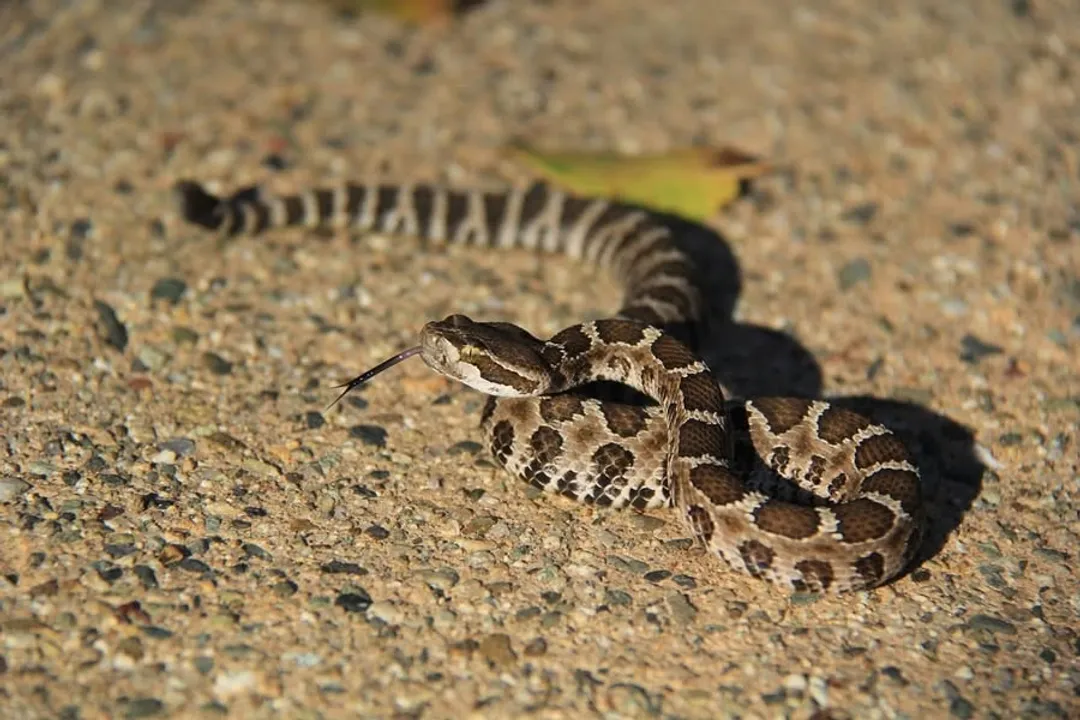
Even when the primary dorsal patterns—such as diamond-shaped blotches—are highly faded, obscured, or merged due to individual variation or environmental factors, another reliable marking exists on the head region. This critical distinguishing feature is a darker line, which often appears to be zig-zagged or striped, originating near the eye and extending down toward the jaw area. Relying on this specific facial marking can be more effective for identification than assessing the overall blotch contrast, especially in arid populations where coloring blends significantly with the substrate.
Related Questions
What is the scientific cataloging name for the Western Rattlesnake?What specialized heat-sensing organs are located between the eye and the nostril of *Crotalus oreganus*?What texture characterizes the dorsal scales of the Western Rattlesnake skin?What feature on the tail is explicitly stated as not being a reliable indicator of the snake's age?What shape do the pupils of the Western Rattlesnake take, a feature typical of nocturnal or crepuscular hunters?How does the head shape of *Crotalus oreganus* differ from the neck region?What darker marking, besides the main blotches, aids in identifying *C. oreganus* when patterns are faint?What anatomical feature provides definitive confirmation of pit viper classification over Gopher snakes (*Pituophis* species)?What physical aspect of the tail tip distinguishes juveniles or non-rattling Western Rattlesnakes from many harmless colubrids?What defining trait remains relatively consistent across the diverse geographic range of *C. oreganus*, aiding identification when color fails?