What anatomical feature provides definitive confirmation of pit viper classification over Gopher snakes (*Pituophis* species)?
Answer
The presence of loreal pits situated between the eye and nostril
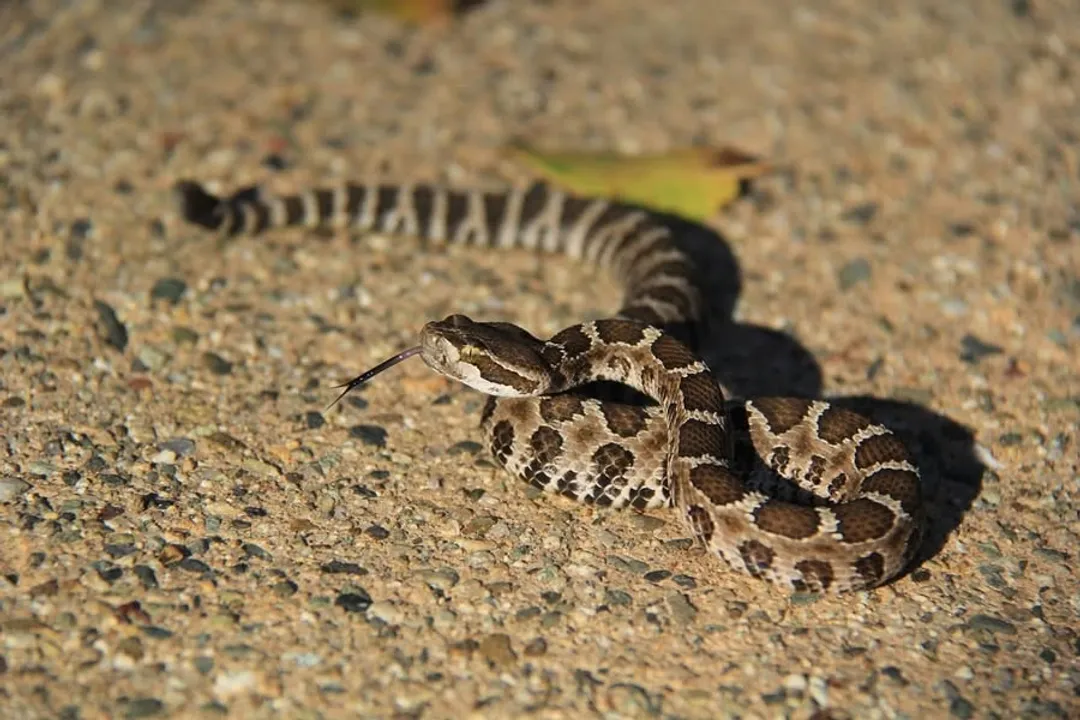
While head shape similarity can exist between *Crotalus oreganus* and mimics like Gopher snakes (*Pituophis* species), the presence of loreal pits offers a definitive physical confirmation of pit viper classification. These pits are specialized, deeply recessed heat-sensing organs located solely on the face of pit vipers, positioned precisely between the eye and the nostril. Gopher snakes lack this specific facial structure, presenting a smooth profile in that area. Therefore, identifying these pits provides a reliable physical test for the presence of venom apparatus associated with the pit viper group, which is safer than relying on pupil shape or general head contour.
Related Questions
What is the scientific cataloging name for the Western Rattlesnake?What specialized heat-sensing organs are located between the eye and the nostril of *Crotalus oreganus*?What texture characterizes the dorsal scales of the Western Rattlesnake skin?What feature on the tail is explicitly stated as not being a reliable indicator of the snake's age?What shape do the pupils of the Western Rattlesnake take, a feature typical of nocturnal or crepuscular hunters?How does the head shape of *Crotalus oreganus* differ from the neck region?What darker marking, besides the main blotches, aids in identifying *C. oreganus* when patterns are faint?What anatomical feature provides definitive confirmation of pit viper classification over Gopher snakes (*Pituophis* species)?What physical aspect of the tail tip distinguishes juveniles or non-rattling Western Rattlesnakes from many harmless colubrids?What defining trait remains relatively consistent across the diverse geographic range of *C. oreganus*, aiding identification when color fails?