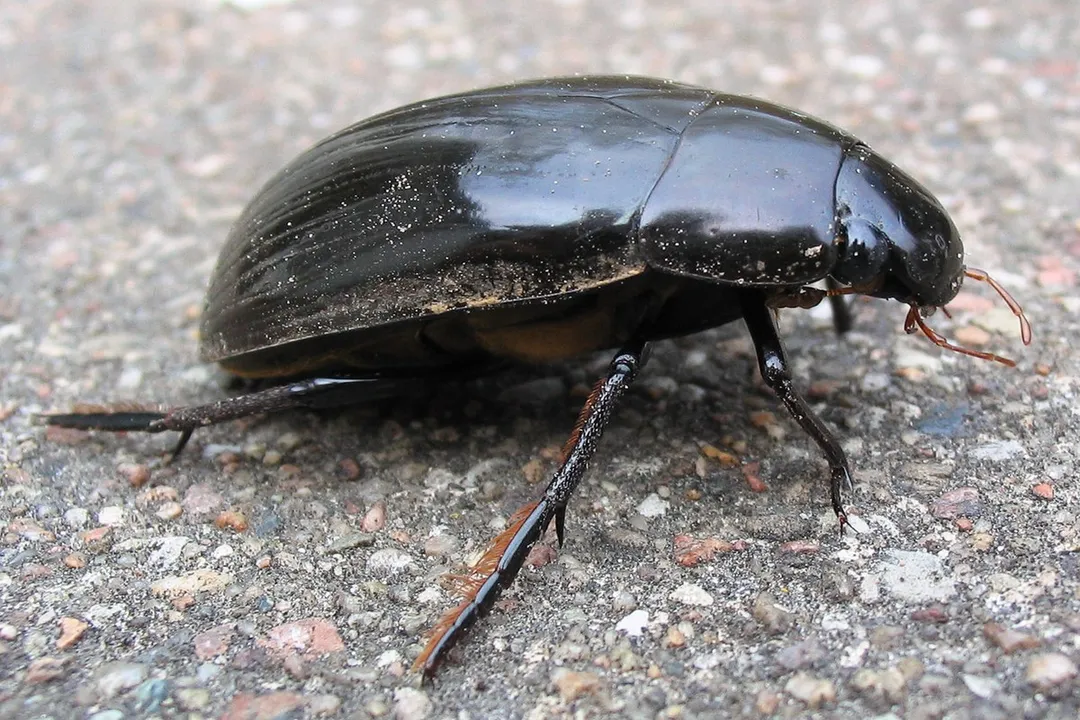
What physical adaptation allows Hydrophilidae adults to remain submerged for extended periods?
Most Hydrophilidae carry a bubble of air underneath their elytra, held in place by specialized hydrofuge hairs
To facilitate prolonged submersion necessary for foraging or resting, Hydrophilidae adults have evolved a sophisticated physical adaptation involving gas exchange. They actively collect and trap a pocket of atmospheric air beneath their hardened forewings (elytra). This air reservoir is physically secured against the body surface by specialized, water-repelling structures known as hydrofuge hairs. As the beetle remains underwater, this trapped air functions as a temporary physical gill, allowing oxygen diffusion from the water into the bubble and subsequently into the insect's tracheal system, enabling extended underwater stays near the surface film.