What morphological detail, besides antennae structure, helps confirm an aquatic insect is a beetle rather than a true bug?
Answer
The presence of hardened elytra
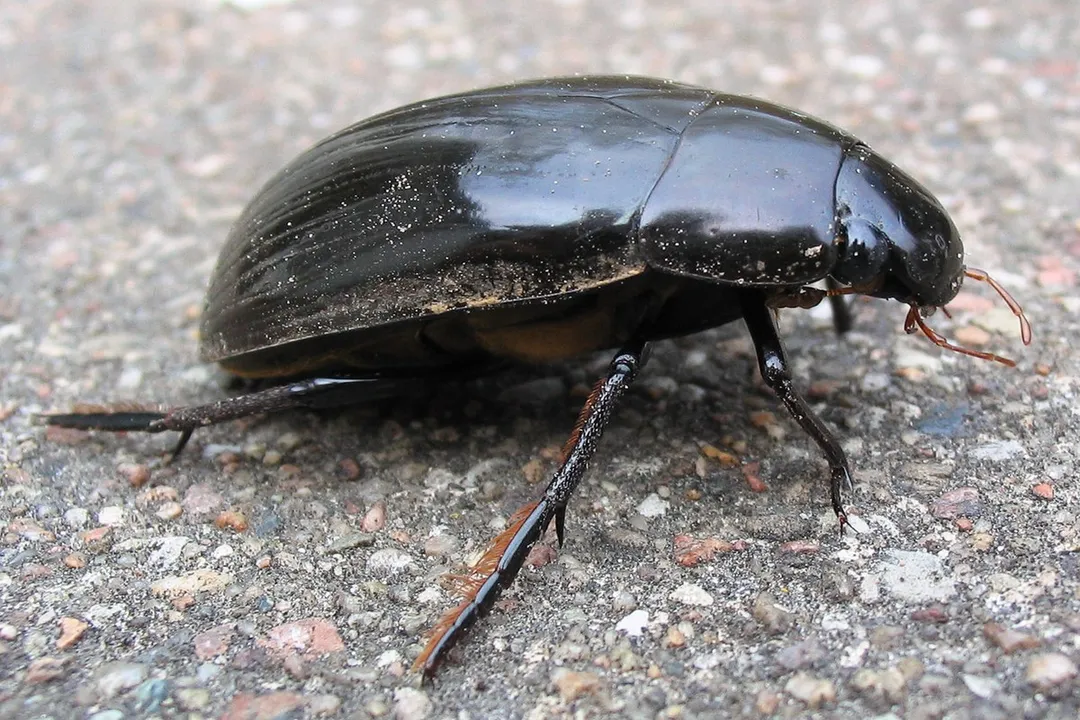
When observing aquatic insects, especially those with long maxillary palps that might mimic certain true bugs (Hemiptera), a definitive characteristic must be used to confirm beetle identity (Order Coleoptera). The key feature confirming membership in Coleoptera is the presence of the hardened forewings, or elytra. Even if an insect possesses features that might suggest another order, the existence of these hardened coverings, which meet in a straight line down the back and serve to protect the membranous hindwings, instantly classifies the specimen as a beetle, overriding potential confusion caused by other features like palps or coloration.
Related Questions
What structural feature defines the beetle Order Coleoptera?What is the typical feeding habit of adult Hydrophilidae, the water scavenger beetles?How do the feeding habits differ between Hydrophilidae larvae and adults?How do Hydrophilidae antennae typically compare morphologically to those of Dytiscidae?What physical adaptation allows Hydrophilidae adults to remain submerged for extended periods?To which Suborder does the Hydrophilidae family belong within the scientific hierarchy?How does the swimming motion of a Hydrophilid differ from a Gyrinidae (whirligig beetle)?What characteristics are key for identifying Water Scavenger Beetle larvae morphology?What identification criterion, used for distinguishing families like Hydrophilidae and Spercheidae, is often difficult to observe in field collections?What morphological detail, besides antennae structure, helps confirm an aquatic insect is a beetle rather than a true bug?