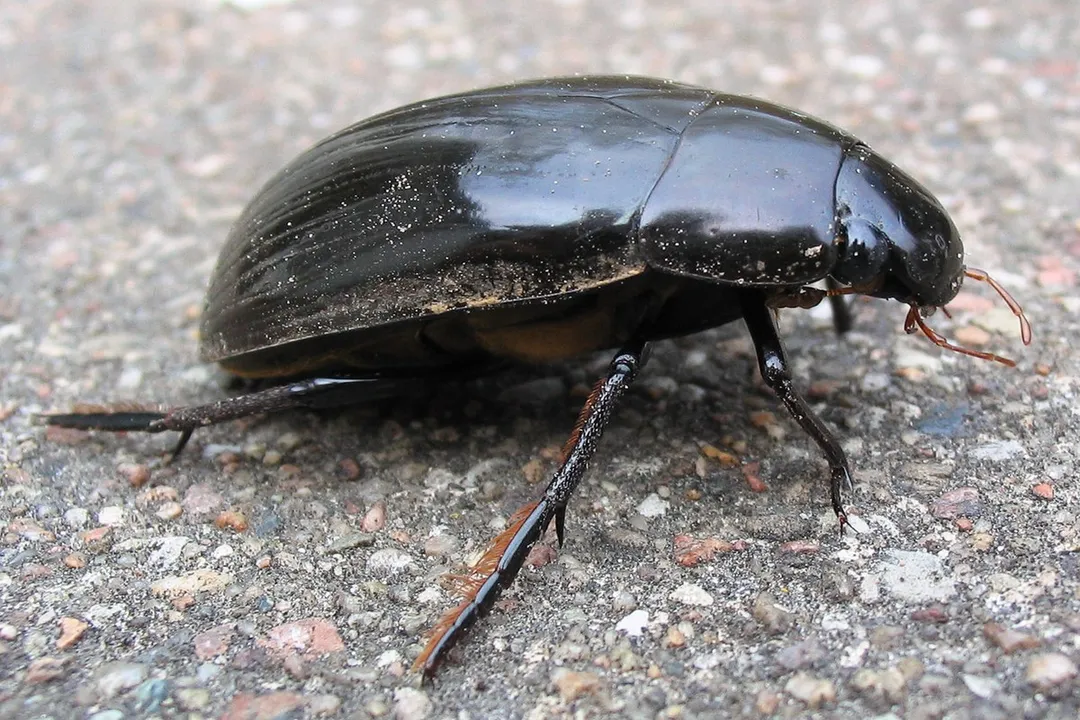
How do Hydrophilidae antennae typically compare morphologically to those of Dytiscidae?
Hydrophilidae adults typically possess relatively short, often clubbed antennae, contrasting with the thread-like antennae of Dytiscidae
Morphological examination, especially of the antennae, is a primary method for separating closely related aquatic beetle families. For the Hydrophilidae, the adults are characterized by antennae that are relatively short and typically end in a club shape, often noted to have 11 segments. This configuration serves as a distinct marker. In contrast, the predaceous diving beetles belonging to the Dytiscidae family exhibit a different structure altogether, possessing antennae that are described as thread-like or filiform. This difference in antennal structure reflects distinct evolutionary pathways, even though both groups inhabit aquatic environments and are classified within the Order Coleoptera.