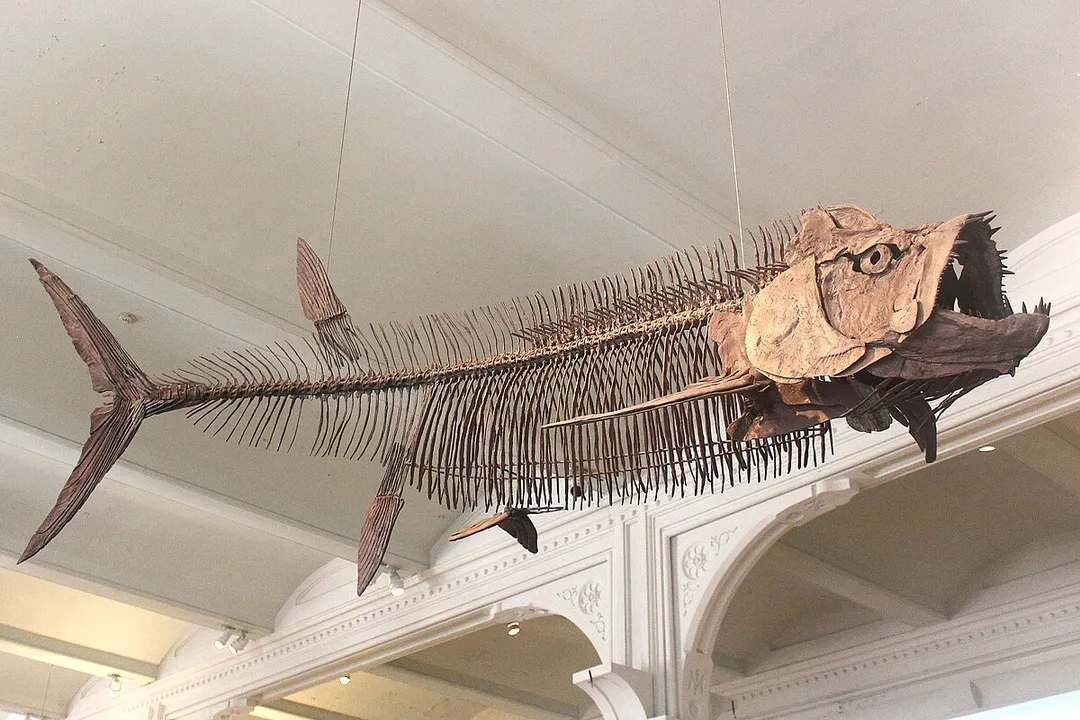
What morphological feature did the caudal fin of Xiphactinus share with modern tuna?
Answer
Deeply forked shape
The caudal (tail) fin of *Xiphactinus* possessed a deeply forked shape. This specific morphology is a significant indicator of an animal evolved for high cruising speeds and sustained swimming performance. This adaptation is comparable to that seen in modern, fast-swimming pelagic species like tuna, suggesting that *Xiphactinus* relied on speed and endurance, powered by a streamlined, muscular body structure, to pursue its prey effectively through the open waters of the seaway.
Related Questions
To which family does the apex predator Xiphactinus belong?During which geological ages did Xiphactinus maintain its predatory success?What is the commonly estimated adult length range for Xiphactinus specimens?How were the teeth of Xiphactinus set, distinguishing it from later bony fishes?What morphological feature did the caudal fin of Xiphactinus share with modern tuna?What potential metabolic state is debated for Xiphactinus compared to most modern fish?What ancient ocean once split North America where Xiphactinus thrived?From which famous chalk beds are detailed Xiphactinus fossils frequently recovered?Which massive marine reptile did Xiphactinus coexist with but not dominate as a predator?Which Xiphactinus species is designated as the more widely known and larger apex predator?What aggressive feeding strategy does the swallowed Protosphyraena illustrate for Xiphactinus?