What minimum temperature is required for effective heat treatment of infested combs?
Answer
Above $120^ ext{F}$ or $49^ ext{C}$
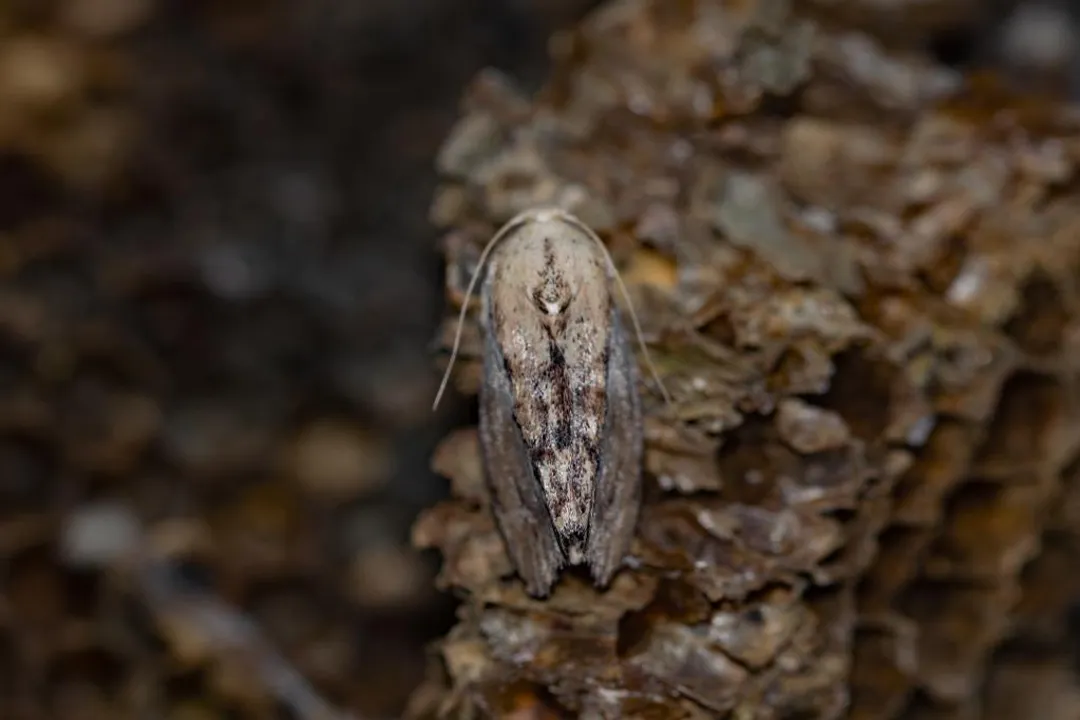
Heat treatment provides a viable alternative to freezing temperatures for controlling wax moth infestations within stored beeswax comb, like old drawn frames or supers. To ensure comprehensive mortality for all life cycle stages, including the resilient eggs and pupae sheltered inside cocoons, the material must be subjected to sustained high temperatures. The established threshold for achieving this mortality rate is exposure to temperatures consistently above $120^ ext{F}$ (or $49^ ext{C}$). This thermal exposure effectively eliminates the pests, offering beekeepers a control method that can be implemented when deep freezing is impractical.
Related Questions
Which stage of the wax moth causes substantial damage to hive materials?What distinguishes the Greater Wax Moth (*Galleria mellonella*) wingspan?What cold temperature kills all wax moth stages in stored comb?What resources, besides beeswax, do wax moth larvae consume?How do strong, healthy honeybee colonies primarily defend against wax moths?What minimum temperature is required for effective heat treatment of infested combs?Outside of apiculture, what role does *Galleria mellonella* larva serve in laboratories?How do the forewings of the Lesser Wax Moth (*Achroia grisella*) compare to *Galleria mellonella*?What granular substance found in the comb indicates active feeding by wax moth larvae?What is a primary outcome when wax moth larvae infest a weak honeybee colony?Besides visual inspection, what physical property might warn of severe wax moth damage in stored supers?