What are some interesting facts about the spongy moth?
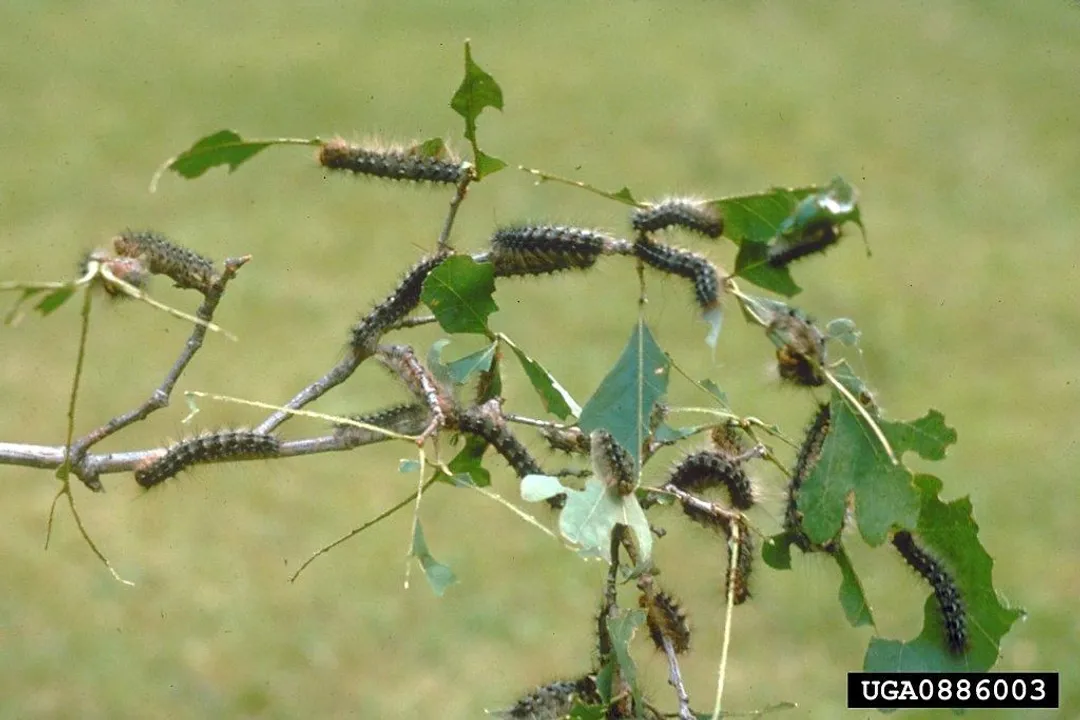
The spongy moth, a name adopted relatively recently to move away from earlier, culturally insensitive terminology, represents one of North America's most destructive invasive forest pests. [3][5][7] This insect, scientifically known as Lymantria dispar dispar, carries a history steeped in accidental introduction and relentless spread, posing a significant threat to hardwood forests across the continent. [2][6] Understanding this pest requires looking closely at its entire life cycle, from the distinctive egg masses laid in winter to the ravenous appetite of its larval stage. [1][9]
# A Name Change
The shift in common nomenclature from the Gypsy Moth to the Spongy Moth is an important detail reflecting a broader institutional effort toward inclusive language. [3][5][7] While the scientific community largely retains the name Lymantria dispar dispar, [3][5] the move to "spongy moth" acknowledges the need to retire older terms. [5][7] This change is significant because it relates directly to the insect's most noticeable physical feature: the egg mass, which is described as "spongy". [1]
# Origins and Spread
The story of the spongy moth’s presence in North America begins not in a native forest, but accidentally, in Medford, Massachusetts, around . [1][2][6] It was brought over from Europe for silk production experiments, a classic example of a non-native species escaping its intended containment. [1][7] Native to Europe, Asia, and North Africa, the moth quickly established itself after this initial introduction. [2][3][6] Since that time, it has spread extensively throughout the northeastern and mid-Atlantic United States and into adjacent Canadian provinces. [3][5] The moth’s ability to spread long distances is not entirely natural; human activity plays a considerable, often unintentional, role. [3]
# Life Stages
The spongy moth undergoes complete metamorphosis, passing through four distinct stages: egg, larva (caterpillar), pupa, and adult moth. [5]
# Egg Deposition
The life cycle’s overwintering stage is the egg mass, which is crucial for detection during colder months. [4][9] Females lay clusters of hundreds of eggs, sometimes up to in a single mass. [1][5] These masses are coated in a protective covering of buff or yellowish hairs, giving them that characteristic "spongy" texture. [1][4] An interesting characteristic is the insect's choice of substrate; while they prefer sheltered locations like bark crevices, they readily lay eggs on almost any stationary object, including firewood, outdoor furniture, vehicles, mailboxes, and house siding. [1][3][9] This habit of using human property as a transport vehicle is a key factor in its broader regional spread. [3]
# The Caterpillar Phase
When conditions warm in the spring, typically around May, the caterpillars emerge to begin their feeding period. [4][5] These larvae are unmistakable due to their hairy appearance and the tell-tale pattern of five pairs of blue spots followed by six pairs of red spots running down their backs. [1][4][9] This distinctive coloring serves as a warning signal to potential predators. [4] Throughout their development, the caterpillars are incredibly voracious, making this the most destructive phase of the life cycle for trees. [5] One notable behavioral trait is that the caterpillars feed primarily at night, often climbing high into the canopy after dusk. [4]
# Adult Moths
The transition to adulthood occurs in mid-to-late summer. [4] There is a clear sexual dimorphism, or difference in appearance between the sexes. [1] Adult males are smaller, featuring brownish wings marked with darker, wavy lines, and they are active, capable fliers. [1][4] The adult females, by contrast, are much larger, displaying creamy white wings, and are very poor fliers, often only managing short glides or hops. [1][4] Due to this flight disparity, the natural spread across large geographic barriers relies almost entirely on the male’s flight, whereas local spread—or establishment in new, non-contiguous regions—is often due to human transport of the stationary egg masses. [3] Adults do not feed; their sole purpose is reproduction, after which they die. [4]
# Forest Defoliators

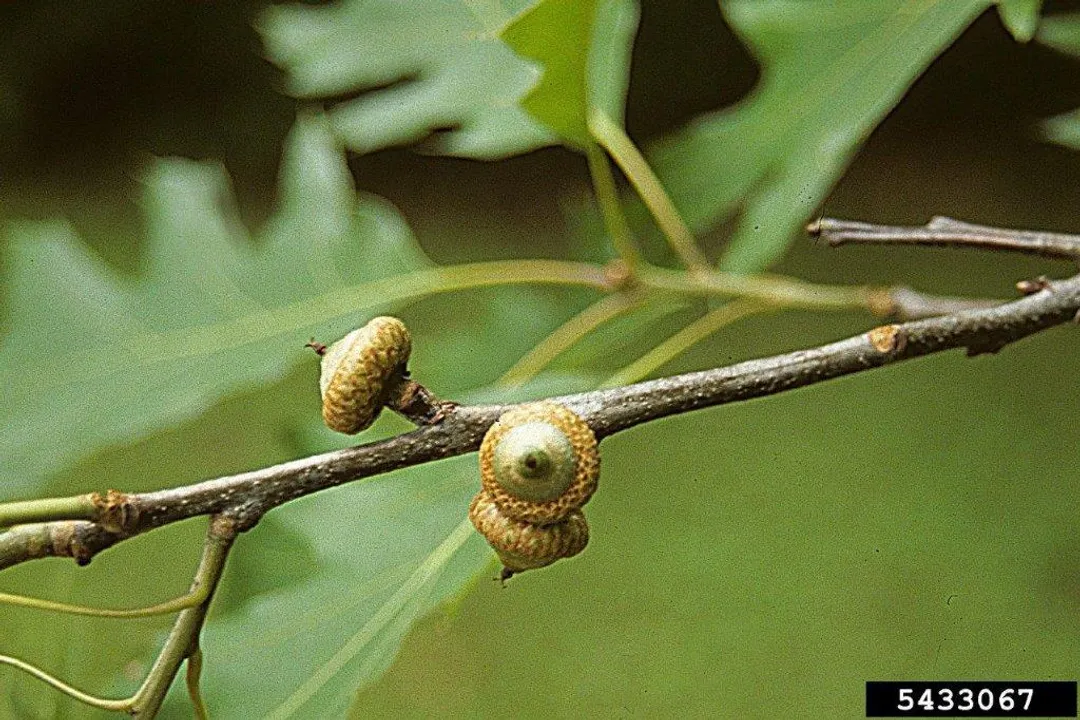
The primary ecological and economic concern surrounding the spongy moth centers on the feeding habits of the caterpillar. [5][6] While the insect can feed on more than species of trees and shrubs, [1][5][6] it shows strong preferences for certain hardwoods. [5][9] The most commonly targeted species include oaks, maples, birch, poplar, and apple. [1][5]
This specialized but broad preference means that during high-density outbreaks, entire swaths of forest can be stripped bare of their leaves. [5] The complete defoliation caused by mass feeding sessions can occur quickly. [5] If you observe a significant outbreak where oaks are present, you might notice that while many other tree types are heavily damaged, some species, like pines and hemlocks, are largely untouched, offering a stark visual contrast in the canopy. [1][5]
When considering the sheer volume of consumption, it is worth noting that a major outbreak means millions of caterpillars are active simultaneously across a given area. [3] This high feeding pressure not only starves the tree of energy reserves but also makes it highly susceptible to secondary stresses. [1][5] For instance, a tree weakened by the loss of its leaves in summer is far more vulnerable to drought, disease, or subsequent attacks by other common pests like borers. [5] While a healthy, mature tree can often survive one year of defoliation, repeated stripping over two or three consecutive years frequently leads to tree mortality, particularly among already stressed or older specimens. [5]
# Management Strategies
Managing spongy moth populations requires a multi-faceted approach that often targets different life stages. [1][9] Because the insect's life cycle is relatively predictable, control efforts can be timed for maximum effectiveness.
# Winter Work
The most accessible time to manage the population is during the winter months when only the eggs remain attached to surfaces. [1] Manual removal of egg masses—scraping them off trees, siding, or outdoor equipment—is a highly effective, non-chemical control method suitable for residential areas. [1][9] Proper disposal is key; masses should be submerged in soapy water for at least hours to ensure the eggs are destroyed. [1] If you are dealing with a small backyard infestation, systematically removing every visible egg mass can significantly reduce the following year’s caterpillar population density. [9]
# Active Season Control
During the caterpillar stage, management becomes more intensive, focusing on protecting high-value trees. [1]
- Banding: Wrapping tree trunks with sticky bands can trap some climbing caterpillars, though this method is labor-intensive and often ineffective against large populations. [1]
- Biological Controls: Certain naturally occurring agents can help manage the population naturally. [1][9] The fungus Entomophaga maimaiga is a significant natural enemy that can cause widespread caterpillar death when conditions are damp, though its effectiveness varies season to season. [9]
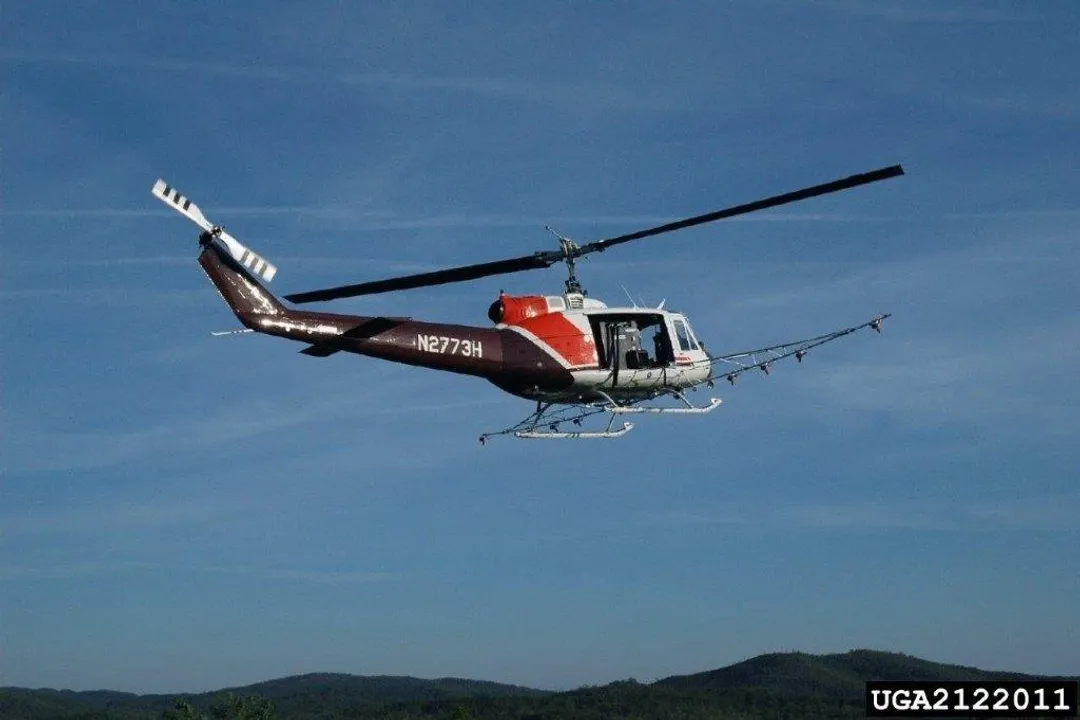
- Chemical Treatments: For large-scale protection, particularly in high-value landscapes or forests, chemical treatments targeting the larvae are sometimes necessary. [1] These treatments must be applied when caterpillars are actively feeding and are regulated by state agencies to protect non-target species. [1]
When thinking about which trees to prioritize for protection, one practical approach involves assessing the species' tolerance level. Since oaks are primary targets, and maples and birches are also highly susceptible, dedicating control resources to these species, especially if they are mature and aesthetically important on a property, often yields the best return on effort. [5][9] Conversely, accepting some level of leaf loss on less valuable, fast-growing pioneer species might be a viable strategy to save resources for more critical areas.
# Regulatory Measures
Because the spongy moth is recognized as a significant agricultural and environmental pest, government agencies actively monitor and regulate its movement. [3] State and federal organizations often implement quarantines in infested areas. [3] These quarantines restrict the movement of outdoor household articles, firewood, and nursery stock that might inadvertently carry viable egg masses to uninfested regions. [3] If you live in or near a regulated area, being aware of these movement restrictions is vital to preventing the unintentional assistance of the moth’s spread to new landscapes. [3]
Related Questions
#Citations
Spongy Moth [fact sheet] - UNH Extension
Spongy Moth Facts and Information - Pests - Orkin
Spongy Moth | Animal and Plant Health Inspection Service
Spongy Moth Home
Spongy Moth Insect Info and History
Spongy Moth | National Invasive Species Information Center
Spongy Moth – Profile and Resource | Invasive Species Centre
Spongy Moth - NYSDEC
Spongy Moth: Facts, Life Cycle, Damage and Control - Davey Blog