What are some interesting facts about the Io moth?
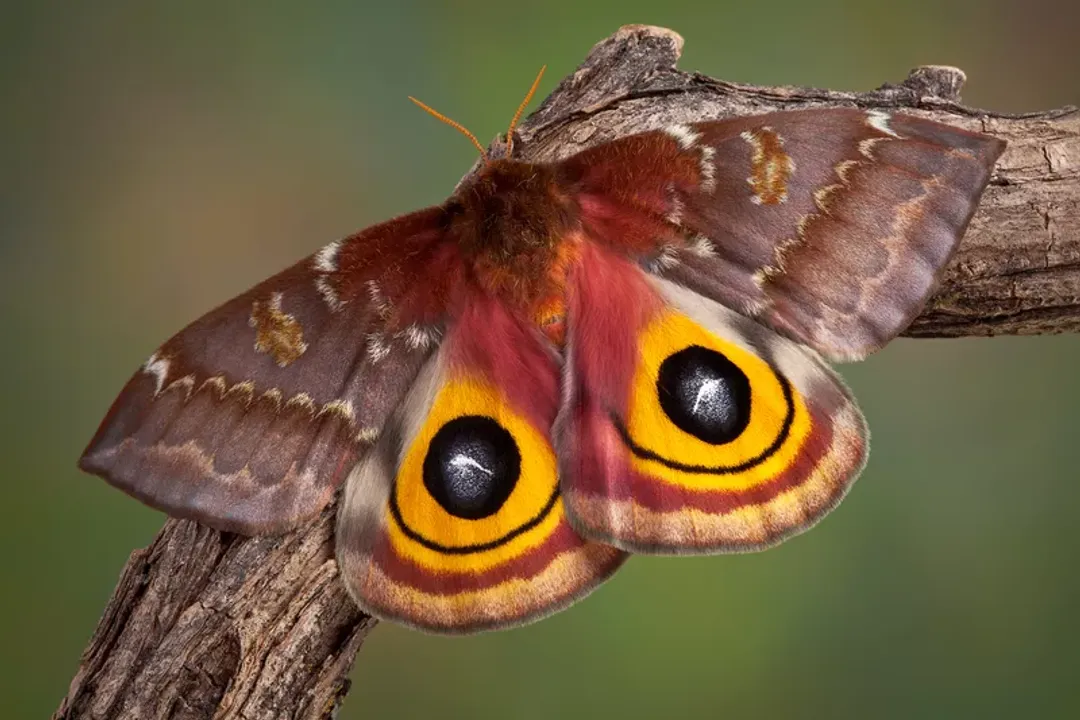
The Io moth, scientifically cataloged as Automeris io, presents a striking example of nature's dramatic flair within the world of Lepidoptera. These moths belong to the Saturniidae family, often referred to as giant silkmoths, and they certainly live up to the "giant" moniker, boasting an impressive wingspan that can reach up to three inches, or roughly 7.6 centimeters. What makes this species particularly compelling is the stark difference between the sexes, a trait known as sexual dimorphism, which dictates both their appearance and how they interact with their environment.
# Color Contrast
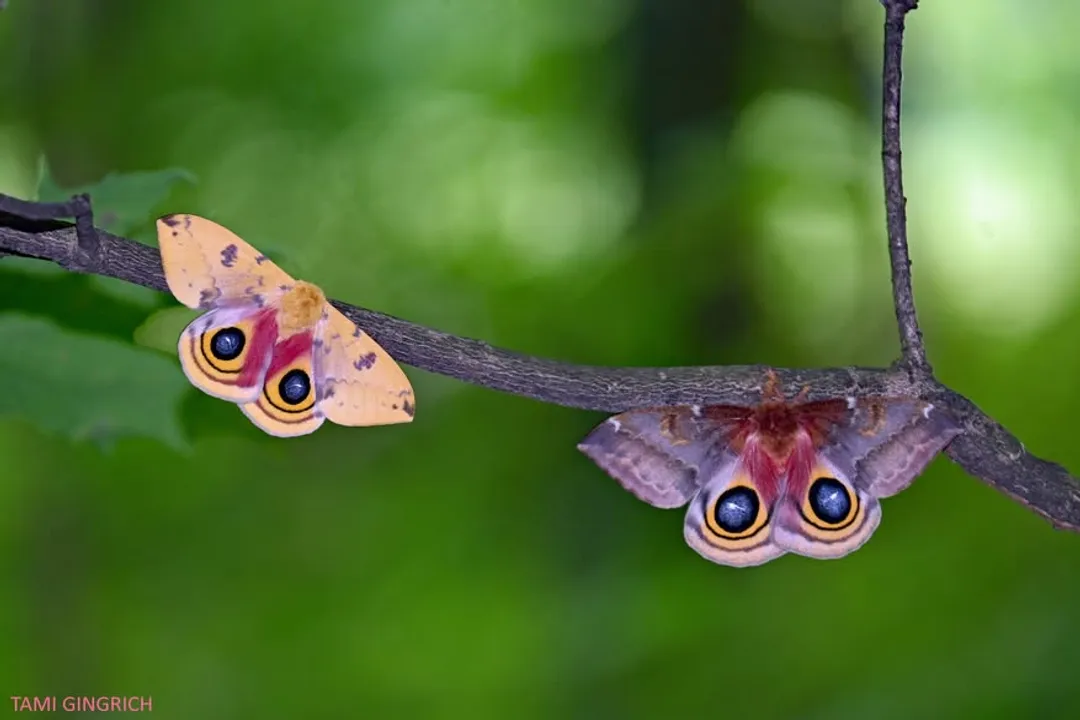
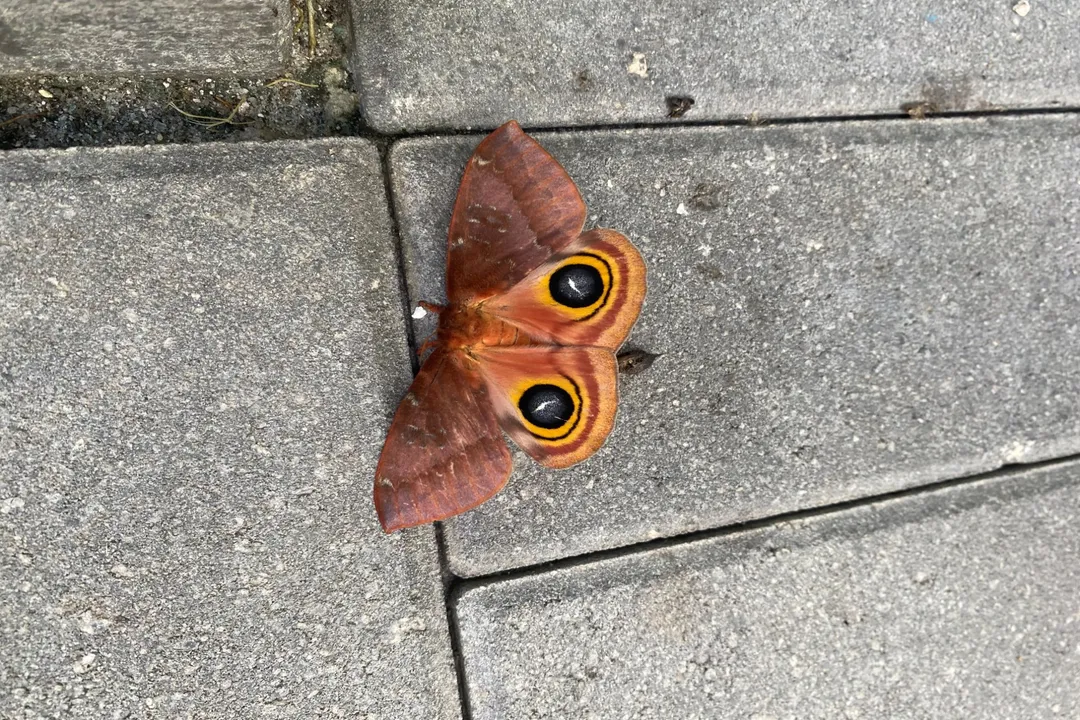
The most immediate and captivating difference between male and female Io moths lies in their coloration. Males are typically a vibrant, almost shocking yellow or a bright yellow-orange, making them highly visible when in flight or resting on certain foliage. Females, on the other hand, adopt a much more subdued and cryptic palette, usually appearing in shades of dark brown or purplish-brown. This difference in coloring suggests different selective pressures; the bright male might be optimized for visual signaling over long distances, while the dark female needs better camouflage while laying eggs. Despite this major divergence in wing base color, both sexes share one critical, shared feature: spectacular eyespots decorating their hindwings. These markings are usually black, often featuring prominent blue or white centers, serving a very specific purpose when the moth feels threatened.
# Hairy Warning
If the adult moth is a study in conspicuousness or cryptic beauty, the larval stage—the caterpillar—is a masterpiece of active defense. Io moth caterpillars are vivid green, which usually blends well with the leaves they consume, but their covering is anything but ordinary. They are covered in dense tufts of branched spines, sometimes called setae, arranged in rows along their bodies. These spines are not merely for show; they are urticating. Contact with these spines can result in an uncomfortable, stinging sensation for the person touching them. When observing these caterpillars in the field, it is crucial to remember that while they are fascinating subjects for observation, handling them should be avoided unless one is properly equipped, as the pain can persist even after the caterpillar is gone. This chemical defense mechanism is a far more aggressive strategy than the passive camouflage of many other caterpillars. It forces potential predators, like birds, to learn quickly to avoid them after just one unpleasant encounter.
# Startle Display
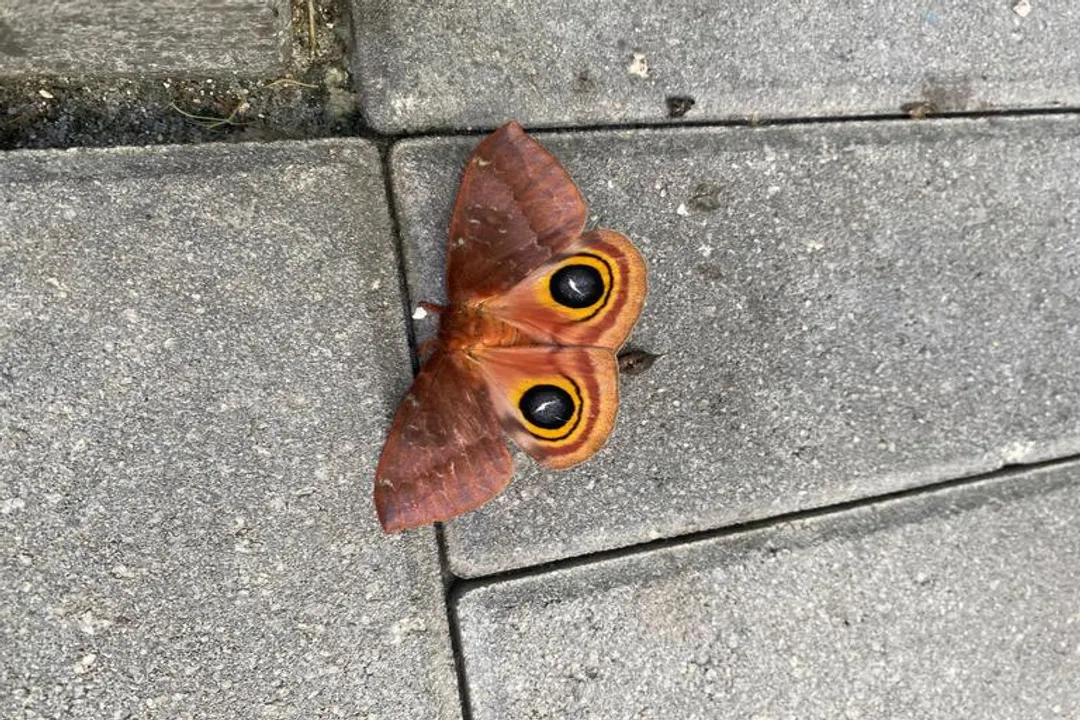
The striking eyespots on the adult moth's hindwings are deployed as part of a sudden, startling defense mechanism known as flash coloration. When an Io moth is resting, its forewings usually cover the hindwings, hiding these conspicuous markings. If a predator, such as a bird or a small mammal, approaches too closely or disturbs the moth, it will instantly flash open its wings, suddenly exposing the large, startling "eyes". This sudden appearance of what looks like the eyes of a much larger creature—perhaps an owl or a larger animal—can momentarily confuse or frighten the predator, giving the moth the split second it needs to escape. This behavioral tactic is highly effective against visually oriented predators and is a classic evolutionary response seen across various insect groups, though the specific coloration of the Io moth makes it particularly memorable.
# Ephemeral Existence
One of the most fascinating, if slightly melancholic, aspects of the Io moth’s life centers on the adult stage. Once the moth successfully emerges from its cocoon, its priorities shift entirely to reproduction. A significant biological detail about the adult Io moth is that it often lacks functional mouthparts, meaning the glorious winged stage does not eat. This is a trade-off common among many giant silkmoths. All the energy required for flight, mating, and, for the female, egg production, must be accumulated during the highly specialized, eating-only larval phase. Consequently, the adult life is incredibly brief, often lasting only about a week—sometimes less—dedicated solely to finding a mate before the energy reserves run out. Considering the larva spends weeks or even months building up reserves, that final week as an adult represents an intense, final sprint of existence driven by inherited biological imperative. Furthermore, like many moths, they are often attracted to artificial light sources, which can tragically shorten their already limited lifespan if they become trapped or exhausted near a porch lamp.

# Dietary Diversity
The larval stage’s success hinges on its ability to consume a wide variety of available vegetation, which contributes to the species’ wide distribution across eastern and central North America, reaching down into Mexico. The caterpillars are generalists when it comes to their host plants, feeding on the leaves of numerous deciduous trees and shrubs. Common favorites include various species of oak, sweetgum, willow, and maple. They have also been known to feed on birch and even agricultural crops like corn. Females typically deposit their eggs in clusters on the underside of leaves belonging to these host plants, ensuring the emerging, hungry first instars have immediate access to food. A gardener observing a newly hatched cluster of these spiny caterpillars on an oak tree might be tempted to remove them, but understanding their role in the local ecosystem, and their necessity for completing their brief cycle, offers a moment of pause for reflection on food web dynamics.
# Geographic Spread
The Io moth’s successful adaptation to a varied diet and its ability to complete its life cycle across diverse wooded and field environments allows it to maintain a broad geographic range. From the Great Lakes region down through the eastern United States and into Mexico, Automeris io is a relatively common sight, especially during the warmer months when they fly. Their presence is often noted in woodland edges, fields, and areas where their preferred larval food sources are plentiful. The species name itself, Automeris, is derived from Greek words meaning "self-splendid," a fitting description given the male’s brilliant coloration and the dramatic nature of their defense mechanisms.
This comparison between the specialized adult and the generalist larva provides a neat ecological snapshot: the larval stage is one of acquisition and defense against immediate threats (predators), while the adult stage is purely about dispersal and reproduction within a narrow time window. Observing an Io moth, whether the sunlit yellow male or the brown female, is a reminder that beauty and danger, brevity and abundance, are perfectly balanced in the insect world.
Related Questions
#Citations
Io Moth Insect Facts - Automeris io - A-Z Animals
The Fascinating World of the Io Moth | All “U” Need Pest Control
Automeris io - Wikipedia
Automeris io (Io Moth)
Io moths emerging in Geauga County, Ohio, with unique eyespots
Io moth Facts for Kids
National Moth Week: Io Moth (Automeris io)
Io Moth Automeris io (Fabricius) (Insecta: Lepidoptera: Saturniidae)
Io Moth - The Wisconsin Moths Field Guide